Iran is nearing forced oil production stoppages as storage tanks fill rapidly, with capacity set to be exhausted within 20 to 24 days, according to an April 22 update from Kpler, a commodities data firm that tracks global oil, gas, and shipping flows.
The firm said that Iran’s output has already fallen by about 750,000 barrels per day from pre-war levels, primarily because of lower domestic demand during the Iran war.
It said that Iran’s oil supply is being forced to adjust to “two simultaneous shocks”: damage to key infrastructure and an almost complete halt in exports.
Homayoun Falakshahi, who leads Kpler’s crude oil analysis team, said that strikes on key phases of the South Pars gas field have cut condensate production by roughly 100,000 barrels to 120,000 barrels per day for at least six months.
He said that with about 1.8 million barrels a day no longer being exported, and roughly 39 million barrels of storage available onshore, Iran could run out of space to store its oil in about 20 to 24 days.
“Given that condensate production is tightly linked to gas processing at South Pars, this loss cannot be rapidly offset and effectively caps Iran’s liquids recovery in the medium term,” Falakshahi said.
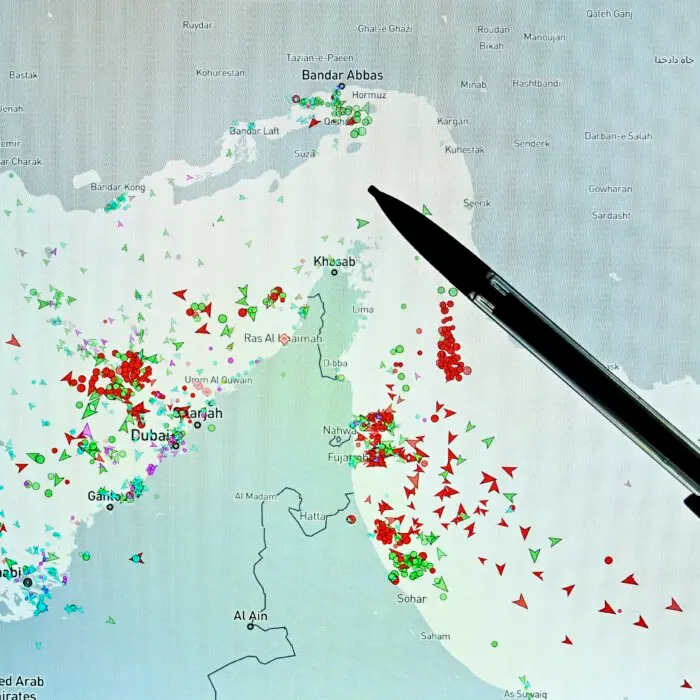
Falakshahi said only a couple of very large crude carriers, a type of massive oil tanker, are currently stranded in the Persian Gulf, allowing another 4 million barrels of oil to be loaded.
“Nonetheless, Iran is being pushed into a storage-driven shut-in cycle,” he said.
Falakshahi said that the estimate could be a bit high, because not all storage tanks can be fully emptied or used. But it could also be too low, as some extra storage at northern refineries, such as in Tehran, Tabriz, and Esfahan, might be underestimated.
“The United States Navy will continue the blockade of Iranian ports,” U.S. Treasury Secretary Scott Bessent said in an April 21 post on X.
“In a matter of days, Kharg Island storage will be full and the fragile Iranian oil wells will be shut in. Constraining Iran’s maritime trade directly targets the regime’s primary revenue lifelines,” he said.
Bessent said the U.S. Treasury will continue to “apply maximum pressure through Economic Fury to systematically degrade Tehran’s ability to generate, move, and repatriate funds.”
“Any person or vessel facilitating these flows, through covert trade and finance, risks exposure to U.S. sanctions,” he said.
“We continue to freeze the funds stolen by the corrupt leadership on behalf of the people of Iran.”
A top Iranian official on April 22 said that it’s “impossible” to reopen the Strait of Hormuz amid what he claimed are ceasefire breaches, after its military seized ships in the strategic waterway.
“A complete ceasefire only makes sense if it is not violated by the maritime blockade and the hostage-taking of the world’s economy,” he said, adding that “the only way forward is to recognize the rights of the Iranian nation.”
A day prior, Trump announced an extension of a two-week ceasefire with Iran and cited fractures in the ruling regime, allowing for Tehran to submit a proposal at a later time. Pakistani officials also requested that the United States hold its attack against Iran until a unified proposal is submitted by the regime, Trump wrote on Truth Social.