Damascus and Russia have reached a memorandum of understanding to end Moscow’s presence at its remaining bases in Syria, including transferring civilian facilities to Syrian state management and converting Russian military bases into joint training centers.
Quoting the ministry’s Media and Communications Department on Aug. 9, Syria’s official state news agency SANA said that the agreement follows about a year and a half of intensive negotiations led by Syria’s Ministry of Foreign Affairs and Expatriates.
Russia’s naval facility at Tartous and its Hmeimim air base near Latakia have long been Moscow’s principal military footholds in the Mediterranean and Middle East.
Damascus added that Syria will assume management of facilities designated for civilian use, including Hmeimim Airport and the fourth commercial berth at Tartous Port, allowing them to be gradually integrated into the country’s civilian administration.
A maximum three-month deadline applies for completing the transition.
Their future has been the subject of negotiations with Syria’s new leadership since former President Bashar al-Assad was ousted in December 2024.
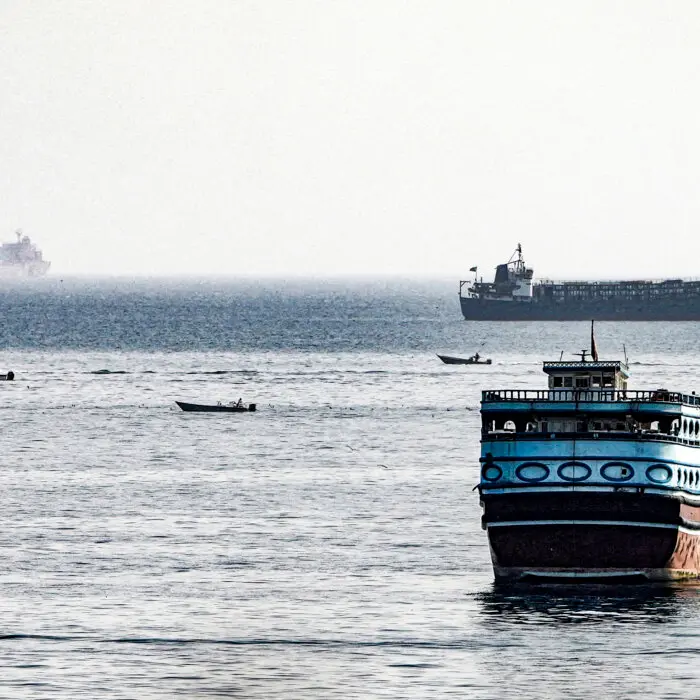
In a separate statement, Syria’s General Authority for Ports and Customs said Syria would take over the commercial sites previously operated by Russia at the port of Tartous, including Pier No. 4 and its associated warehouses and facilities.
Established in 1971, Tartus has been Russia’s only Mediterranean naval facility since Soviet times.
Khmeimim, built in 2015, was used for Russia’s air campaign in Syria and was later a logistics hub for its African operations.
In 2017, Russia signed a 49-year lease giving it jurisdiction over Tartous and the right to base nuclear-capable vessels there.
However, Damascus has increasingly tilted toward the West, rejoining the U.S.-led anti-ISIS coalition.
“Assad and his family have arrived in Moscow. Russia, for humanitarian reasons, has granted them asylum,” reported state-run Russian News Agency TASS at the time, citing a source in the Kremlin.
The announcement was made after Assad was forced to flee Syria following a rebel takeover of the nation’s capital city of Damascus, with rebels declaring victory following a 13-year civil war.
Formerly known as Mohamed al-Golani, al-Sharaa is also the leader of the Hayat Tahrir al-Sham (HTS) terrorist group, an ideological offshoot of al-Qaeda.
In April, the United States handed over Qasrak Air Base, its last major base in Syria, to al-Sharaa’s government, ending more than a decade of U.S. presence in Syria.
At the time, Syria’s Foreign Ministry welcomed the transfer of military sites previously operated by U.S. forces to the Syrian government, according to SANA, saying the move marked a step toward restoring state control over all territory.
It said that Syria is now in a position to lead counterterrorism efforts with international cooperation against ISIS.
Russian officials have yet to react publicly to the agreement, said Hanna Notte, director of the Eurasia Nonproliferation Program at the James Martin Center for Nonproliferation Studies, who also holds posts with the CSIS Russia and Eurasia Program and the Kennan Institute, in an Aug. 10 post on X.
Notte said that without having seen the text of the agreement, her key question was whether Russia’s military could still use the bases for expeditionary warfare and logistics support for its Africa Corps operations.
Reuters, The Associated Press, Adam Morrow, Evgenia Filimianova, Emel Akan, and Joseph Lord contributed to this report.