Inside China’s Forced Organ Harvesting System: Journalist Jan Jekielek to Present Decades of Evidence at Toronto Book Talk

Inside China’s Forced Organ Harvesting System: Journalist Jan Jekielek to Present Decades of Evidence at Toronto Book Talk
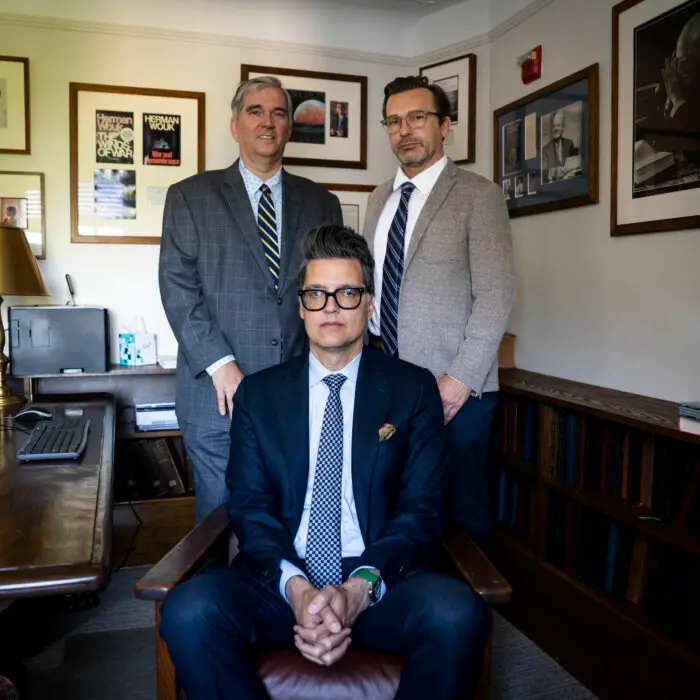
Jan Jekielek, Epoch Times senior editor and author of "Killed to Order,” receives the French Quarter Magazine 2026 Best Author of the Year award at the French Embassy in Washington on April 20, 2026. Madalina Kilroy/The Epoch Times
|Updated:
0:00

New York Times best-selling author and Epoch Times senior editor Jan Jekielek will be in Toronto next week to discuss his newly released book on China’s state-sanctioned organ harvesting practice, which he says Canadians need to understand as Ottawa deepens ties with Beijing.

Jekielek’s book, “Killed to Order: China’s Organ Harvesting Industry and the True Nature of America’s Biggest Adversary,” was released in March. Jekielek will hold a book talk and Q&A event at the Legislative Assembly of Ontario on May 27.

“Killed to Order” compiles evidence from 20 years of independent investigations that expose the Chinese Communist Party’s (CCP) industrial-scale practice of forced organ harvesting, how it became an estimated $9 billion industry, and how the West was drawn into complicity.

The book explains not only China’s state-sanctioned forced organ harvesting industry, but also the true nature of America’s biggest adversary, Jekielek says.

As the Canadian government seeks to get closer to communist China, Jekielek says it is very important that everyone understands the “true nature” of the communist regime.

“If you understand the true nature of the Communist Party of China, you understand that they don’t believe in win-win at all. In fact, their whole effort is an attempt to subvert,” Jekielek, a China researcher, said ahead of the Toronto event.

While he said he doesn’t believe Canada should have no communication with the CCP, he said the way the federal government seems to be approaching relations with China “doesn’t seem to take into account that this regime is looking to exploit us in extreme ways, as it does its own people, never mind gullible or financially incentivized Canadians.”

Forced Organ Harvesting

Detailed reports about China’s practice of forced organ harvesting for profit began emerging in 2006. A whistleblower disclosed at the time that her ex-husband, a surgeon, had admitted to transplanting some 2,000 corneas from live prisoners of conscience.
In 2019, an independent people’s tribunal chaired by Sir Geoffrey Nice QC in London, England, concluded in 2019 that there is clear evidence of forced organ harvesting taking place in China “on a significant scale,” and that practitioners of Falun Gong are one of the main sources of organs. Nice was the lead prosecutor at the International Criminal Tribunal for the case of former Yugoslavian President Slobodan Milosevic.

Falun Gong, also known as Falun Dafa, is a traditional Chinese spiritual discipline centred on self-improvement that consists of five meditative exercises as well as moral teachings based on the principles of truthfulness, compassion, and forbearance. The practice quickly grew in popularity in China in the 1990s, with government statistics indicating between 70 million and 100 million people had taken up the practice.

Although the discipline is currently practised in more than 100 countries around the world, it is prosecuted in China. The CCP deemed Falun Gong’s growing popularity as a threat to its power and launched a violent persecution campaign against the spiritual discipline in 1999, vowing to eliminate it.
The persecution in China continues to today, with reports of torture, forced labour, indoctrination, surveillance, and killings, in addition to live organ harvesting.
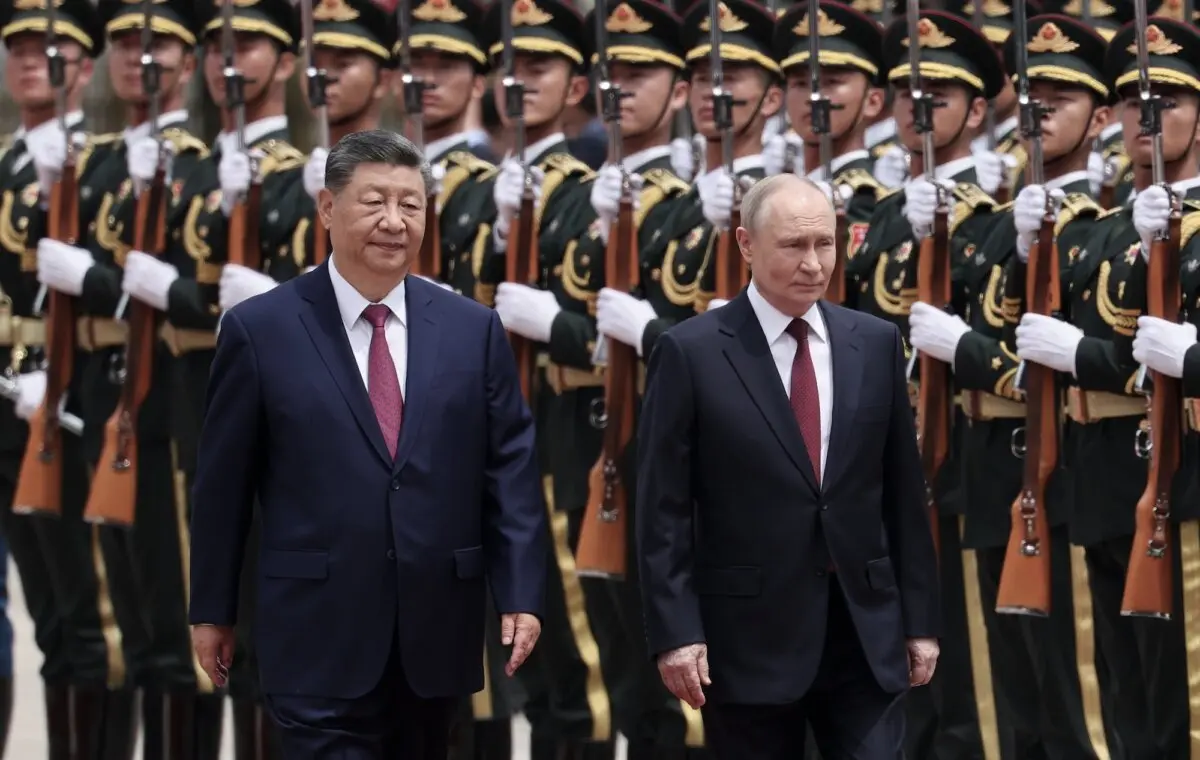
Russian President Vladimir Putin (R) and Chinese leader Xi Jinping inspect an honor guard during a welcoming ceremony in Beijing, China, on May 20, 2026. (Maxim Shemetov/Pool Photo via AP)
Russian President Vladimir Putin (R) and Chinese leader Xi Jinping inspect an honor guard during a welcoming ceremony in Beijing, China, on May 20, 2026. Maxim Shemetov/Pool Photo via AP
The issue of China’s organ harvesting industry received increased attention last year when an exchange between Chinese leader Xi Jinping and Russian President Vladimir Putin was caught on a hot mic, capturing the leaders discussing increased longevity through organ transplants, with the possibility of extending one’s lifespan to 150 years.

The conversation, which was livestreamed through Chinese state media online and on television, made international headlines as China watchers pointed to longstanding concerns about forced organ harvesting.

A voluntary donor who matches a variety of medical criteria is needed for ethical organ transplantation and in most cases the donor is very recently deceased, except in cases such as a single kidney transplant.
Estimated wait times to receive a donated organ are years long, but in the early 2000s in China, advertisements boasted of two-week wait times, and doctors heard about people paying tens or hundreds of thousands of dollars for an organ transplant and returning for aftercare just weeks later.

More Targets

There are also indications that as the CCP has expanded its transplant industry, it has targeted more groups for forced organ harvesting, such as the Uyghur population in Xinjiang, China. Beijing’s crimes against humanity targeting Uyghurs has been documented, with Canada declaring China’s persecution of Uyghurs a “genocide” in 2021.
Jekielek said there is a reason a Genocide Convention was agreed on by many countries in the world, noting that some things require an international response “because otherwise they spread.”

He noted that the atrocities by Nazis in Germany began with a eugenics program for disabled people, and eventually spread to targeting Jewish people, and had plans to eliminate other ethnicities such as the Polish.

When it comes to forced organ harvesting in China, Jekielek said the CCP “built this ‘killed to order’ forced organ harvesting system on the backs of Falun Gong practitioners,” and when there was not much of an international response for 14 or 15 years, they began targeting the Uyghur population as well. He also noted that persecution against Christians is ramping up in China, adding that he has “a genuine fear that this could spread to another group as well.”

“It’s very important for Canadians to understand the true nature of communist China, and not believe we’re dealing with a normal regime, or an ethical regime, of any sort,” Jekielek said.

Isabelle Karamooz, founder, CEO, and publisher of French Quarter Magazine, presents the magazine's 2026 Best Author of the Year award to Jan Jekielek, Epoch Times senior editor and author of "Killed to Order," at the French Embassy in Washington on April 20, 2026. (Madalina Kilroy/The Epoch Times)
Isabelle Karamooz, founder, CEO, and publisher of French Quarter Magazine, presents the magazine's 2026 Best Author of the Year award to Jan Jekielek, Epoch Times senior editor and author of "Killed to Order," at the French Embassy in Washington on April 20, 2026. Madalina Kilroy/The Epoch Times

Best Author Award

Jekielek was awarded 2026 Best Author of the Year by French Quarter Magazine last month for “Killed to Order.”

At an awards ceremony in Washington on April 20, the magazine’s founder and CEO, Isabelle Karamooz, said forced organ harvesting in China is “a subject as sensitive as it is significant, and one that invites us to reflect on human dignity, ethics, and global responsibility.”

“The role of journalist as its best is not only to inform but to illuminate, and sometimes to ask us to look more closely at what we might prefer not to see,” Karamooz said.

The May 27 event in Toronto will also feature a screening of the documentary “State Organs: Unmasking Transplant Abuse in China,” which also highlights forced organ harvesting in China and has been awarded for its efforts in raising awareness of the CCP’s abuses.
The documentary screening is set to begin at 5 p.m. EST, followed by the book talk and Q&A session from 6:30 to 7:30 p.m. EST. Audiences can attend the event in person at the Ontario Legislative Assembly by registering online. The book talk and Q&A portion of the event will also be livestreamed online.
Catherine Yang, Cathy He, Eva Fu, and Frank Fang contributed to this report.
Google LogoMark Us Preferred on Google