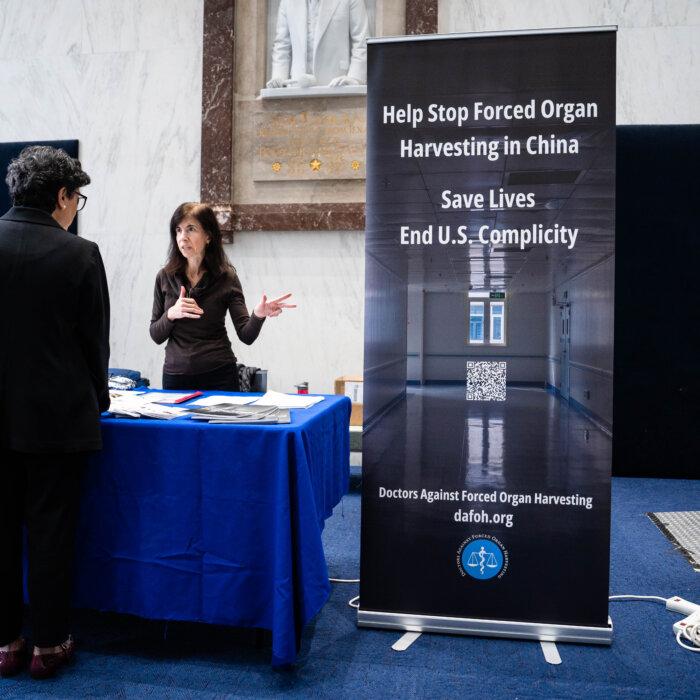
Parents throughout multiple regions of China are pulling their children out of school after widespread online allegations of illegal organ harvesting from minors, triggering a surge of fear over child safety under Chinese Communist Party rule.
Chinese social media platforms, including WeChat, Douyin, and RedNote, have been flooded with posts from parents saying that they have stopped sending their children to school out of concern for their lives, a sentiment described by netizens as “suspending school to stay alive.”
Online posts discussing such cases are frequently censored, further fueling suspicion and fear among parents.
Parents Take Kids Out of School
On Jan. 22, a Douyin user posting under the name “Zhugege” said in a video that he was pulling his 14-year-old daughter out of school, despite the high pressure in Chinese society to excel in the competitive education system.“Whether she succeeds academically no longer matters,” the user said. “As long as she grows up safe, healthy, and happy, that’s enough.”

The video quickly drew hundreds of responses. One person who commented wrote that his 16-year-old son was staying home “as long as he’s safe and healthy.” Another said her 15-year-old child had already left school to work, noting, “As long as she’s alive, nothing else matters.” Many of these comments received large numbers of likes.
Zhang, a lawyer in China’s Hubei Province who gave only his surname out of concern for his safety, told The Epoch Times that the reaction reflects a broader erosion of public trust rather than a response to a single incident.
“In a system where information is opaque, and power lacks effective oversight, the public has no way to verify the truth or seek accountability,” he said. “There is a huge gap between official narratives and what people feel they are experiencing.”
Zhang said parents are increasingly relying on fragmented information from social media to assess risk, citing reports shared online of students who allegedly died at school, disappeared, or died shortly after being hospitalized.
School Health Checks
Concerns have also focused on mandatory school health checkups. Chinese parents on social media have questioned routine medical examinations that include blood draws. Many have pointed out that such procedures were not required when they were students themselves.Fear intensified further when Chinese netizens pointed out that blood tests could be used for organ matching. Many warned parents to “bring children home immediately to save their lives.”
Parental unease has also been fueled by recent official publicity related to organ donation. On Jan. 20, the WeChat account “China Organ Donation” posted a video showing an 18-year-old who donated organs after his death, including footage of medical staff bowing in tribute and images of a birthday cake and a donation certificate. The promotion of “voluntary organ donations” sparked widespread discussion online.
Separately, screenshots from school events have resurfaced in which students hold placards bearing phrases such as “organ donation” and “dedicating one’s life.” Wang, a parent in Wuhan identified by only his surname out of concern for his safety, told the Chinese-language edition of The Epoch Times that he and his wife had decided to switch to homeschooling out of fear that their child could be pressured into signing organ donation documents without fully understanding what that entails.
Chinese authorities have not publicly responded to the online panic or addressed the specific claims circulating on social media.