Hungary’s new government, led by Prime Minister Peter Magyar, is moving to align its domestic policies more closely with European Union expectations on migration and LGBT content, in what analysts describe as a major ideological repositioning during the post-Orban era.
Reversal on Asylum
The first signal came on the migration issue. Foreign Minister Anita Orban, who is not related to former Prime Minister Viktor Orban, told Hungary’s European Affairs Committee on May 11 that Hungary would allow migrants to file asylum applications at Hungary’s borders, rather than from third countries.The proposal represented “a sharp reversal” from the outgoing Fidesz government, which had refused to allow asylum claims on Hungarian soil, Rodrigo Ballester, head of the Center for European Studies at the Mathias Corvinus Collegium in Budapest, told The Epoch Times in an interview.
He stated that this new policy also contradicted Tisza’s campaign promises “to be stricter than Fidesz on both legal and illegal migration.”
The move aims to lift the 1 million euro ($1.17 million) daily fine imposed by the Court of Justice of the European Union (CJEU) in June 2024 over Hungary’s asylum policy. The fine “must be brought to an end,” Anita Orban said.
Viktor Orban had refused to pay the daily fine imposed by the CJEU for Hungary’s breach of EU migration law. The CJEU ruled that Hungary had failed to comply with its 2020 judgment on the rights of asylum seekers to remain pending appeal and on the removal of illegally staying third-country nationals. The penalty is periodically deducted from the country’s share of the EU budget.
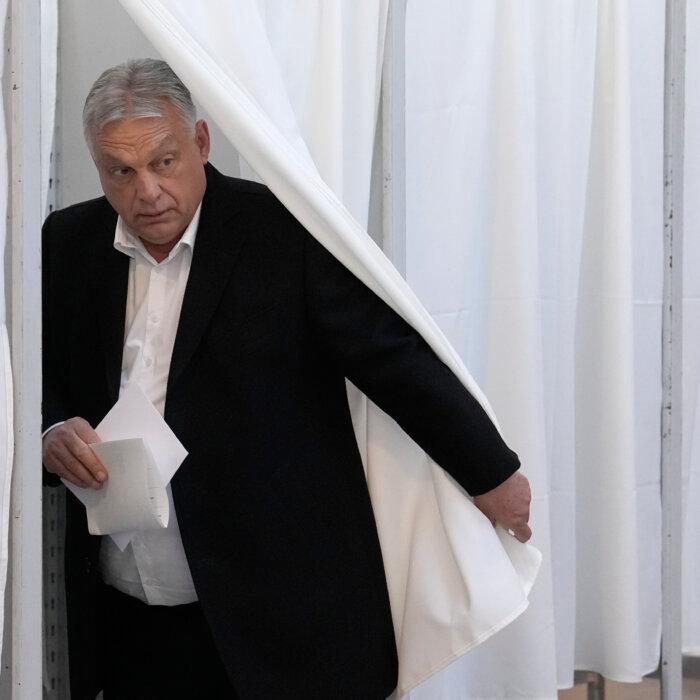
The CJEU ruling also included a 200 million euro ($233 million) lump sum, a record-high for lump-sum penalties ordered against EU member states.
Billion in Frozen Funds
Zoltán Koskovics, a geopolitical analyst at the Budapest-based Center for Fundamental Rights, framed the change as an obligation for Magyar’s government if it hoped to unlock the 18 billion euros ($21 billion) in EU funds frozen for Hungary.The Commission froze access to the funds because the outgoing government of Viktor Orban did not comply with several EU laws.
European Commission President Ursula von der Leyen defended the freeze as a means of protecting what she described as EU values and pushing for reforms in Member States.
The new minister “will have to align with Brussels’ minimum requirements on immigration” to retrieve frozen EU funds, Koskovics said.
Brussels clung to mass immigration as a demographic remedy despite mounting evidence, he argued, that newcomers had largely failed to integrate into either European culture or its economy. As a result, he said, they weighed on public resources rather than adding to European GDP.
Even conservative governments, he argued, were bound to meet the minimum requirements of that agenda, or face financial penalties on the grounds that they violated the EU’s rule of law.
“To read the situation properly, you have to understand that the new government is subservient to Brussels and has to take its direction from there. Picture Brussels as the capital of a progressive empire, with Budapest serving as one of its administrations. The ministers may not speak like progressives, or even see it that way themselves, but in practice they cannot afford to step out of line with Brussels’ directions,” he said.
Constitutional Identity, Tested
In the European Union, EU law takes precedence over national law. Conservatives in Europe often argue that this prevents right-wing governments from passing legislation strong enough to reverse course on issues like immigration, even though national laws in some Western European countries already go further than EU law itself.To push back against this constraint, several right-wing governments and parties have advanced the idea that the national constitution should prevail over EU law in certain areas, a doctrine known as constitutional identity.
In response to the 2015 migration crisis and the EU’s refugee relocation quotas, the Orban government introduced a constitutional amendment, ultimately adopted in 2018 as the Seventh Amendment to Hungary’s Fundamental Law, enshrining “constitutional self-identity” as a core value the state must protect.
However, the CJEU repeatedly rejected this argument, holding that national constitutional identity could not override EU law obligations, and Hungary was ultimately hit with fines for refusing to comply with EU asylum rules.
Poland tried a similar route. In 2021, the Polish Constitutional Court ruled that certain provisions of the European treaties were incompatible with the national Constitution. The CJEU invalidated those rulings in December 2025, holding that Poland’s highest court could not depart from the principle of the supremacy of EU law.
The CJEU also holds that determining the scope of EU competences falls not to national courts but exclusively to EU courts, and that once a country joins the EU, it takes on “legally binding obligations from which Member States cannot free themselves.”
Child Protection Law on Borrowed Time: Analysts
The same logic was visible in cultural policy, these analysts said. Justice Minister Márta Görög told a parliamentary committee on May 12 that Hungary would revise its 2021 “child protection law,” which prohibited the depiction of homosexuality and gender transition in materials accessible to minors.“Hungary is a member of the European Union, which means that there are responsibilities on Hungary,” Görög said. “This means that regarding this court ruling the justice ministry needs to carry out a lawful correction.”
The move follows an April 21 ruling by the CJEU, which found the legislation violated EU law and what the Court described as “the very identity of the Union.”
The ruling aligns with earlier legal opinions in the case. The Advocate General previously said that this legislation is “based on a value judgment that homosexual and non-cisgender life is not of equal value or status as heterosexual and cisgender life.”
“The Hungarian bill is a shame,” von der Leyen also said in 2021, promising she would use “all the powers of the Commission to ensure that the rights of all EU citizens are guaranteed, whoever you are and wherever you live.”
The CJEU judgment, Ballester said, “uses an extremely ideological vocabulary, referring for example to ‘cisgender persons,’” someone whose gender identity matches the sex they were assigned at birth. “This is purely activist language now enshrined in European case law.”
“For Brussels, the LGBTQ question functions as a religious dogma. No government operating under its supervision will be allowed to depart from it,” Koskovics said.
Energy: Continuity Over Rupture
On Russian energy, by contrast, the Tisza government has signaled continuity.
Hungary remains heavily reliant on Russian energy, receiving roughly three quarters of its natural gas and around 86 percent of its oil via pipelines from Russia, according to the International Monetary Fund.The previous Orban government had repeatedly framed this dependence as a geographical constraint, citing Hungary’s landlocked position and the absence of alternative supply routes that could be brought online quickly without significant price increases.
Economy and Energy Minister Istvan Kapitany told lawmakers Hungary would not abandon Russian oil and gas, pursuing diversification while continuing to use existing infrastructure, including the Druzhba pipeline transporting Russian oil through Ukraine and the Adriatic pipeline linking Hungary with Croatia: “We don’t want to wean ourselves off Russian energy; we want to stand on several legs.”
The position places the new cabinet on a potential collision course with the European Commission’s REPowerEU framework, which has set the end of 2027 as the deadline for fully phasing out Russian gas imports.
For Koskovics, however, the new Hungarian government’s declarations exposed the limits of EU rhetoric. “The official policy is to cut Russian supplies; the physical reality is that the European Union simply cannot replace them, because the alternatives are not there,” he said.
He pointed to record-high Spanish liquefied natural gas imports from Russia in march as evidence of an ongoing gap between Brussels’ stated positions and member states’ actual practice.