A new report from the Montreal Institute for Global Security, “Guarding the G7: Countering Beijing’s Interference Operations,” describes China’s influence efforts in Europe as a quiet, long-term campaign to embed access and dependency inside democratic institutions.
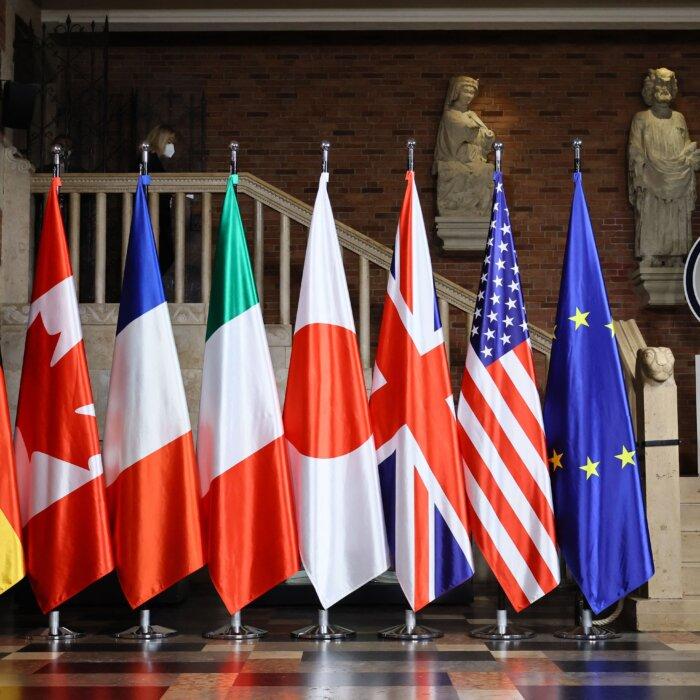
The study was released in May 2026, ahead of the summit of the G7 group of leading industrial nations, which runs in Évian, France, from June 15 to June 17.
It examines how the Chinese Communist Party (CCP) operates through its United Front Work Department, which the authors describe as a central, long-standing instrument of political influence.
Information Deficit
In comments to The Epoch Times, Marie Lamensch, who coauthored the report with Kyle Matthews, said gathering reliable information was “a challenge.”“The academic, institutional, and media spheres seem to show little interest in the issue of foreign interference” when it comes to China, she said, contrasting this with the attention given to Russia.
“This is particularly true in France, Germany, and Italy,” she said.

In France, Lamensch said, the activity was carried out by a limited number of people, not on a regular basis, and “not in a very public manner.”
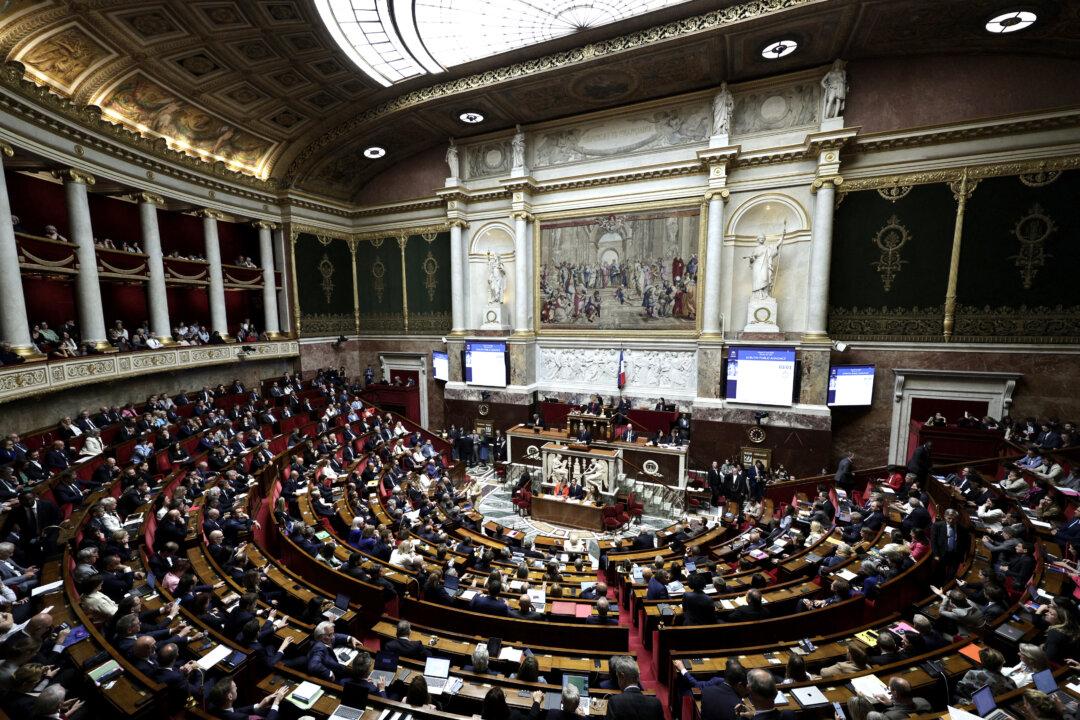
André Gattolin, a former French senator interviewed for the report, told The Epoch Times that counterinterference resources are thin, citing a French intelligence unit on China of roughly 10 people that he called “derisory” next to the staff devoted to counterterrorism.
For Germany, “there is a genuine fear of economic repercussions,” Lamensch said, which she attributed to “its long-standing commercial ties with China.”
“In Italy, the situation stems both from concerns about potential retaliation and from a shortage of specialists within universities and government institutions,” she said. “There is no dedicated China office, which is rather surprising.”
Gattolin pointed to further obstacles.
“Those who work on China are afraid of no longer being able to go there, and that is an instrument of pressure,” he said.
Language is another barrier.
“The CCP writes a great deal, and many official documents set out its positions plainly, but people do not go to the sources,” he said.
A final difficulty is political.
“It is above all a reluctance on the part of governments, which see the short-term interest in cooperating with China, or at least in not angering it,” Gattolin said.
Elites and Access
Gattolin confirmed that elite co-option is among the most effective levers. He pointed to a framework analysts call MICE (money, ideology, compromise, and ego). Former officials keep valuable networks long after leaving office, he said, and the CCP can secure their goodwill cheaply.“These are relays that China buys at a low price: a few big trips, some well-paid conferences,” Gattolin said. “The cost-benefit ratio is, for them, extremely advantageous.”
Such figures, he noted, have “made the appointments and careers of hundreds of people in the administration,” giving Beijing access to operational levels that are rarely visible.
The report’s French examples follow that pattern. One former prime minister received China’s Friendship Medal in 2019 and was questioned by the General Directorate for Internal Security, France’s domestic intelligence service, over his frequent Chinese contacts, yet was given a new official mission on China by French President Emmanuel Macron in 2025.
Another former premier, who later headed the Constitutional Council, France’s highest constitutional authority, traveled to China repeatedly and met Chinese Foreign Minister Wang Yi in 2024.
Gattolin argued that Beijing places little faith in elections themselves.
“It does not believe in democratic elections, and an election won is lost again five years later anyway,” he said.
An Ideological Draw
Ideological affinity offers another opening. For France, the report points to Jean-Luc Mélenchon, leader of the far-left party France Unbowed (LFI), whose anti-Americanism and support for the “One China” policy have at times aligned with Beijing and drawn approval from the Chinese Embassy in Paris.LFI is the dominant force on the French left, and with a little more than a year remaining before the 2027 presidential election, Mélenchon is widely regarded as a potential contender capable of reaching the second-round runoff.
The party’s worldview also surfaces in its ties to the American left. Its leader is in touch with U.S. Sen. Bernie Sanders (I-Vt.). Manon Aubry, an LFI member of the European Parliament, traveled to New York City in late 2025 to campaign for democratic socialist Zohran Mamdani’s ultimately successful mayoral run.
Emma Fourreau, another LFI lawmaker, went to Cuba in March 2026 in support of a flotilla to break the U.S. embargo on that country and denounce the Trump administration.
After a trip to Beijing in 2025, Aurélien Taché, a lawmaker from LFI, wrote on X that faced with “[U.S. President Donald] Trump-style imperialism,” France should “strengthen its partnership with China,” a country he described as committed to peace, multilateralism, and “environmental pacifism.” He later wrote that “Taiwan is Chinese” during a flare-up between Japan and China over Taiwan.
Germany—Dependence as Leverage
Germany, China’s largest trading partner since 2015, sits at the center of Beijing’s European strategy, and the Montreal Institute report describes influence that runs through the country’s political mainstream.It singles out party-to-party relations as a central channel, naming the major German parties—including former Chancellor Angela Merkel’s Christian Democratic Union/Christian Social Union and the Social Democratic Party of Germany—as among Beijing’s closest European partners.
Under Merkel, German policy followed the doctrine of “Wandel durch Handel,” or “change through trade,” which assumed that commerce would encourage political liberalization. The report calls that assumption flawed but states that it left a legacy of deep economic exposure that still shapes political behavior.
The economic ties translate into quiet pressure. The report cites research identifying 54 German business associations and trade bodies with links to the united front system, and notes that firms in the automotive, chemical, and machinery sectors have faced retaliation or threats over sensitive issues such as Taiwan and the Xinjiang region, encouraging self-censorship.
Influence also operates through elite forums and local government. The report describes China-Brücke, an opaque dialogue platform set up in 2019 by a Bundestag vice president under Merkel. It publishes only its board members, while keeping its wider membership undisclosed.
Germany’s 2023 China strategy now describes the country as a partner, competitor, and systemic rival, and in 2025 the Bundestag created an expert commission, backed by the Christian Democratic Union/Christian Social Union and the Social Democratic Party of Germany, to review economic dependence on China each year.
Italy—Institutional Gaps
Italy is home to a large Chinese diaspora and was the only G7 country to join China’s Belt and Road Initiative, signing on in 2019 before withdrawing under Prime Minister Giorgia Meloni.Antonio Tajani, Italy’s foreign minister, said the pact had produced no measurable economic benefits for Italy.
Italy’s information space is an additional factor. The report documents content-sharing arrangements with Chinese state media, including a partnership between Chinese state media outlet Xinhua and Italian news agency ANSA that supplied free, overwhelmingly positive material until ANSA ended the partnership over intelligence concerns.
Agreements with the public broadcaster RAI and with Mediaset, the private group owned by the Berlusconi family, remain. The report states that in academia, structural self-censorship is driven by fear of losing Chinese funding, with sponsorships from firms such as Huawei and ZTE.
The deeper problem, the report states, is institutional. Italy is the only G7 country without a national security council, has no foreign agent registration system, and offers little transparency over locally funded travel and hospitality, conditions that favor informal united front engagement.
Influence at Local Levels
The local level recurs throughout the report. Bütikofer told the authors that the greatest weakness across G7 democracies is subnational: city twinning, port investments, and cultural projects that escape national scrutiny.“In a highly decentralized country such as Italy, and even more so in a federal state like Germany, national intelligence services often struggle to monitor what is happening at the local level,” Gattolin said.
“This is a shrewd way of weaving a network of economic, academic, and political influence in areas deemed strategic while remaining below the radar, since it does not involve high-profile figures or decisions made by the central government.”
Gattolin framed the wider objective in starker terms.
Call for Coordination
The report describes the threat from China as “a strong, deliberate, massive, and systemic strategy” toward the G7, in Gattolin’s words, and concludes that national responses remain fragmented and reactive.It calls for a coordinated G7 approach: a permanent task force on foreign interference, a shared registry of united front-linked organizations, stronger research security, and joint protection for diaspora communities.
The authors warn that as some G7 states recalibrate economic ties amid shifting transatlantic dynamics, interference concerns risk being set aside in favor of trade.