The Carney Liberals’ desire to establish closer relations with Beijing resembles that of the Trudeau government after it came into power in 2015. But how does the situation compare in form a decade later, after the world and the bilateral relationship between the two countries have undergone key changes?
The presence of U.S. President Donald Trump in the White House, and Canada’s trade pact with the United States, made the possibility of Canada pursuing free trade with China, as former Prime Minister Justin Trudeau had attempted, a non-starter. But alternatively, Trump’s policies are cited by Ottawa as justification for its pursuit of deeper ties with Beijing.
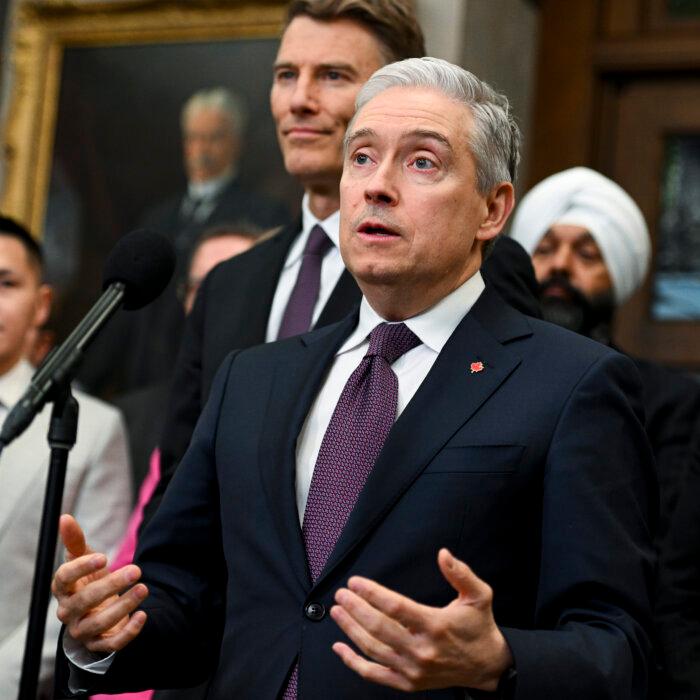
Most recently on the China file, Finance Minister François-Philippe Champagne led a delegation of top Canadian financial officials on a China visit last week to boost closer economic links with the Chinese communist regime.
Prime Minister Mark Carney started the process to re-engage with China early in his mandate as a means to diversify trade amid U.S. tariffs on Canada, but his stated starting point is different than Trudeau’s in 2015.
Trudeau’s efforts to deepen ties hit a wall in late 2018 when Beijing arbitrarily detained two Canadians during the Meng Wanzhou affair, in retaliation against Canada for arresting the Huawei executive to comply with a U.S. extradition request. In subsequent years, Ottawa changed its approach and put in place various safeguards to protect Canada against Chinese spying, economic encroachment, and research theft.
Awareness of Beijing’s meddling in Canada’s democracy also increased with the holding of a public inquiry into foreign interference following extensive media reports about China’s interference efforts.
In this global context, Carney may not be planning to go as far as Trudeau had planned to with China, such as crafting a free trade deal or signing an extradition treaty. He is, however, laying the groundwork for an expanded relationship apart from trade with a secret agreement on law enforcement cooperation between the two countries.
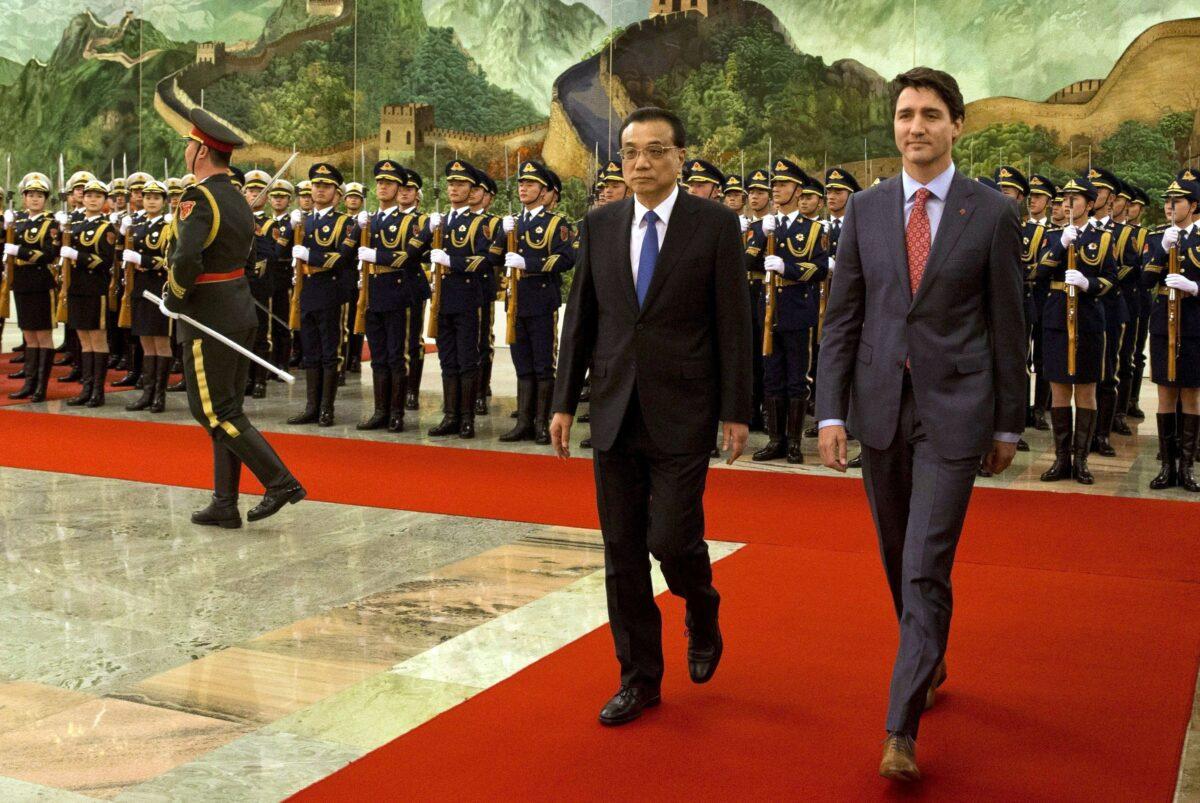
Trudeau’s public comments on China before taking office were positive, such as declaring a “level of admiration” for its “basic dictatorship” in 2013, but his tone changed following the Meng affair. In 2020 he accused China of “coercive diplomacy” and shelved the idea of pursuing free trade.
Meanwhile, Carney’s initial comments on the issue of China sent mixed signals as to how he would deal with the regime.
Increasing Engagement
While noting security threats and geopolitical risks from the Chinese regime, Carney’s public criticism has been more directed at Trump’s America. The prime minister’s January speech in Davos, Switzerland, was widely seen as a swipe against Trump’s policies, while it also touted Canada’s response, which includes establishing a new strategic partnership with China.Carney made the speech a few days after visiting Beijing and meeting with Chinese leaders. During a meeting with the Chinese premier, he said the progress made in the relationship “sets us up well for the new world order.”
The visit was the culmination of several ministerial meetings with Chinese officials in previous months.
Trudeau visited again in 2017, and over the span of that year and the following one, a total of 21 visits were made by Canadian ministers.
The increased engagement from the Trudeau Liberals ground to a halt after Canada executed a U.S. extradition warrant in late 2018 against Huawei founder’s daughter Meng Wanzhou. In apparent retaliation, Beijing arbitrarily detained Canadians Michael Kovrig and Michael Spavor for more than 1,000 days.
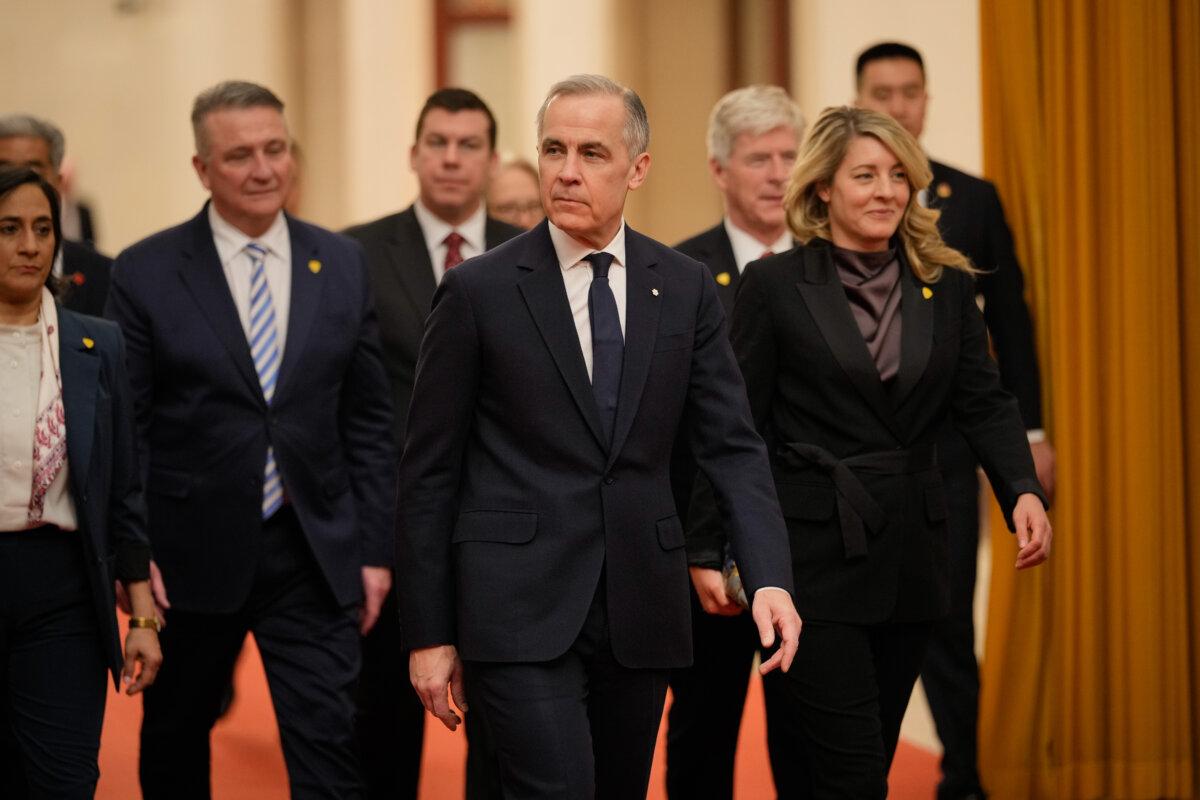
The pace has increased under Carney, with several ministerial visits starting in late 2025. The most recent one was Minister Champagne’s last week.
Boosting Trade
Ottawa is hoping to boost trade with Beijing by first establishing stronger ties in the financial sector. A similar objective around financial services had been stated following Trudeau’s 2016 visit.Under the terms of the United States-Mexico-Canada Agreement (USMCA), which replaced NAFTA and came into force in 2020, parties cannot enter free trade agreements with non-market economies without prior notification of other signatories. A review of the USMCA is set for July.
Carney has acknowledged that the USCMA prevents Ottawa from engaging in a free-trade deal with China, and has said his government follows the rules.
In any case, any kind of trade deal with China would likely not shield Canada from economic actions Beijing can take to punish or compel trading partners.
In 2018, a few months after Canada executed the U.S. warrant for Meng, China blocked the import of canola seeds from two major Canadian producers, alleging the detection of pests. The ban was lifted in 2022. China also briefly blocked shipments of Canadian beef and pork in 2019.
Canada’s trade deficit with China has steadily increased, going from around $20 billion in the early 2000s to $57 billion in 2024.
Lowering Tariffs
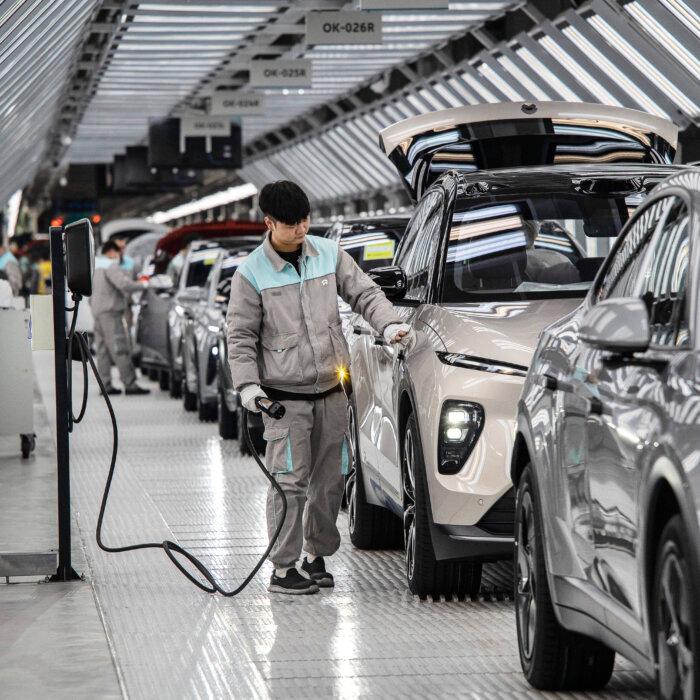
China dropped or reduced some of its tariffs on Canada in recent weeks, following Carney’s visit to Beijing and a deal made to allow up to 49,000 Chinese electric vehicles into the country at the “most-favoured nation” rate of 6.1 percent. Vehicles outside the quota face a 100 percent tariff since Ottawa applied the surtax in October 2024, a move which mirrored Washington’s.The debate around the arrival of Chinese electric vehicles (EVs) initially centred on their impacts on Canadian auto jobs and the security risks posed by the sensor-laden cars. Another aspect, tied to human rights, came into focus in late March during a House of Commons committee meeting on federal EV policies.
Liberal MP Michael Ma appeared to dismiss the existence of forced labour in China, as an expert witness discussed the presence of forced labour in EV parts made in China.
Opposition MPs, China experts, and human rights advocates have raised other concerns about the new strategic partnership pursued by Ottawa.
Similar to the early Trudeau years, the Canadian government is pursuing increased cooperation with Chinese law enforcement.