The new Liberal government signalled this summer that changes were afoot in how it manages relationships in Asia, and this has materialized more recently in a significant way, as Ottawa pursues “pragmatic” policies.
In short, sizeable contentious issues are being fenced off in order to benefit from the economic opportunities offered by the world’s two most populous countries: China and India.
Canada’s relations with the two countries crashed in recent years, due to key incidents and both of them being seen by Ottawa as a source of foreign interference and transnational repression.
The government of Prime Minister Mark Carney is not letting these concerns impact a diplomatic reset, as it aggressively seeks to boost foreign trade to diversify away from the United States.
Meetings at the highest level have relaunched the relationships. Carney met with his Indian counterpart Narendra Modi in Canada in June, and with Chinese leader Xi Jinping in South Korea on Oct. 31.
Carney has yet to travel to India but has accepted an invitation from Xi to visit China.
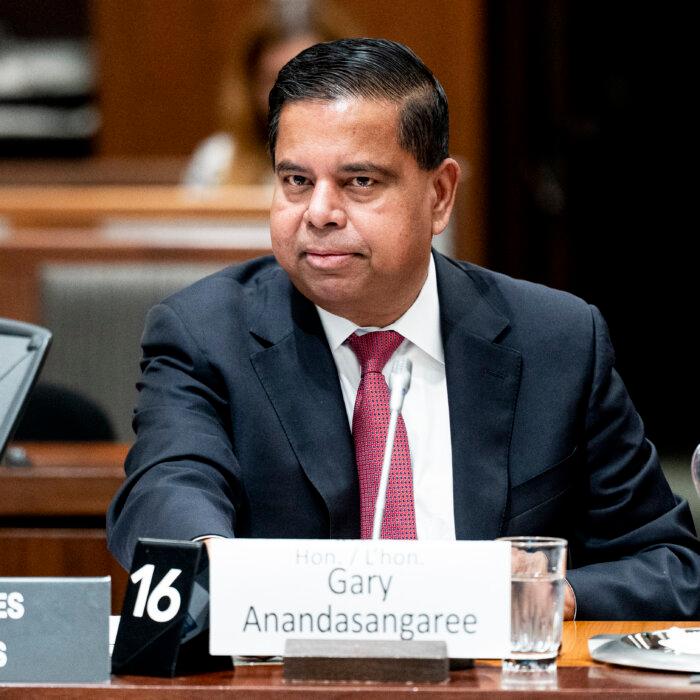
“We must be nuanced in our diplomacy,” she told The Canadian Press in an interview after her trip. “We must stress our concerns relating to security and public safety on the one hand, and we must seek to build additional supply chains on the other. That is pragmatism.”
This re-engagement strategy focused on boosting trade in Asia is in the process of being drafted into formal government policy, Anand said in late October.
“What I’m saying to the department now is we need to update that Indo-Pacific strategy. It is not reflective of our economic ambitions in the region,” Anand said during an event held by the Canada 2020 think tank. The minister said access to Asian markets must translate into economic gains for Canada.
The Indo-Pacific Strategy was written after a breakdown in relations with China occurred in late 2018, when Canada executed a U.S. extradition warrant for Huawei executive Meng Wanzhou. China detained Canadians Michael Kovrig and Michael Spavor for more than 1,000 days in apparent retaliation.
The strategy calls China an “increasingly disruptive global power” that disregards international rules and whose values “increasingly depart from ours.”
Carney’s Vision
After his meeting with Xi Jinping in South Korea, Carney was asked by reporters whether he agrees with Canada’s existing Indo-Pacific Strategy’s statement that China is disruptive.He responded that there are different aspects of disruption, including in terms of China having market dominance in some areas like critical minerals or having overcapacity in steel production.
“That disruption that comes from China brings also opportunity,” he said, pointing to Canada’s wealth in critical minerals.
Carney added that his government is “clear-eyed” about issues in the Indo-Pacific. “From a geo-strategic perspective, we have pragmatic engagement with China, pragmatic engagement with China,” he said. “There are areas where we will engage and cooperate, and there’s others where, again, in a relationship, we can establish an ability to make our views known directly to them.”
On areas of cooperation, like the previous Liberal government, Carney is looking to work with China on areas like climate change and net-zero initiatives.
After his meeting with Xi, he steered clear of signalling his intention regarding Ottawa’s 100 percent tariff on Chinese electric vehicles, which has been met by retaliation against Canada’s agricultural and seafood sectors.
Meanwhile, areas like cyber cooperation is a “different issue,” Carney said, adding Canada has to be “clear” on where the Chinese are.
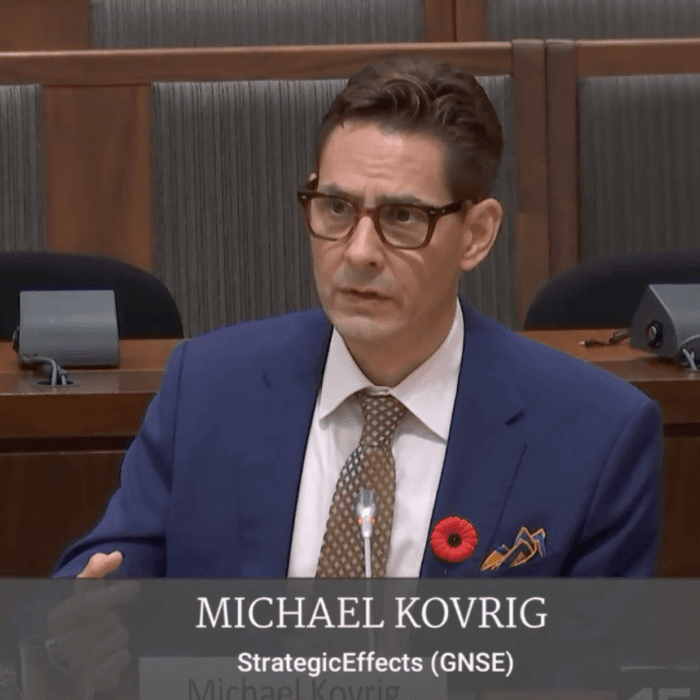
Michael Kovrig, the former Canadian diplomat detained for nearly three years in China, has warned in recent weeks about the risks of putting China at the core of Canada’s trade diversification strategy and of focusing on climate issues as a way to find common ground.
Change of Tone
Carney’s weighted words to describe China and its actions, along with Anand calling the relationship a “strategic partnership,” have now replaced his previous tone.At the time of the election campaign and shortly after, Carney had made several comments critical of China.
Carney did not close the door entirely, however, as he pointed out that Canada does a significant amount of trade with China. “But we have to be very careful, very deliberate, and they need to meet Canadian standards.”
After winning the election, Carney met with U.S. President Donald Trump at the White House in May and called him a “transformational” leader. Later, when asked by reporters in what positive way Trump has been transformational, Carney pointed to his approach toward China.
Military Moves
Carney’s government has not signalled a similar military intention, nor would it have the capacity, but it is significantly increasing defence expenditures to grow and re-arm the Canadian Armed Forces.The Philippines and other Southeast Asian countries have been involved in long-standing territorial disputes with China in the South China Sea. One recent incident in October involved a Chinese coast guard ship ramming a Philippine government vessel near Thitu Island, part of the Spratly Islands, which are disputed among several Southeast Asian states.
Critical Minerals
The Indo-Pacific Strategy also highlights the importance of critical minerals and the role Canada can play in supplying Asian partners such as Japan and South Korea.China has been a dominant producer of rare-earth minerals used to manufacture communications and defence equipment, and it has leveraged this asset in its trade conflict with the United States by threatening to shut off supply.
In a bid to reduce this dependency, Ottawa has expressed interest in recent years in developing and increasing Canada’s capacity to mine and process the minerals, and the Carney Liberals have taken additional steps in recent months.