Increasing the pay for soldiers and repairing existing Canadian Armed Forces equipment are some of the measures being planned to reach the target.
Carney announced on June 9 that Canada will spend 2 percent of its gross domestic product on defence this year, beating his initial campaign pledge to meet the target by 2030. This is also seven years earlier than his predecessor, former Prime Minister Justin Trudeau, had initially planned.
A single NATO country, Poland, currently exceeds 3.5 percent, while nine members of the alliance are below 2 percent.
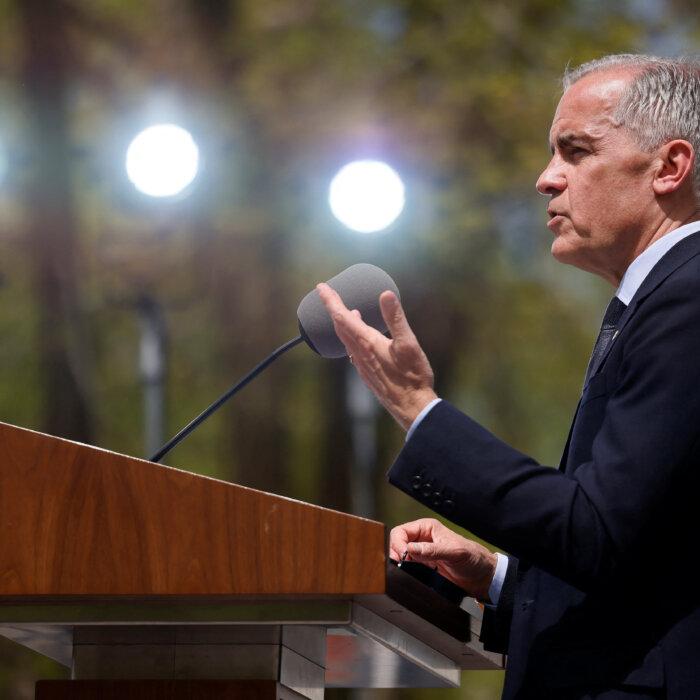
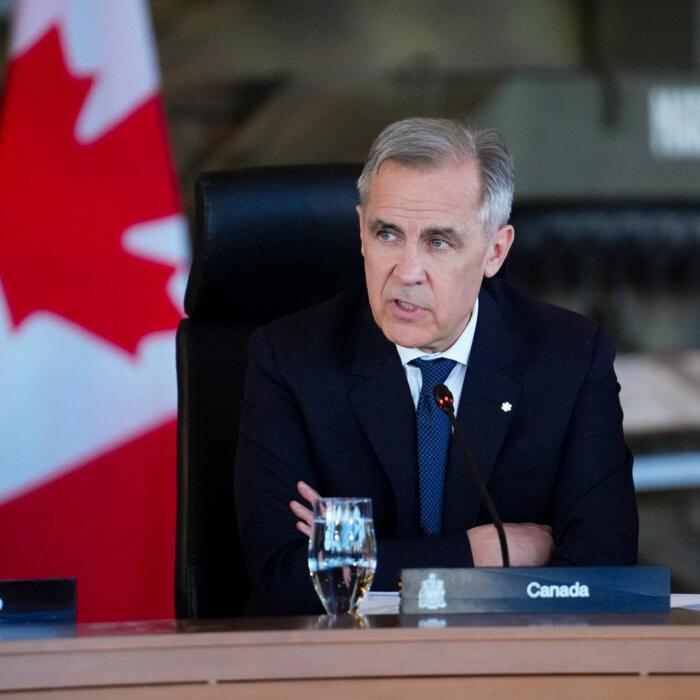
Carney’s plan to spend an additional $9 billion on defence in fiscal 2025–2026 will meet NATO’s 2 percent target.
“Our fundamental goal in all of this is to protect Canadians, not to satisfy NATO accountants,” he said during the June 9 announcement in Toronto.
Carney told reporters later that day his government will table supplementary estimates outlining how the money will be spent on defence.
The largest spending falls under the “foundational investments” theme, which includes measures to recruit and retain military personnel. DND says $2.6 billion will be spent to reach the Canadian Armed Forces (CAF) authorized strength of 101,500 members by 2030, noting a current shortfall of 13,000.
This would include increasing the salaries of CAF members and boosting the defence civilian workforce to free up military personnel to focus on operational requirements.
Repair and Maintenance
Other spending under the “foundational investments” theme includes $844 million to repair and maintain CAF equipment and infrastructure.DND’s year-end report said that none of the CAF fleets in the land, maritime, and aerospace domains had a serviceability rate higher than 50 percent for fiscal 2023–2024 to meet the requirements for training and military readiness.
Carney said Canada doesn’t currently have the necessary parts for repair, adding that CAF assets for “far too long have been allowed to degrade.”
The last item also considered “foundational” includes a $560 million envelope to help DND and CAF upgrade their information technology. More specifically, this would include defending against cyber threats and leveraging data for decision-making. Some of those funds would go to the electronic spying agency, the Communications Security Establishment, which falls under the DND portfolio.
The Liberal government’s plan also includes spending $1 billion to expand and enhance what DND calls “emerging military capabilities,” in a bid to defend the nation, and “especially” the Arctic.
Another $4.1 billion in the new spending plan is earmarked to strengthen Ottawa’s relationship with Canada’s defence industry, which includes launching a defence industrial strategy. There is also a stated intent to diversify Canada’s defence partnership “beyond the United States.”
Carney repeated his intention on June 9 to have Canada join the European rearmament plan, saying that “close discussions” are taking place on that topic.
How to Fund
Carney was asked by reporters if “creative accounting” would be used to fund his $9 billion plan. He replied in the negative. The prime minister also said new taxes would not be implemented to pay for the new defence expenditures.Carney’s announcement comes days before he will welcome G7 leaders to Alberta for a summit. U.S. President Donald Trump, who has long criticized some NATO allies for not pulling their weight in the alliance, will be in attendance.
Carney said the United States is a “fundamental ally” to Canada and that his announcement on defence spending is “very complementary to the process of developing that new economic and security partnership with the Americans.”
Canada will also participate in the NATO summit later this month in The Hague, Netherlands.
NATO defence ministers met last week in Brussels, and the alliance said in a statement it is expected that a new spending guideline raising the bar significantly will be adopted.
Carney told reporters he’s “very comfortable” with the proposal to spend 1.5 percent of GDP on defence and security-related investments, which he described as a “defence industrial pledge.”
“We feel very confident that we are in the zone of already beating that requirement,” he said.
Canada did not have a plan to reach the 2 percent target at this time last year, even after releasing its updated defence policy in April 2024. Under pressure to increase defence spending, Trudeau announced at the July 2024 NATO summit in Washington the target would be reached in 2032.