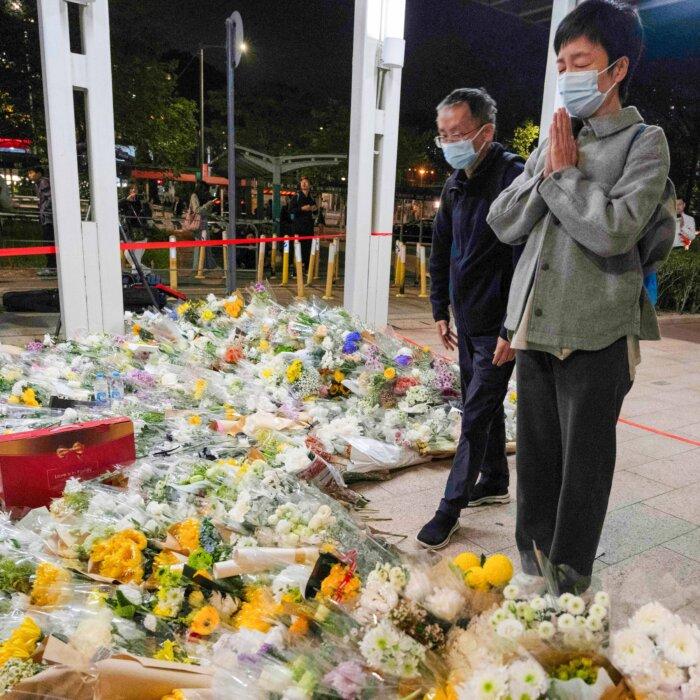
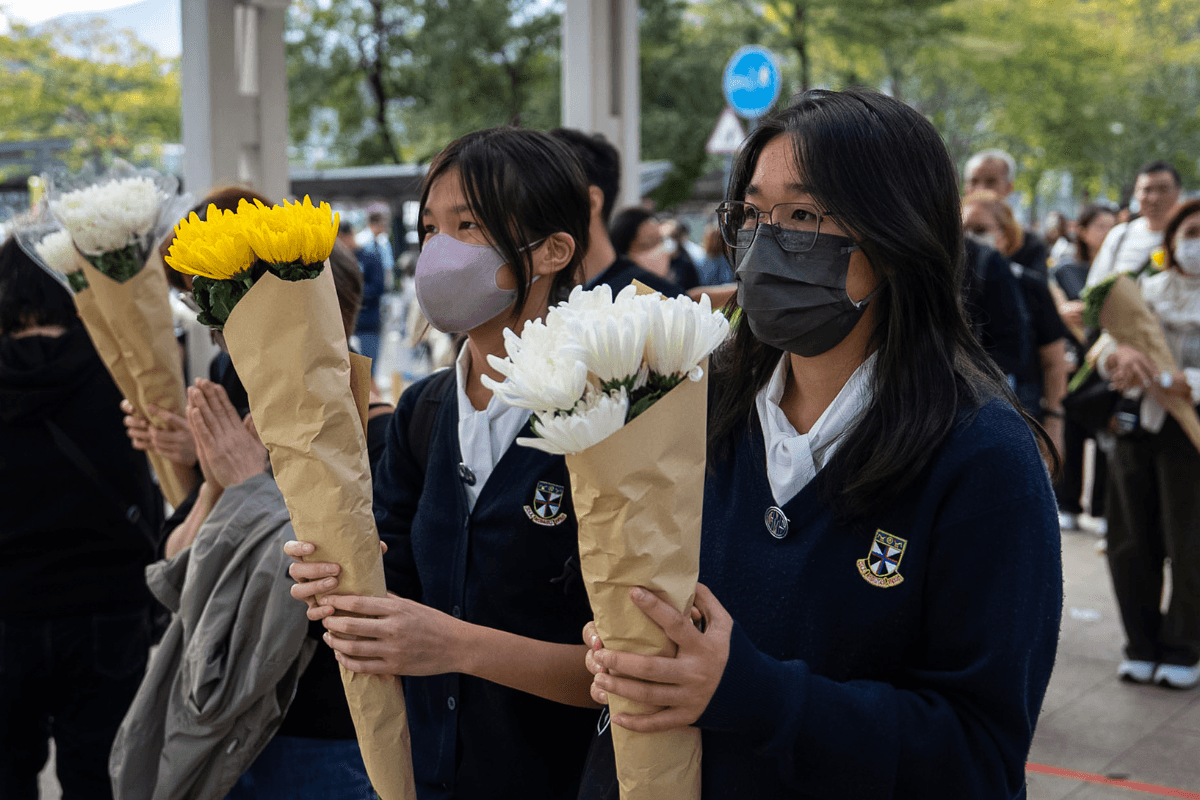
The official death toll for the fire that engulfed an apartment complex in Hong Kong rose to 151 on Dec. 1, with authorities confirming 13 people had been arrested for manslaughter in relation to the blaze.
More than 40 people are still missing.
They added that a large number of computers and documents had been seized from the suspects’ offices and homes.

Officials overseeing the investigation said that tests on several samples of a green mesh that was wrapped around bamboo scaffolding on the buildings at the time of the fire did not meet fire retardant standards.
They also said that foam insulation used by contractors had fanned the flames. Fire alarms at the complex were also not working properly, authorities said.
The fire began on Nov. 26 and engulfed seven of the eight towers, sending flames and smoke billowing out of windows. By the early hours of Nov. 28, local time, the fire was mostly contained.
Warning From Beijing
Work on 28 other building projects by the same contractor—Prestige Construction & Engineering Co. (PC&E)—has been immediately suspended amid safety audits, Hong Kong officials announced late on Nov. 29.“The five alarm fire at Wang Fuk Court, Tai Po, exposed serious deficiencies of PC&E in site safety management, including the extensive use of foam boards to block up windows during building repairs,” the government said in a statement.
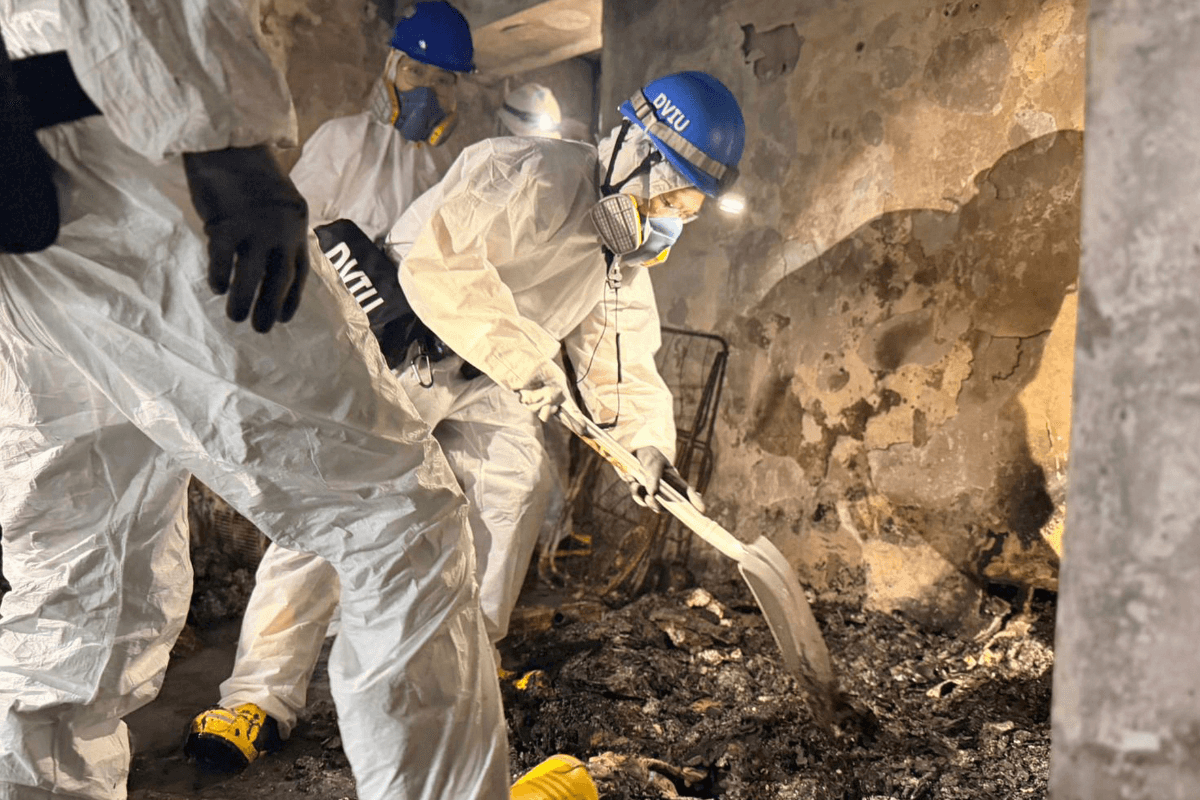
Multiple petitions have surfaced in recent days demanding a full investigation of what transpired and triggered the massive fire.
China’s national security authority issued a warning on Nov. 29, threatening to take a “hard stance” against any “disruptive” actions resulting from the disaster.
According to multiple local media outlets, university student Miles Kwan was questioned by the Hong Kong Police National Security Department and later arrested after he started an online petition calling for an independent investigation into the fire.
Kwan’s petition laid out four demands: secure housing for survivors, establish an independent inquiry, review construction-safety oversight, and hold government officials accountable for regulatory failures.