Dr. Brian Day of Vancouver fought for 14 years through the court system to expand private health-care options in British Columbia, only to ultimately fail at the Supreme Court of Canada.
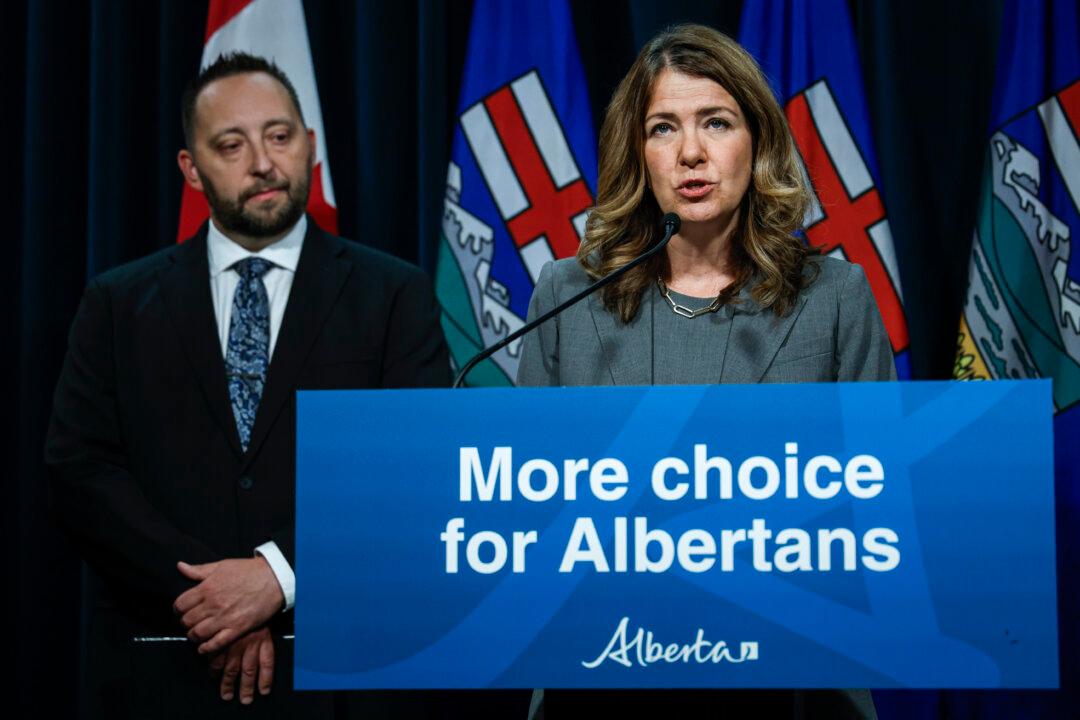
But what Day championed is now on the cusp of achieving partial success in Alberta, where the provincial government recently put forward a proposal to allow surgeons to perform privately paid elective surgeries outside their regular hours in the public system.
“It’s certainly a good start. It needs another step. That is to legalize private insurance coverage for all services,” Day told The Epoch Times.
“Canada is unique on the planet Earth in making such insurance illegal. Extended health insurers [private companies] already cover 70 percent of Canadians for such essential services as medications, ambulances, physio, and dentistry, etc. They should be able to extend that coverage to so-called ‘medically necessary’ services.”
Health Care in Alberta
Alberta has among the longest wait times for surgery in Canada, averaging more than 38 weeks in 2024. A September report by the SecondStreet.org think tank found that between April and July of this year, 81,848 Albertans were on the waiting list for surgery, 174,022 were waiting to receive a diagnostic test, and 256,019 were waiting for an appointment with a specialist.

“It is undoubtedly a positive thing for Alberta patients” he said.
“Not necessarily good for our Cambie Surgery Centre,” he added. “I recently operated on five Albertans at Cambie. They will now be able to exercise that choice in their home province.”
Day, 78, said the steps being taken by Alberta might have persuaded him to open up in that province if he was at a different stage in his life. “If I were younger, I might have considered that,” he said.
Alberta’s opposition NDP says Bill 11 counters the Canada Health Act. The legislation outlines a certain set of criteria for provinces to qualify for further federal funding for health care, and a key part of it is the distinction between medically necessary and elective procedures.
According to Day, “one has to understand that in Canada the term ‘elective surgery’ is used to include life-threatening diseases such as cancers, heart surgery, and brain surgery.”
“The only truly elective surgery is cosmetic surgery,” he notes.
The goal is to let physicians “treat more patients” by offering private options, including clinics “operating on evenings and weekends,” the province says.

Wait Times
Alberta’s new plan has been criticized by the provincial NDP, who say that allowing doctors to perform private elective surgeries outside their public health-care hours is a step toward a privatized, two-tier health-care system.Alberta’s UCP government says the changes will lessen wait times for residents while not increasing costs for taxpayers, something Day said he agrees with.
“Over 300,000 Canadians currently go to the U.S. for care each year,” he said. “If Albertans stay home and get treatment, the economy benefits from spending at home, and—unlike public hospitals—the private centres pay taxes.”
However, Day said that making a dent in current wait times in Alberta will take time due to the “massive pent-up demand.”
Data released in July by the B.C. Ministry of Health showed that, last year alone, some 142,000 people in B.C. who went to the emergency department in hospitals left without receiving medical care. The report also found that emergency department walk-outs on Vancouver Island went up by about 160 percent between 2018 and 2024.

Private Health Care Criticisms
The Canadian Medical Association has said that Alberta’s changes would actually decrease access to health care and increase wait times, pointing to Quebec as an example.Day disagrees with this assessment, saying that Quebec’s situation does not have a bearing on what Alberta is endeavouring to pursue.
“The analogy is meaningless, since Quebec did not introduce or allow private insurance, as ordered by the Supreme Court of Canada in 2005, nor did it allow doctors to work in both public and private sectors,” Day said.
Day’s case invoked the Canadian Charter of Rights and Freedoms, while the case of Quebec family doctor Jacques Chaoulli mainly referenced Quebec’s own charter. As a result, Day required a majority of the Supreme Court of Canada to find the Charter had been violated, but the court refused Day’s appeal and allowed his lower B.C. court losses to stand. A victory for Day would have reshaped the national constitutional right to purchase private insurance, as opposed to the Chaoulli ruling, which led to no national consequences and applied only in Quebec.

Past Dismissal
The Cambie Surgeries 2009 case challenged parts of B.C.’s Medicare Protection Act. Day argued against a ban on buying private insurance for services insured under the province’s health-care system.Cambie also argued in favour of allowing medical practitioners to practise both inside and outside the public system, in addition to allowing private doctors to charge amounts higher than those that would be paid back under the provincial health insurance reimbursement.
The Supreme Court’s dismissal of Day’s final appeal in the spring of 2023 was described by him at the time as “a very sad day for Canadians.”
“Wealthy Canadians have always gone down to the United States [for care], but where do middle income and lower income Canadians go? The answer is they’re not allowed to go anywhere. They stay and suffer and die on wait lists,” Day said at the time.
B.C.’s then-Minister of Health Adrian Dix applauded the Supreme Court’s dismissal of Day’s appeal, saying the decision upheld the principles of universal health care.
“It sends a strong message that our nation’s highest court supports the principles of universal health care, where access ... is determined by a patient’s needs, not their ability to pay,” Dix said.

Universal Health Care
Canada’s universal health-care system traces back to former Saskatchewan Premier Tommy Douglas, whose democratic socialist government formed the first universal hospital system in 1947, growing it into a complete medical insurance coverage system for Saskatchewanians by 1962.Ottawa followed suit, giving cost-sharing payouts to provinces who gave public health care after the 1966 passage of the Medical Care Act, leading all provinces to sign on by 1972.
This was followed by the 1984 passage of the Canada Health Act, which established the backbone of Canada’s current medicare system.
Day says the concept of a just universal health-care system in Canada is a “fantasy.”
The study concluded that “income-related differences in mortality fell substantially after the advent of universal health care. However social inequities still persist for a variety of health outcomes, including mortality from coronary heart disease and other causes.”
Day said the allegation that public health care is a protection for the poor is undermined by various nations that subsidize private health care for lower-income groups.
“Government subsidies of insurance premiums eliminate any allegation that the rich will benefit at the expense of the poor,” he said. “In Switzerland, Holland, and many other wealthy countries with universal care, the government pays or subsidizes the premiums for low-income groups.”
Day said his position is further bolstered by the enormous benefits of detecting and treating serious illness earlier, both when it comes to patient health outcomes and cost.
“Evidence is unequivocal that it is far less expensive to treat sick patients early than late. Just one example is breast cancer. With early detection and treatment (stage 1) total cost is $35,000. Delay until stage 4 – cost is $350,000!” he wrote in an email.

Day’s Solutions
Day outlined a seven-point plan he believes would greatly improve and fix Canadian health care.Specifically, Day calls for ending Canada’s block-funding model for hospitals, meaning hospitals would be funded based on how many people they treat. He also advocates for the government to issue a “care guarantee” for patients to receive necessary treatment within advisable maximum wait times, and pay for treatment elsewhere if the time is exceeded.
Additionally, he wants to cut the size of Canada’s health bureaucracy, reallocating more funds to front-line care and allowing the formation of a hybrid health-care system that allows the option of private health insurance similar to the model used in the Netherlands and Switzerland.
Under Day’s proposal, low-income individuals would receive government subsidies to access private coverage if needed.
Day also advocates for the expansion of spaces within medical schools and nursing programs, as well as the re-establishment of private medical training programs to entice Canadian medical professionals who have relocated overseas. In addition, he proposes that public hospitals be used during evenings and weekends for privately paying individuals, with the revenue generated being reinvested into the public system.