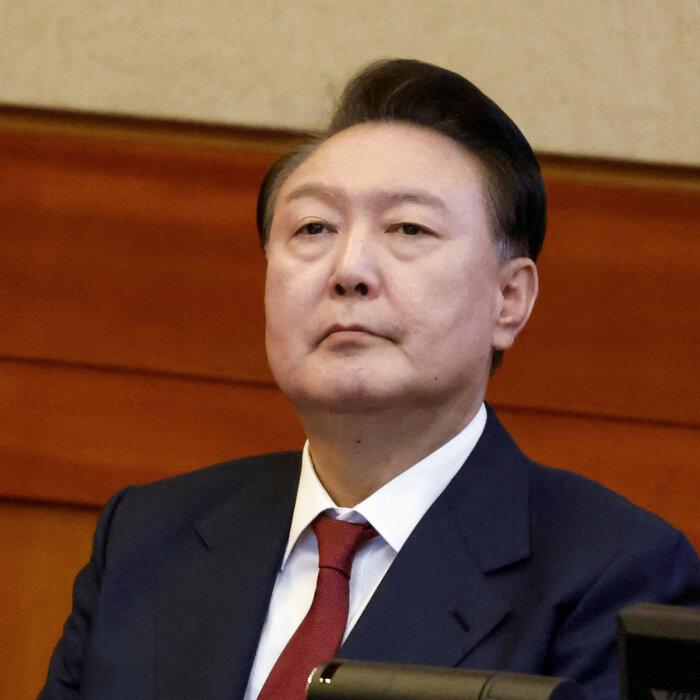
Former South Korean President Yoon Suk Yeol attended a court hearing on July 9 to review a special prosecutor’s request to arrest and detain him, as part of an investigation into his short-lived declaration of martial law last year.
Seoul Central District Court began hearing arguments from the special counsel team, led by special prosecutor Cho Eun-suk. Cho is pursuing additional charges against Yoon in connection with his Dec. 3, 2024, decree, including allegations of abuse of power, obstruction of official duties, and falsification of official documents.
Cho’s team said it is applying for detention because the former president poses a threat to destroy evidence; however, Yoon’s lawyers said the request is excessive and made without evidence.
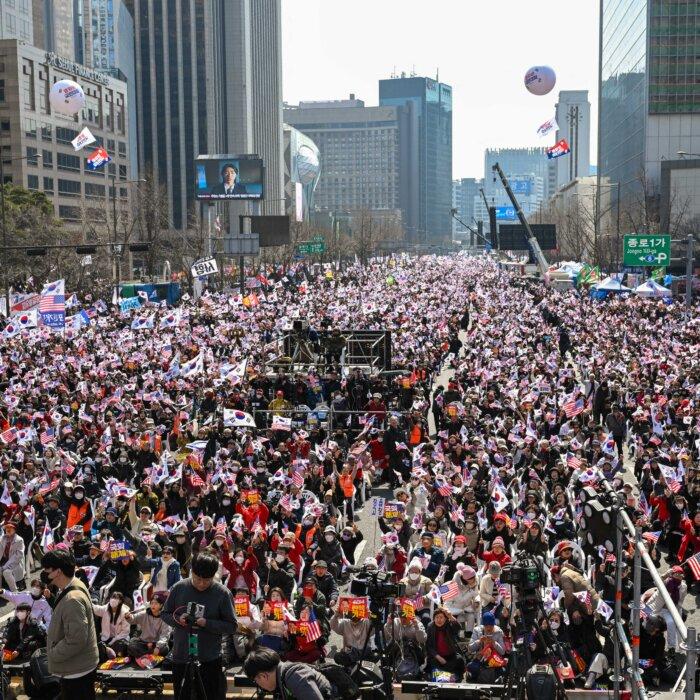
Yoon arrived at court in a dark navy suit and red tie and did not answer questions from reporters when he entered the building. Around 100 people had gathered at the courthouse to offer their support to the former president, chanting “Yoon Again” and “President Yoon.”
The special prosecutor said Yoon will await the court’s decision—which is expected to be made by the evening of July 9 or early July 10—at Seoul Detention Center, approximately 12 miles away.
If the court sides with the special counsel, the former president is expected to remain at that facility.
Impeached
Yoon, then representing the conservative People Power Party, came to power in March 2022 and governed until he was ousted from his post in April 2025, after the Constitutional Court upheld his impeachment, which was sparked by his declaration of martial law.He is already facing charges of insurrection—which is punishable by life imprisonment or the death penalty—and is also accused of unlawfully deploying security forces to block an initial attempt to arrest him in early January.
Authorities were eventually able to arrest and detain the former president later in January. However, after 52 days, he was released in March after the Seoul Central District Court overturned the arrest on technical grounds.
Martial Law
When he invoked martial law, Yoon said leaders in the liberal opposition Democratic Party of Korea were sympathizing with communist North Korea and were engaging in “anti-state activities plotting rebellion.”Troops were then deployed outside of the National Assembly, South Korea’s parliament.
Yoon was then impeached on Dec. 14, 2024, and indicted by public prosecutors on Jan. 26, 2025, who accused him of orchestrating a rebellion.
The opposition had said that Yoon attempted to arrest assembly members by deploying the military in a bid to allegedly disrupt the democratic process and undermine the authority of the country’s legislature.
South Korea’s last military coup was in 1980, and the country has had a democratic government since 1987.
Under the country’s constitution, presidents have wide-ranging immunity from prosecution, except for the charge of insurrection.
However, there has not been an execution in South Korea since 1997, and in 1998, then-President Kim Dae-jung introduced a moratorium on executions.