Former Bulgarian President Rumen Radev, who has expressed Eurosceptic views and wants a thawing of relations between Europe and Russia, has won the Bulgarian parliamentary election, according to official results from the Central Election Commission (CEC) released on April 20.
The CEC stated that with 100 percent of the votes counted from April 19’s parliamentary election, Radev’s Progressive Bulgaria gained 44.6 percent of the vote, according to the national Bulgarian News Agency.
Progressive Bulgaria could still govern alone, albeit without an outright majority, but Radev has not ruled out a coalition with another smaller party.
The party’s tally puts it far ahead of GERB-UDF, led by former Prime Minister Boyko Borissov, at 13.4 percent, followed by the We Continue the Change-Democratic Bulgaria (PP-DB) coalition with 12.6 percent. They were followed by the Movement for Rights and Freedoms (7.1 percent) and Vazrazhdane (4.3 percent).
The results are among the strongest for a single party in Bulgaria in a generation and may end the instability that has led to eight parliamentary elections since 2021.
“This is a victory of hope over distrust, a victory of freedom over fear, and finally, if you will, a victory of morality,” Radev told reporters late on April 19.
Bulgaria is a member of NATO and the European Union, and the country of 6.5 million recently joined the Eurozone. Radev has expressed views critical of some of Brussels’ policies—including an overreliance on renewable energy—and has discussed improving ties with Moscow, as well as resuming the flow of Russian oil and gas into the EU.
Congratulations From Moscow and Brussels
Brussels and Moscow have congratulated Radev on his win.European Council President António Costa congratulated Radev in an April 20 post on X on what he called an “outright victory.”
“As conveyed in our phone call this morning, I look forward to working together with you in the #EUCO on our shared agenda for a prosperous, autonomous and secure Europe,” Costa said, referring to the European Council.
Russian presidential press secretary Dmitry Peskov said it was too early to tell whether Radev’s election was an indication of a shifting European relationship toward Russia. However, he said Moscow was encouraged by comments from Radev and other leaders in the bloc for the need for pragmatic dialogue, according to Russia’s state-run news agency TASS.
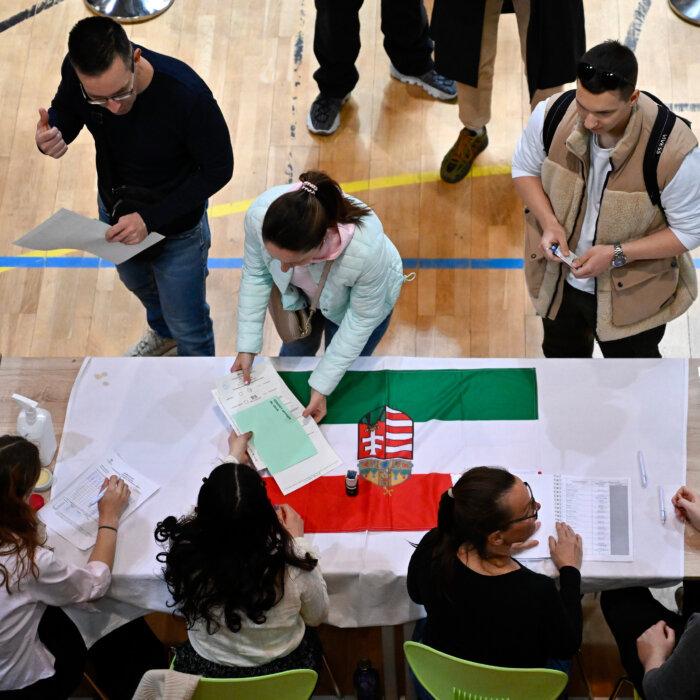
With eight parliamentary elections conducted in five years, the people of Bulgaria have faced political instability. Following the election, some voters expressed optimism at the prospect of a new government.
“There is now an opportunity for the things people have been hoping to see change to actually become visible,” Evelina Koleva, a manager at a digital marketing company in Sofia, told Reuters.