



A forester who warned of Jasper wildfires back in 2017 says not enough work is being done to rehabilitate the areas hit by last year’s blaze and the lack of action may lead to more fire risks.
Ken Hodges, a retired forester with more than 40 years of experience, says recovery efforts in Jasper following last year’s wildfires have not progressed as quickly as they should. He warns that conditions in some fire-affected areas pose risks to visitor safety, and also notes that delays in recovery are missed opportunities to support ecosystem restoration and to reduce the risk of future wildfires.
He noted that timber is present in large quantities in the park due to fire suppression in Jasper over the last 100 years.

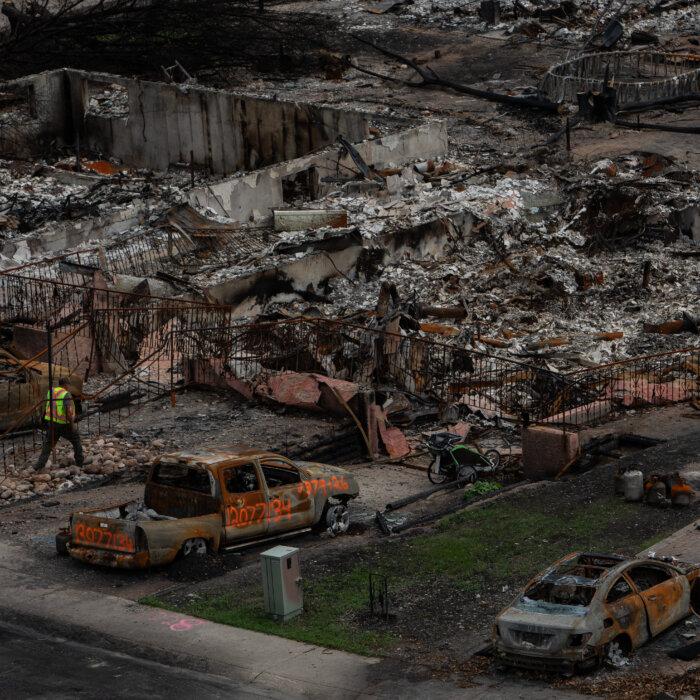
But Hodges is raising concerns about how the aftermath of the fire is being managed, arguing that rehabilitation efforts in the Jasper area remain limited a year later. He says such measures are important for breaking up organic debris left behind by the wildfire—which can contribute to future fire risk—as well as for facilitating the ecosystem’s recovery.
Parks Canada Measures
Parks Canada says it has been updating its long-term wildfire risk reduction strategy after the 2024 Jasper wildfire. Its current approach includes measures such as reducing fuels, creating fire control lines, following FireSmart practices, and supporting wildfire suppression, the agency says. FireSmart practices are guidelines for communities to reduce their vulnerability to wildfires.During the 2024–25 winter season, the agency focused its Jasper wildfire risk reduction work on vegetation management and fireguard enhancements, Parks Canada spokesperson Megan Hope told The Epoch Times.
That included tree felling, limbing, and removal and on-site burning of debris around outlying commercial areas, as well as the clearing of an additional 99 hectares of vegetation west of town. Work also included maintaining narrow roads for emergency access and exit routes for residents, visitors, and first responders.
When it comes to reducing fuel loads, Parks Canada says it uses both mechanical removal and prescribed burning, but notes that mechanical methods offer greater flexibility.
“While prescribed fire is a valuable tool, it requires specific weather and site conditions to be safely conducted,” says a Parks Canada statement. “Mechanical removal allows crews to maintain flexibility in treatment schedules and ensures progress in meeting [wildfire risk reduction] targets, even when conditions for prescribed fire are not ideal.”
Hodges cautioned that the rehabilitation of the park, which often involves stabilizing soil and supporting the recovery of natural hydrologic and biological processes, requires active intervention rather than leaving the area to recover on its own.
Jasper Wildfire
Hodges said he wrote multiple letters to Parks Canada and then-Environment Minister Catherine McKenna between 2017 and 2018, warning that a wildfire in Jasper National Park was not a matter of “if” but “when.”He warned that years of fire suppression in the area, combined with a buildup of pine beetle-killed trees in the national park, created ideal conditions for a wildfire, and that the town was unprepared to prevent it.
“If they had completed some strategies around that—and they had seven years in which to do something and come up with a plan of some sort—I think they could have prevented the loss of Jasper town itself,” he said.
The federal government, for its part, has said it took all possible measures to prevent and fight the wildfires in Jasper.
“To think that over all those decades, we would not have deployed all of the resources necessary to try and do everything that is humanly possible to protect a town from a forest fire, is simply not true,” former Environment Minister Steven Guilbeault said in July 2024.
“The fact that we were able to protect 70 percent of the town speaks to all of those measures we have put in place over the years and frankly, decades.”
Meanwhile, Alberta Forestry and Parks Minister Todd Loewen raised concerns during an Oct. 7, 2024, House committee meeting about what he described as inadequate federal wildfire prevention efforts, such as prescribed fires, to remove beetle-killed trees from national parks.
“The tragic events in Jasper highlight the importance of proactive measures in forest conservation and fire prevention,” Loewen said.


