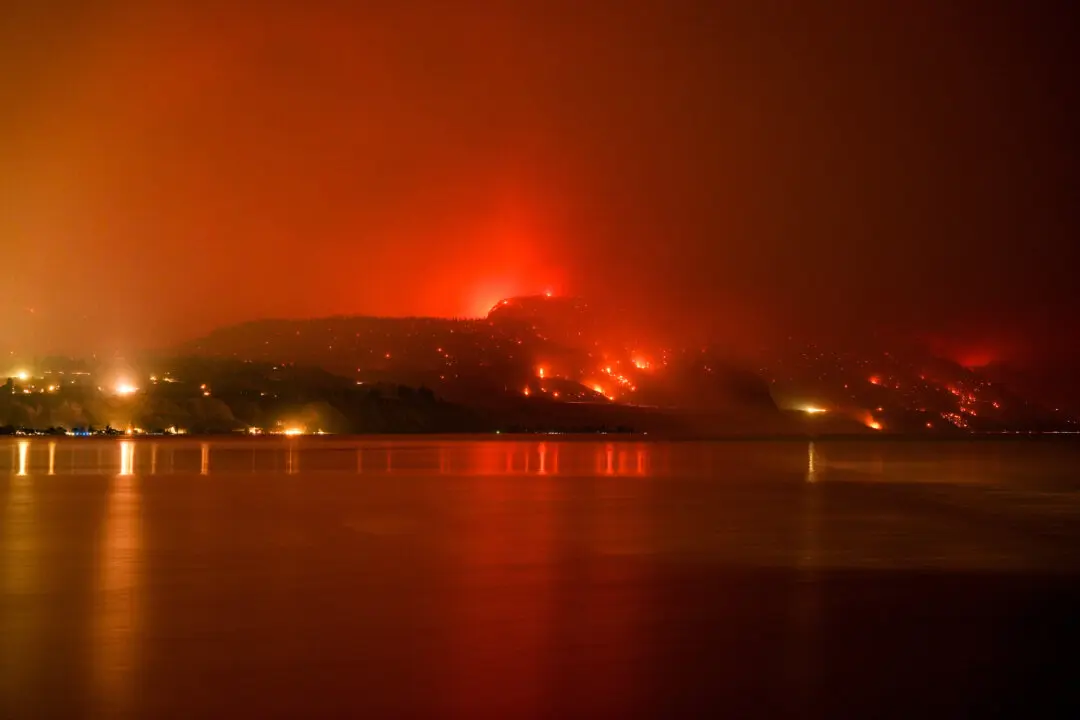
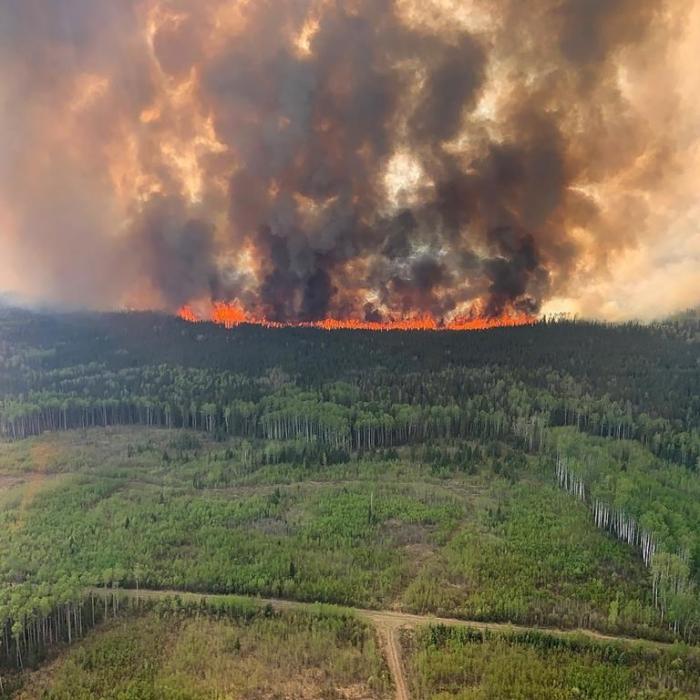
More than 25,000 residents in Canada’s prairie provinces have been forced to evacuate as dozens of wildfires remain active today, while states of emergency persist in Manitoba and Saskatchewan.
Many of the evacuated residents are from Manitoba, which declared a state of emergency last week, while some Saskatchewan and Alberta residents have also been told to leave their homes. Fires are also burning in Northern Ontario and British Columbia.
Manitoba
Most of the province remains under extreme fire danger with small pockets of high fire danger, according to a bulletin from the Manitoba Wildfire Service (MWS) late on June 2.More than 17,000 individuals have been forced to leave their homes since last week, including all 5,000 residents of Flin Flon.
Premier Wab Kinew said some 1,000 hotel rooms have been allocated for evacuees in Winnipeg.
“Nobody wants to sleep on a cot for more than a day or two, even in an emergency,” Kinew told reporters before participating in the June 2 premiers’ conference in Saskatoon.
“We’re connecting folks who need those enhanced accessibility supports first and then broadening it out to everybody else who needs help too.”
Some residents from Pimicikamak Cree Nation, located east of Flin Flon, have been transported to a hotel in Niagara Falls, Ont., as accommodations within the province fill up.
Kinew expressed appreciation for the support the province has received from other jurisdictions, while stressing the need for Canada to increase its firefighting capabilities.
Manitoba reported 25 active wildfires as of June 2 with 10 listed as out of control.
Two out-of-control fires are burning in the east region of the province. One blaze is located one kilometre from Bird River and encompasses 189,833 hectares. The other is located on the Ontario border near Ingolf and has burned approximately 5,060 hectares on the Manitoba side of the border.
Four blazes have been labelled as out of control in the western section of the provinces with the largest located near Sherridon. The fire has destroyed approximately 110,000 hectares while the fire near Flin Flon has burned 40,000 hectares.
Smaller blazes near Mathias Colomb Cree Nation and Wanless have burned approximately 10,000 hectares and 1,400 hectares respectively.
Four more out-of-control blazes have been located in the northern section of the province, with the largest located in Lynn Lake where 50,000 hectares have already burned. Another 4,000 hectares have burned in Split Lake, 3,300 hectares have been destroyed near Pimicikamak Cree Nation, Jenpeg Generating Station, and Whiskey Jack Landing, and 2,287 hectares have burned near Cross Lake.
The province has experienced 109 wildfires to date, well above the average of 86 total fires for this time of year, Manitoba Wildfire Service said.
Human activity “continues to significantly contribute” to the current wildfire situation, the service said in its bulletin.
“Today’s precipitation, while welcome, is not enough to contribute towards wildfire suppression efforts and comes with the risk of lightning starts from thunderstorms,” it said.
Saskatchewan
A state of emergency continues in Saskatchewan where more than 8,000 people have been forced to leave their homes as wildfires burn near their communities.The out-of-control fire is fast moving and was listed at more than 836 square kilometres in size by evening, the agency said.
Evacuation orders have also been issued for northern areas, including Pelican Narrows, East Trout Lake, and Peter Ballantyne Cree Nation.
Eighteen fires were burning in Saskatchewan as of June 2 and Premier Scott Moe has said there could be many more evacuation orders in the coming days.
Moe, who was in Saskatoon June 2 for the premiers’ meeting, thanked Canadians for coming to the aid of the Prairie provinces.
“Many others around this table are consistently reaching out to the three of us to offer resources,” he said, referencing Kinew and Alberta Premier Danielle Smith. “And for that, we’re very grateful.”
Alberta
Alberta Premier Danielle Smith said her province has seen nearly 5,000 people evacuated as 26 out-of-control fires rage in the province.The province was experiencing shifting winds, so some fire crews sent elsewhere have been called home, Smith told reporters from the Saskatoon conference.
“With so many communities facing evacuation ... we’ve got to be able to respond in a way that is going to be rapid,” she said.
Some Westlock county residents were permitted to return home but evacuation orders remained in effect for residents located on the west side of the Pembina River.
British Columbia
There are currently 69 active wildfires raging throughout the province, with 52 of them categorized as out of control, including several that ignited over the weekend.The service described the blaze as a “threat to human life” and ordered the evacuation of residents in Kelly Lake and the areas North of Campbell Lake, West of Tent Lake, South of Twin Lakes, and East to the Alberta border.
Ontario
Twelve wildfires are currently raging in Ontario’s far north, four of them located near the Manitoba border.A fire located near Caribou Lake approximately 31 kilometres northeast of Kenora is currently out of control as is a blaze near Wildgoose Lake, approximately 18 kilometres west of Geraldton. The third fire near Maligne River in Quetico Provincial Park is currently being observed.
“At the time of this update there are 15 active fires in the Northwest Region in various states of control,” the province said. “The fire hazard remains extreme to high across the majority of the Northwest Region. Unsettled weather is expected to bring some rainfall as well as the potential for lightning activity.”
The wildfire season in Canada spans from May until September. The most severe wildfire season in recent history occurred in 2023 when a large swath of North America was blanketed with hazardous smoke for several months.