While there was no shortage of tanks, guns, and warships, the buzz was all about artificial intelligence (AI), drones (and anti-drone weapons), and the capability of military satellites.
Hadean began in the gaming industry before moving into defense tech, and Routledge said it now supplied Britain’s Ministry of Defence (MoD), the United States, and several other NATO countries.
‘Sovereignty of the Supply Chain’
Routledge said, “Sovereignty of the supply chain is a key thing, and you have to be aware of everything that is going into your product.”
If there was squeamishness about using AI in 2023, it has definitely evaporated in the past two years, with autonomous air, land, and sea vehicles being at the heart of DSEI in 2025.
But Thompson said the AI in the system was not able to make its own decisions on what or who was a target, and he said, “None of the counter-measures in NiDAR are deployed without human involvement.”
The younger generation, who have grown up on gaming, may have the perfect skillset to be the recruits in the world’s armed forces, but Thompson said he was worried about the disconnect of remote-controlled warfare.
“One of the scariest things is that war has become gamified. There are threats that have no human attachment. The emotional consequences are being reduced,” he said.
“Reduced accountability is a concern due to gamification.”
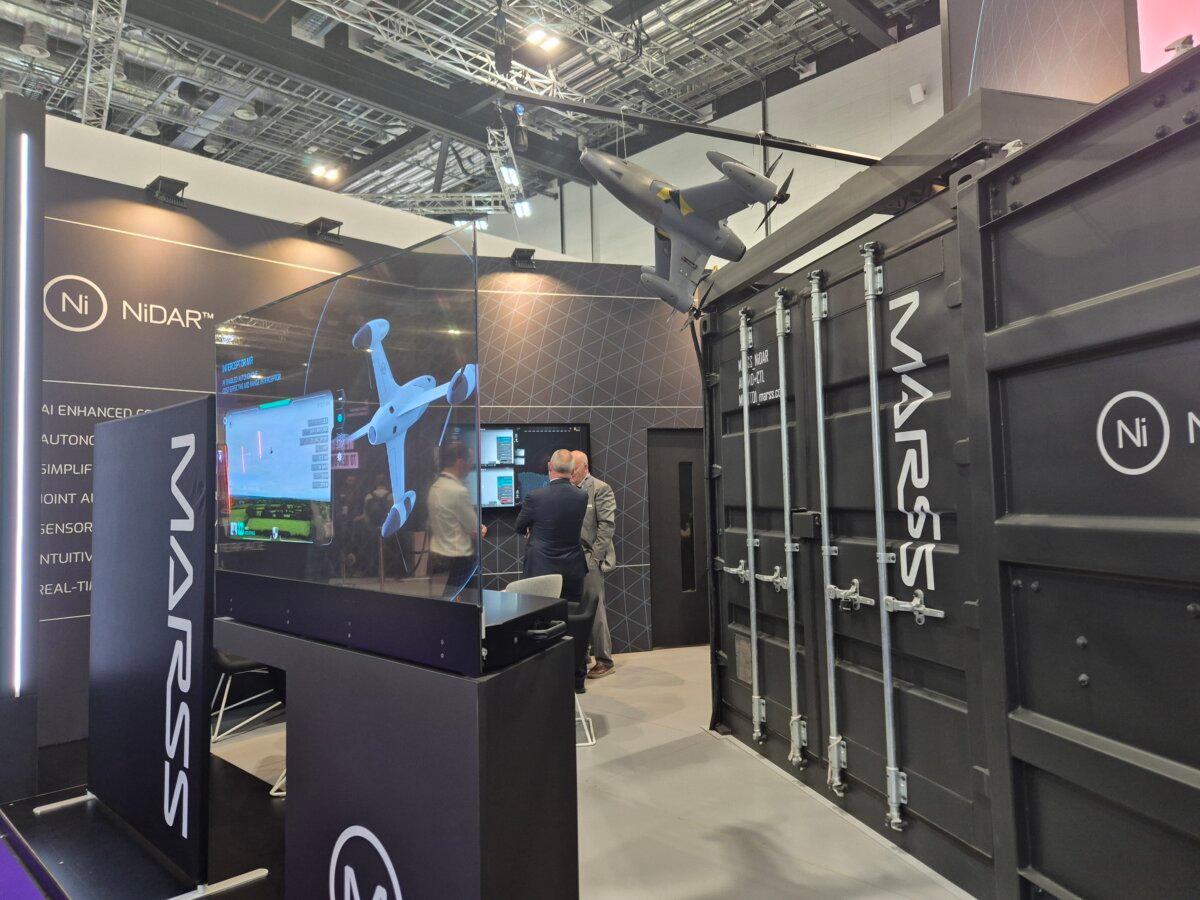
Thompson said this year, unlike in 2023, all the cutting-edge technology firms had been corralled in a Tech Zone, which he described as a “big shed for the nerds.”
AI and other state-of-the-art technologies are now embedded in a wide range of products, from ships and planes to battle tanks and weapons.
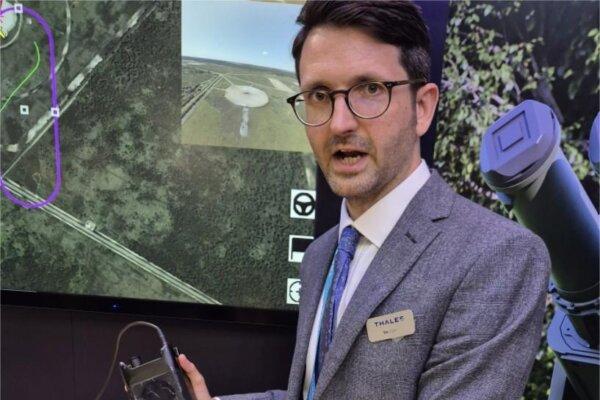
Tim, a Thales UK product manager who declined to give his surname for security reasons, explained that the device—about the same size as an old-fashioned walkie-talkie—generated an electromagnetic “bubble,” which jammed signals and would protect individual soldiers from drone attacks.
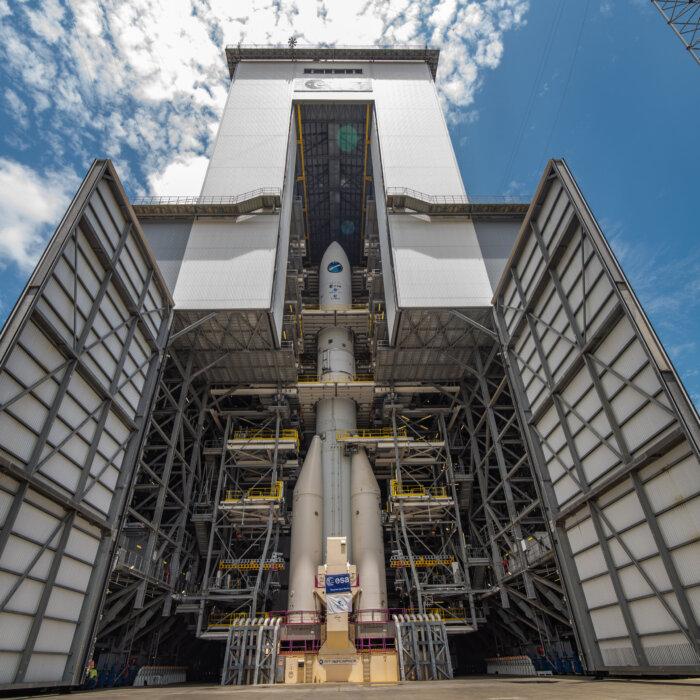
Space is another area that is increasingly coming into the calculations of the military.
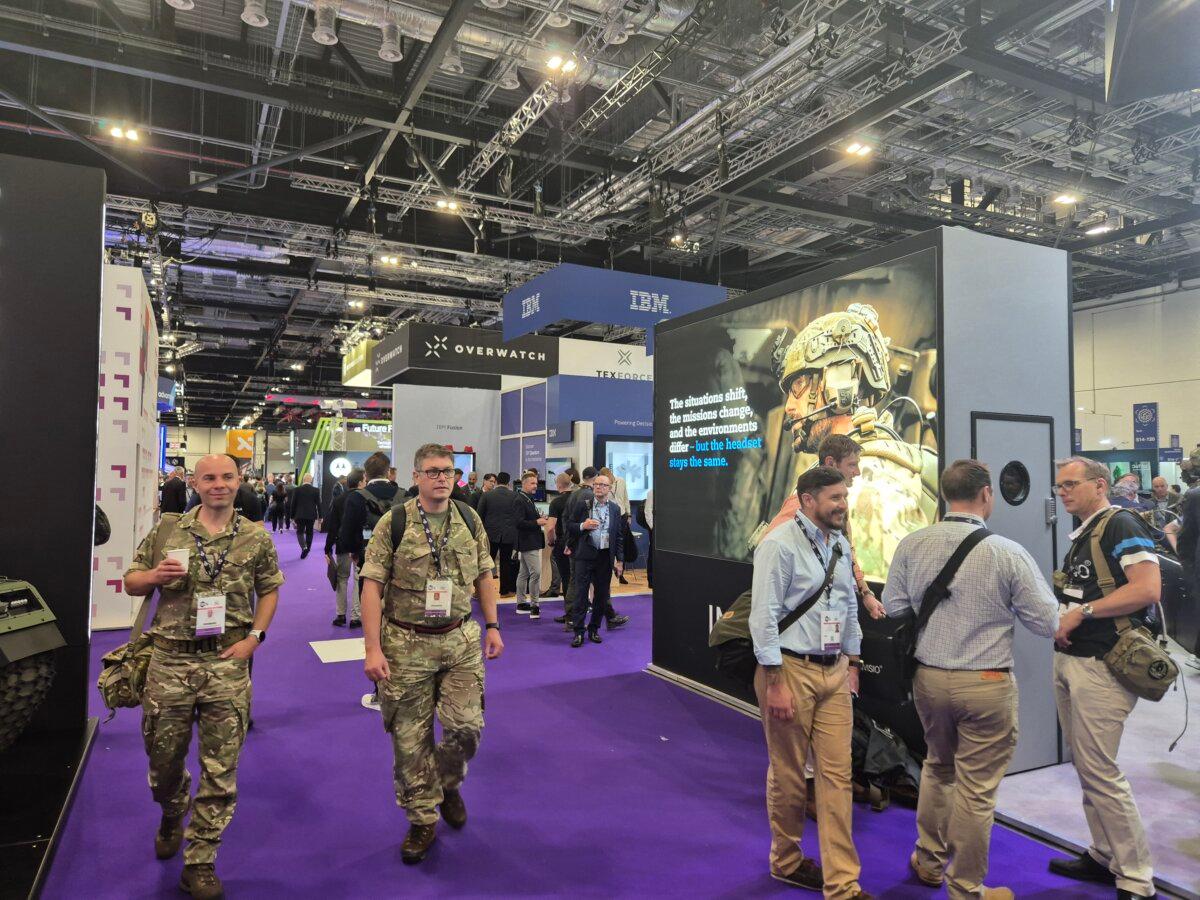
The ISR cell—which gets battlefield data directly from the LEO satellite—comes as a mobile control room in a converted shipping container, which can be transported on the back of a truck to the front line.
Shay Strong, vice president of analytics at ICEYE, said: “This is the first of its kind. It doesn’t exist anywhere else.”
‘Lessons Learned in Ukraine’
Joost Elstak, ICEYE’s vice president of missions, said, “We have been active in Ukraine since 2022, and that has helped accelerate our development, and we have honed our product based on lessons we have learned in Ukraine.”
Warfare has changed enormously in the past 50 years. Gone are the days when an army’s biggest expense was tanks or artillery pieces.
Satellites, AI, and drones cost a lot of money, but in the past nine months, politicians across Europe and further afield have been quick to pick up U.S. President Donald Trump’s insistence that they need to spend more on defense.
The MoD’s national armaments director, Andy Start, said at a keynote forum at DSEI on Sept. 10, “By 2035 we will be spending well over 100 billion pounds [$135 billion], up from 60 billion pounds [$81 billion] this year.”
Start said Britain also aimed to double its defense industry exports, from $19 billion to $38 billion by 2035.
“The horrific events that followed the Russian invasion of Ukraine in Feb. 2022 are what happens when extremism and opportunism go undeterred, and opportunism goes unchecked,” he said.
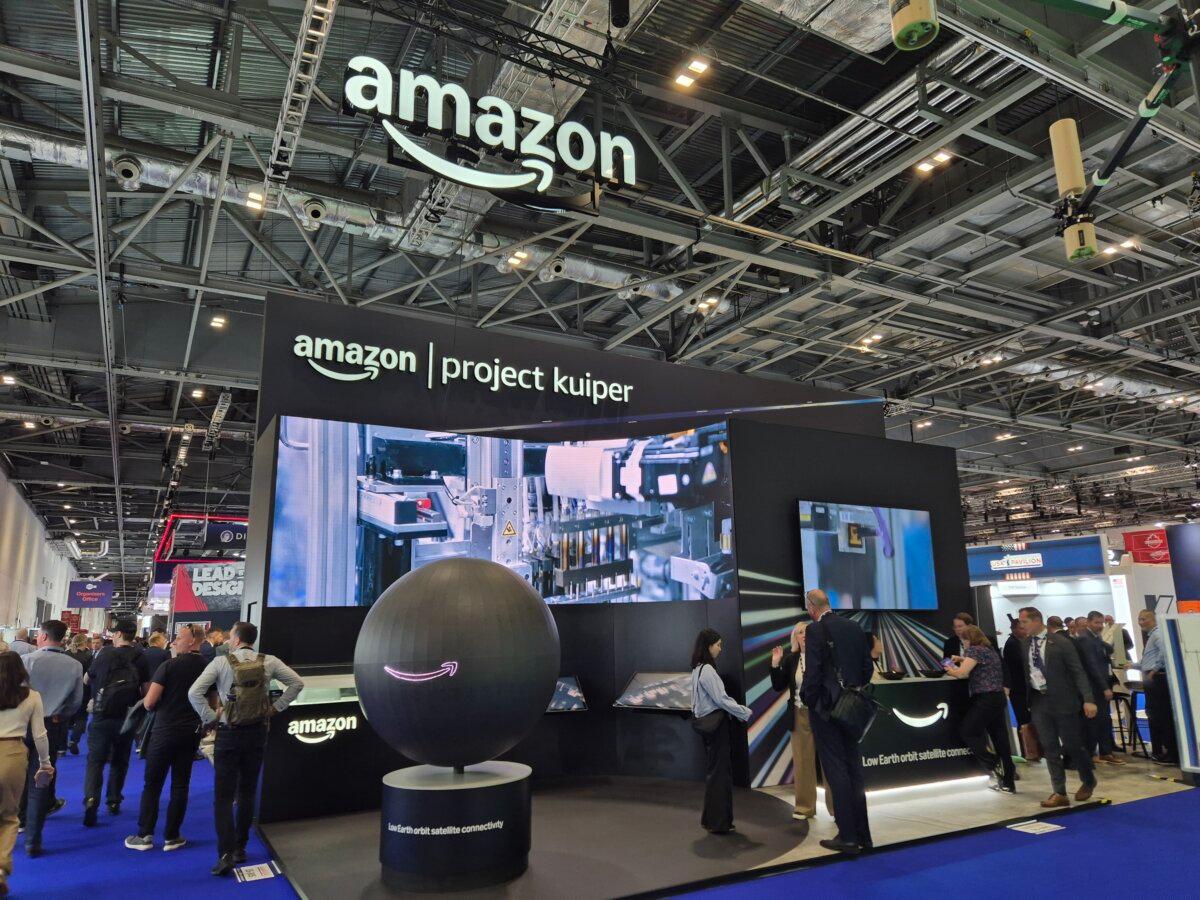
More than 600 UK corporations—including big names such as BAE Systems, Babcock, and Qinetiq—were at DSEI this week, but there were also 215 companies from the United States, including General Dynamics, Northrop Grumman, and SIG-Sauer, which is bidding for the lucrative contract to replace the British Army’s standard SA80 rifle.
London’s Mayor ‘Appalled’
The exhibition contributed to generating billions of dollars of business for UK companies, but a spokesperson for London Mayor Sadiq Khan told The Epoch Times in a statement sent by email, “The Mayor is completely opposed to this event taking place in London and is appalled that the capital is being used as a marketplace for those who wish to trade in weapons.”“The mayor has previously written to both the organisers and ExCel, to remind them that London is home to thousands of people who have fled conflict and suffered as a result of weapons like those exhibited at this event, and continues to urge them to reconsider hosting the fair in London in the future,” the statement said.
Defence Procurement Minister Luke Pollard said he wanted Britain and other NATO countries to spend their money more efficiently, so they can spend more of it, and he said of the armed forces: “Let’s give them the equipment they need to be ready for warfighting. If we do that, we will deter the aggressor.”