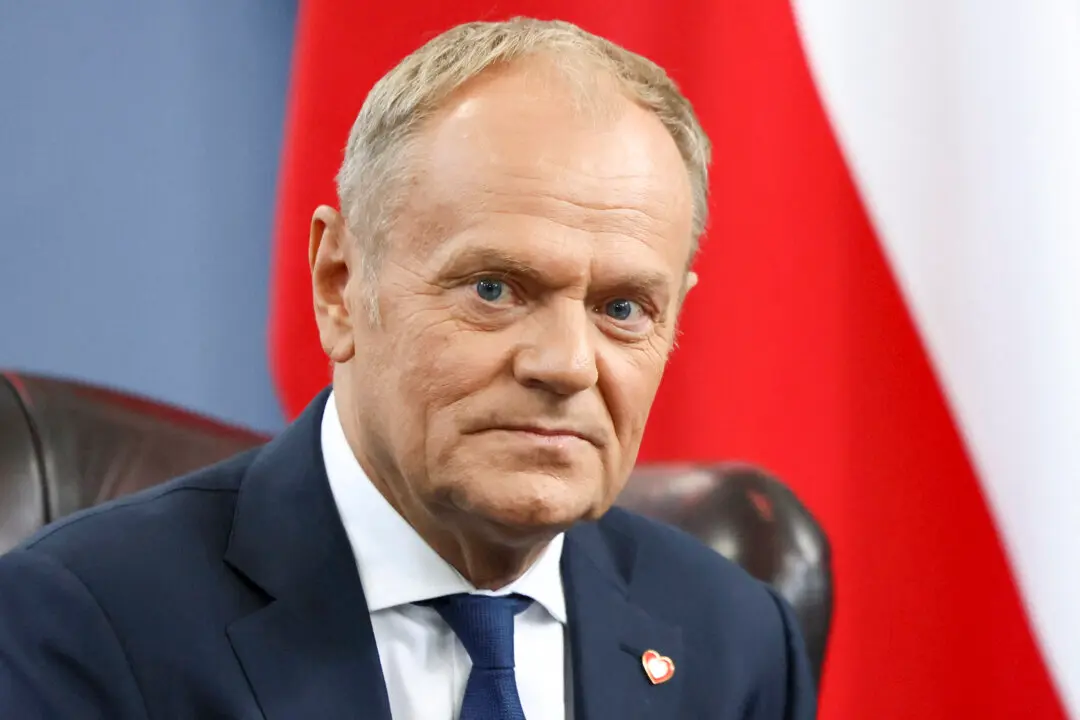
Starlink, a subsidiary of Elon Musk’s SpaceX company, dominates the LEO market, providing cheaper and faster communications than satellites in a higher geosynchronous orbit (GEO).
With a rash of competitors to Starlink entering the market, there is now a line forming at space launch sites around the world.
“The bottleneck right now is not the launch pads—the site where you want to launch the rockets—but the bottleneck is the rockets themselves,” Viktor Shpakovsky, a partner in Beyond Earth Ventures, which invests in space tech, robotics, and communications, told The Epoch Times.
‘Huge Queue’ to Launch Satellites
“For early-stage companies, the only way is to wait for these transporter missions, which are happening maybe twice a year,” Shpakovsky said.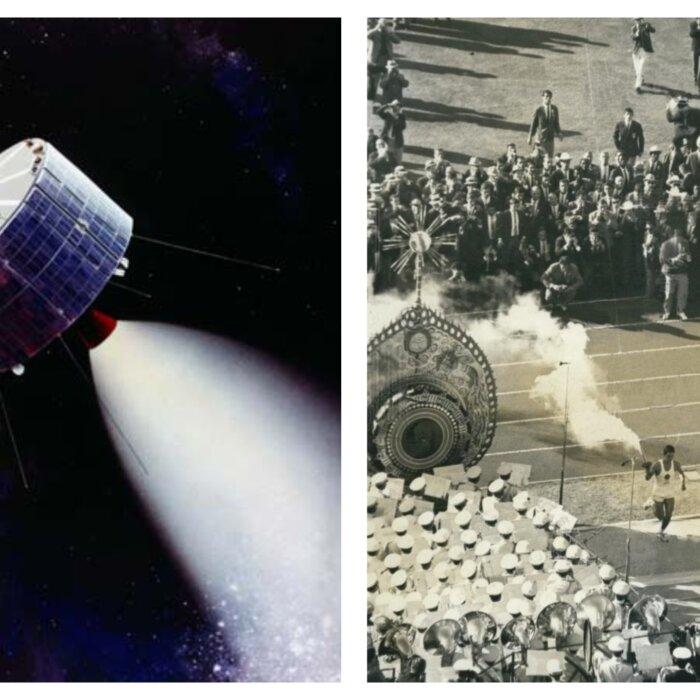
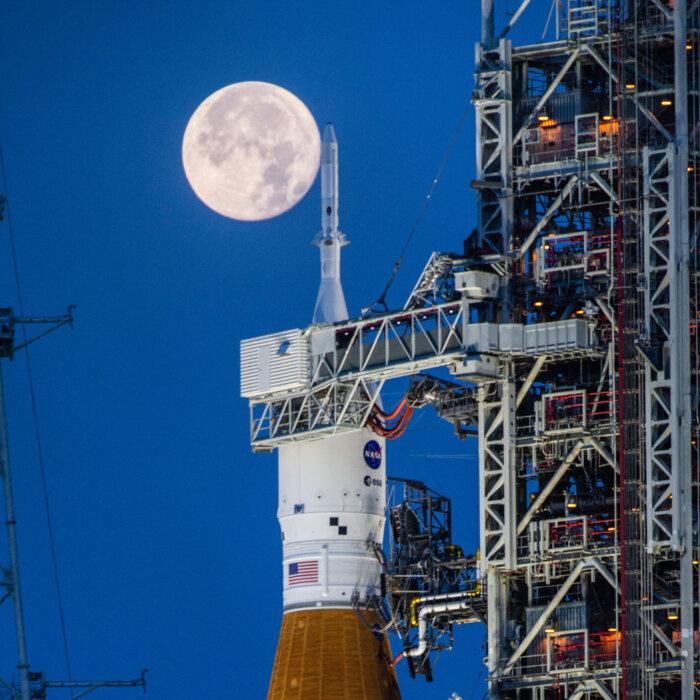
“There is a huge demand to launch something into orbit, but there is a huge queue.”
Jason Steffen, professor of physics at the University of Nevada–Las Vegas, told The Epoch Times that if a space port has enough launch pads, there is no real need to limit the number of rockets that can be sent up.
“It would be hard to come up with a reason why you couldn’t launch rockets from a single site with multiple launch pads, every 30 minutes or something like that. That’s long enough to get one rocket out of the way, and then recover the debris, and proceed with the next one,” Steffen said.
He said it was “plausible” that the bottleneck was caused by a shortage of rockets.
“You don’t necessarily want to do a production run of 1,000 rockets and then find out that there’s some defect in it,” he said.
Because they are in a lower orbit, LEOs cover less of the Earth’s surface, and operators need to have a greater number of satellites, in what is known as a constellation.
A lunar power constellation is a system of orbiting satellites that transmit power wirelessly to a lunar base or surface operations.
But he said he believes that artificial intelligence (AI) will allow companies and governments to “quickly innovate and rapidly build to fill any unexpected gaps.”
India Planning a Space Station
India has also made rapid progress and plans to launch a manned space mission, Gaganyaan, by 2027 and put its own space station—the Bharatiya Antariksh Station—into orbit by 2035.The biggest change in the landscape in recent years has been the boom in private corporations and contractors, most notably SpaceX.
Steffen said NASA’s share of the national budget, which peaked at about 4 percent in the late 1960s at the height of the “space race,” has fallen to about 0.5 percent.
He said that these days, NASA makes up only a small portion of the demand for space launches.
“I suspect that most of SpaceX’s clients are military, and then commercial after that, and NASA’s probably a fairly distant third,” Steffen said.
The Goldman Sachs’s report forecasts that the satellite market could grow from $15 billion to $108 billion by 2035, with about 53,000 satellites originating in China.
Shpakovsky said China does not welcome foreign investors in its space tech industry because it is so closely related to defense.
“In China and in the U.S., there are very different models. In China, there is no shortage of money, so all the capital is mostly government capital. But in the U.S., most of the capital is private capital,” he said.
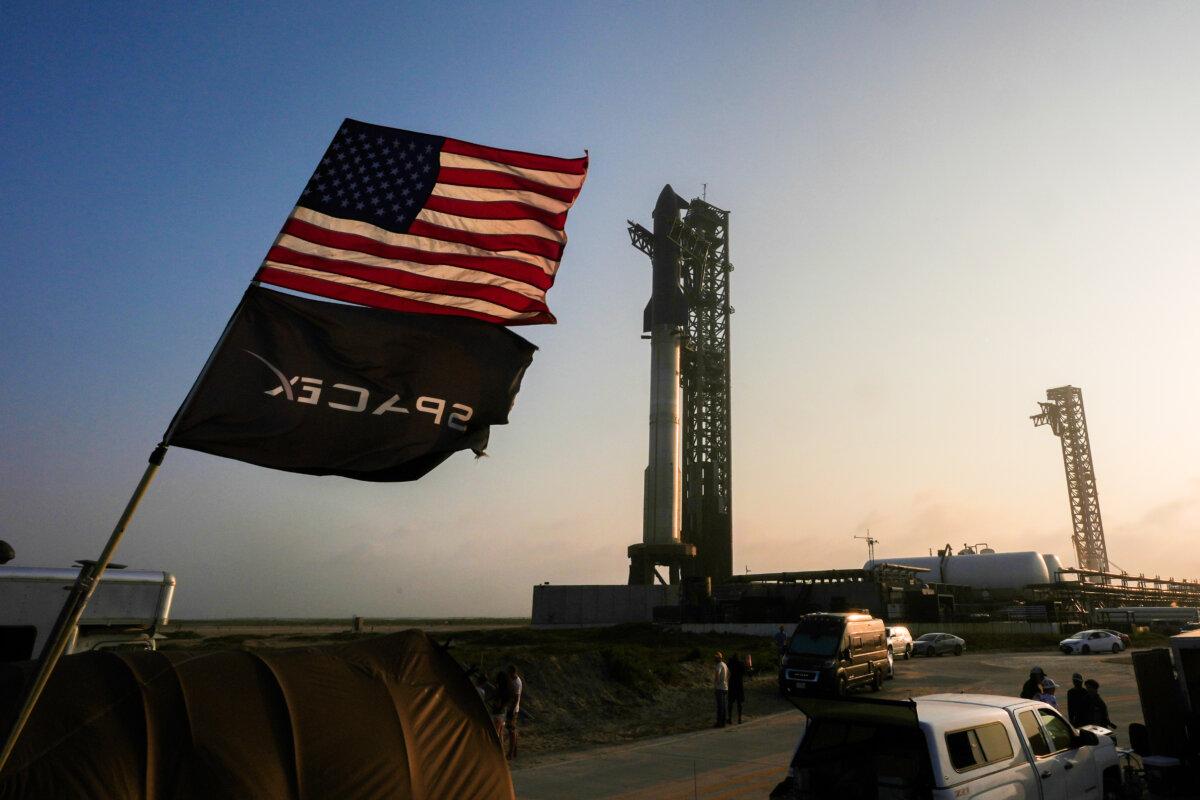
“It’s the U.S. and China that’s driving a lot of technology right now, but the two countries don’t really trust each other.”
Ideally, satellite launch sites should be eastward-facing and close to the equator—in order to take advantage of the west-to-east spin of the Earth—and near the ocean to avoid debris falling back onto populated land.
Brazil’s Tempting Launch Site
Brazil has a launch site at Alcantara, which is only two degrees south of the equator.Shpakovsky said Alcantara’s location was “quite favorable” for space launches and noted that “it could become a major investment project for China to establish a launch pad outside its territory.”
Starlink, which needs permission from the Federal Communications Commission to launch satellites, now has more than 4 million users across more than 100 countries, but several new rivals are set to challenge its dominance of the market.
Rudnyk said the United States and China will probably continue to dominate the space race, noting that Russia’s war in Ukraine had drained that country’s resources and focus.
“If the Europeans are smart, they can probably maintain parity in a number three slot, but they still really need to step up their game,” Rudnyk said.
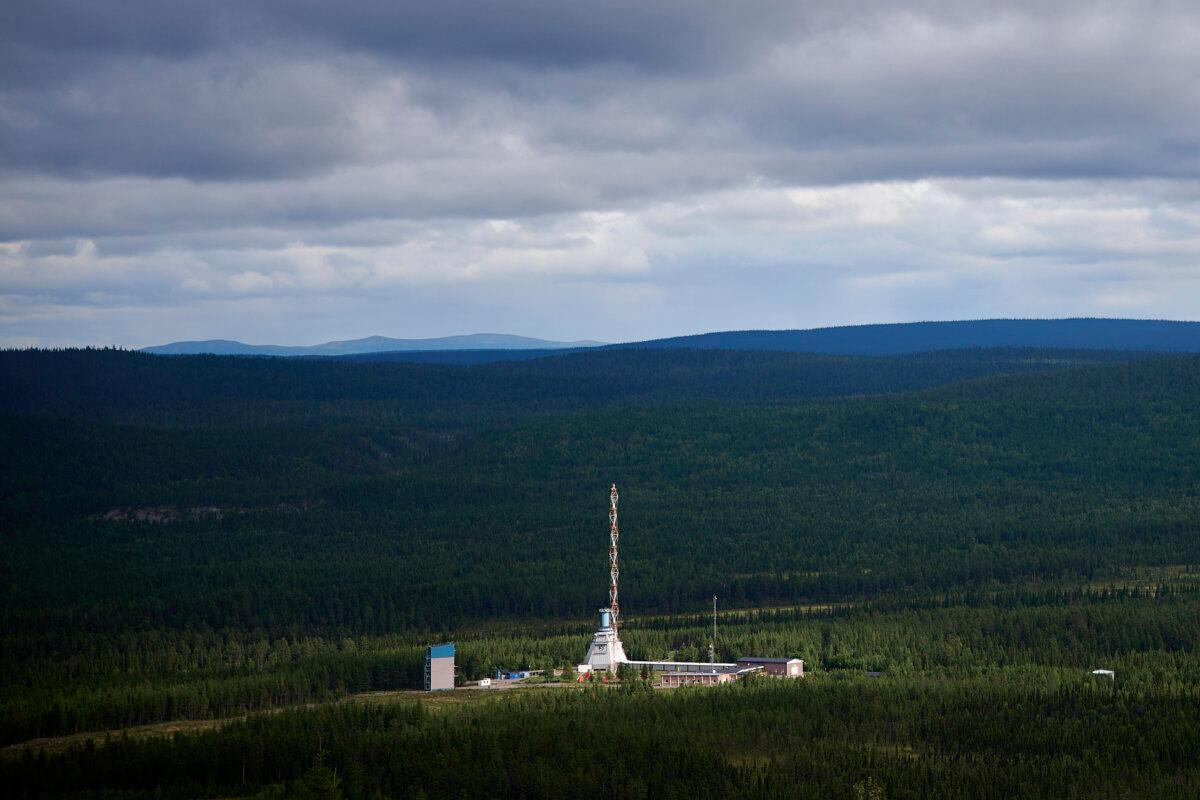
The ESA has always launched rockets from South America—namely Kourou in French Guiana—because it is close to the equator, but two new options at Esrange, in northern Sweden, and Andoya, off the coast of Norway, have emerged in recent years.
Shpakovsky said another emerging problem is that there is no coordination between the companies or countries launching satellites.
There are no flight traffic controllers in space, and there are millions of pieces of debris.
“It’s the issue of the future, because this space debris right now, it’s not a big problem,” Shpakovsky said.
“But the more satellites we have in orbit, the more potential collisions we might have, and if there is a big collision, it can be a disaster.”
Steffen predicts that greater coordination will be needed in the future to address the issue. “There is a lot of debris,” he said. “It’s the small particles that are the problem. I suspect that ... at some point that’s going to need to be coordinated more internationally.”