The Federal Aviation Administration (FAA) official who led the response to a collision between American Airlines Flight 5342 and an Army Black Hawk helicopter that killed 67 people near Reagan Washington National Airport in January 2025 is to leave the agency next week.
Deputy FAA Administrator Chris Rocheleau told employees in an email seen by The Epoch Times that he was leaving the agency to begin the “next chapter” of his career.
The Washington collision, on Jan. 29, 2025, happened just nine days after the previous FAA administrator, Mike Whittaker—who had been nominated for a five-year term by President Joe Biden in 2023—stepped down.
Trump Blamed DEI Policy
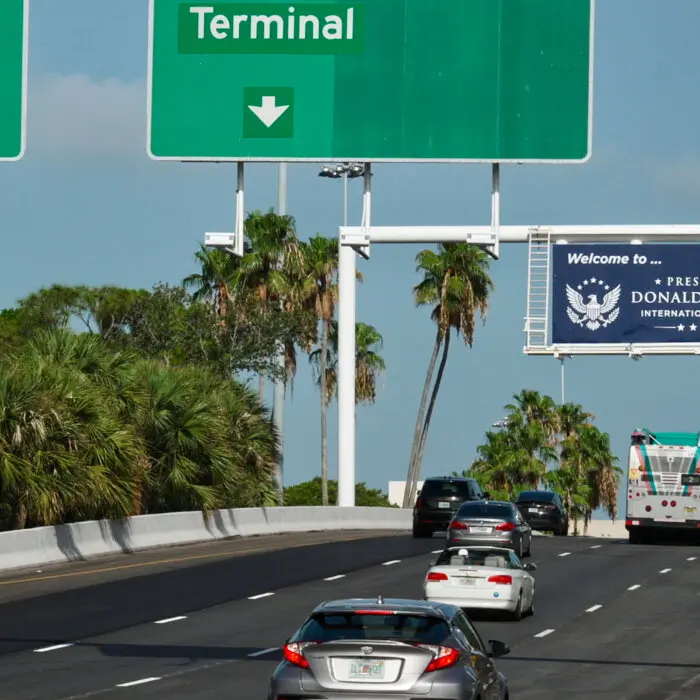
“The FAA is actively recruiting workers who suffer severe intellectual disabilities, psychiatric problems, and other mental and physical conditions under a diversity and inclusion hiring initiative spelled out on the agency’s website,” Trump said at the time.
Eight days before the accident, Trump issued an executive order that reversed the FAA’s hiring policy, which he said prioritized DEI over safety and efficiency. In February this year, the FAA ordered airlines to formally commit to merit-based pilot hiring.
The day before the collision, another airliner was forced to avoid a military aircraft in the same area.
Air traffic control logs showed an Embraer E-175 was cleared to land at Reagan National Airport and had to execute a maneuver to avoid colliding with the helicopter on Jan. 28, 2025.
The National Transportation Safety Board (NTSB), in a January 2026 report, said the collision was caused by systemic failures in FAA airspace design, safety oversight, and risk management.
The NTSB said the FAA should not have allowed helicopters to fly near the airport without safeguards to keep them from colliding with civilian airliners.
Investigators said that despite there being safety data showing repeated close encounters between helicopters and airplanes near the airport, the FAA had failed to “take timely corrective action.”
“This complex and comprehensive one-year investigation identified serious and long-standing safety gaps in the airspace over our nation’s capital,” Jennifer Homendy, chairwoman of the NTSB, said at the time.
The Washington crash was the worst aviation accident in the United States since November 2001, when an American Airlines aircraft crashed into the Belle Harbor neighborhood of Queens shortly after taking off from John F. Kennedy International Airport, killing 260 people on board and five on the ground.
Rocheleau, who continued to oversee safety issues after returning to the deputy administrator role following Bedford’s appointment, told Congress in March 2025 that it was troubling that the data was not acted on.
‘Clearly Something Was Missed’
“I am very concerned about what we have learned in the subsequent investigation, both from the NTSB as well as our own reviews that we immediately took. Clearly, something was missed,” he said.
“And that is why we put artificial intelligence and machine learning in place now, to ensure that we are able to go through tens of millions of pieces of data to identify those trends and act quickly to mitigate those risks,”
The NTSB said there had been more than 15,200 incidents at Reagan since 2021 when airliners and helicopters had lateral separation distances of less than one nautical mile, and vertical separation of less than 400 feet.
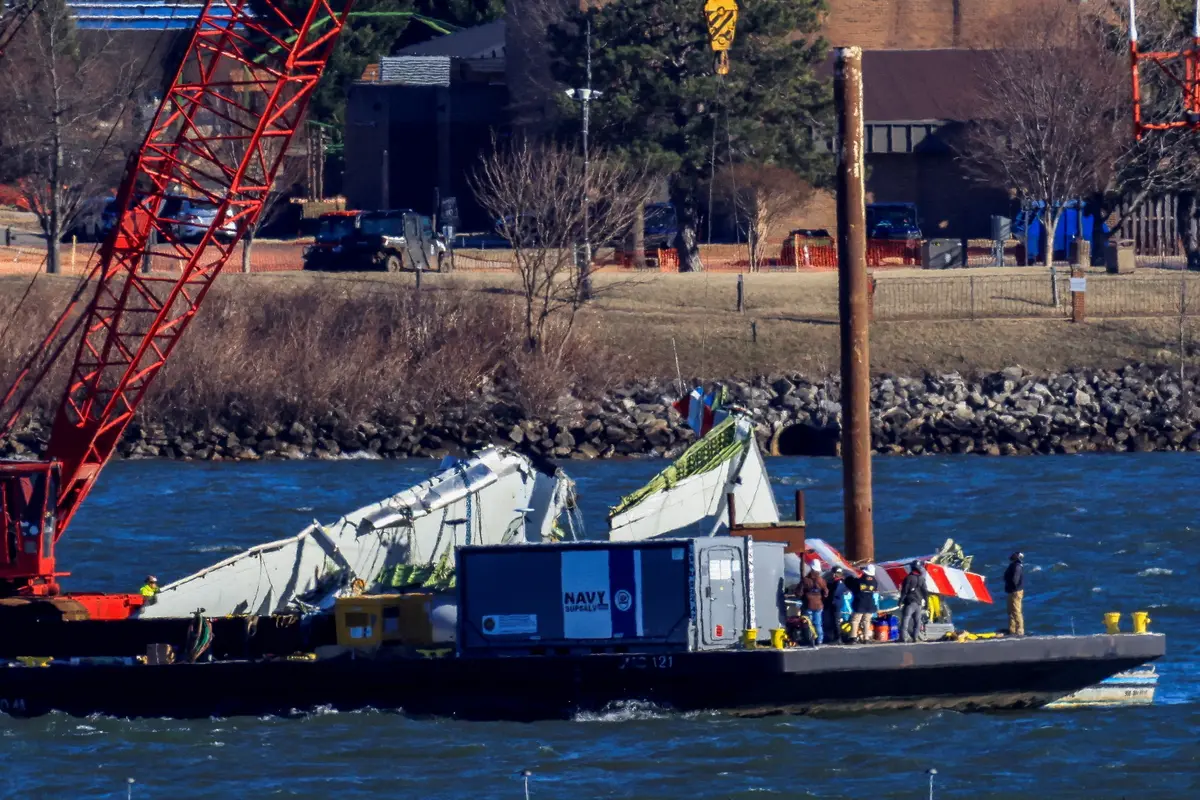
Since the disaster, the FAA has revised helicopter routes at several airports and, in March this year, suspended the use of visual separation between airplanes and helicopters near major airports.
The FAA also barred the Army from helicopter flights around the Pentagon after a near miss in May 2025, which forced two civilian planes to abort landings.
In January this year, the FAA was restructured, creating a new safety oversight office to consolidate functions previously spread across five departments.
A safety management system and a safety risk management process were both implemented.
Rocheleau Praises FAA’s Use of AI
In his email to staff, Rocheleau said he was proud of the FAA’s use of AI and data-driven tools to enhance aviation safety, and the establishment of the eVTOL Integration Pilot Program (eIPP) to accelerate the safe deployment of drones in the National Airspace System.
Rocheleau said it had been a “true privilege” to carry out leadership roles at the FAA.
“While I may be leaving the agency, I am even more excited about what lies ahead for the FAA,” Rocheleau said.
“I look forward to seeing you continue to modernize our aerospace system, safely integrate the next generation of aircraft and aviation technologies into the National Airspace System, and further enhance safety here at home and around the globe.”
Rocheleau thanked Transportation Secretary Sean Duffy for his “unwavering support and confidence” and thanked Bedford for his “vision, drive, and trust” during a key period of transformation.
The FAA’s general counsel, Liam McKenna, will serve as acting deputy administrator following Rocheleau’s departure.