The question of whether deforestation can increase flood risks seems obvious, but scientists have struggled for centuries to find a proven link.
Two university reports now cast new light on the issue, including the finding that the chances of large-scale flooding can increase by over 700 percent if widespread deforestation occurred previously.
In the first study, researchers from the University of Tasmania analysed 44 years of data from across the world, which encompassed about 250 wildfire events that either killed 10 or more people or ranked among the 200 most economically damaging.
It found that 43 percent of the most damaging disasters since 1980 had occurred within the last decade: between that year and 2023, economically catastrophic fires quadrupled in occurrence, and major fatality events tripled.
The researchers put the data collected by reinsurance company Munich Re into a statistical model, which allowed them to identify those areas at greatest risk, revealing that coastal southern Australia is one of those.
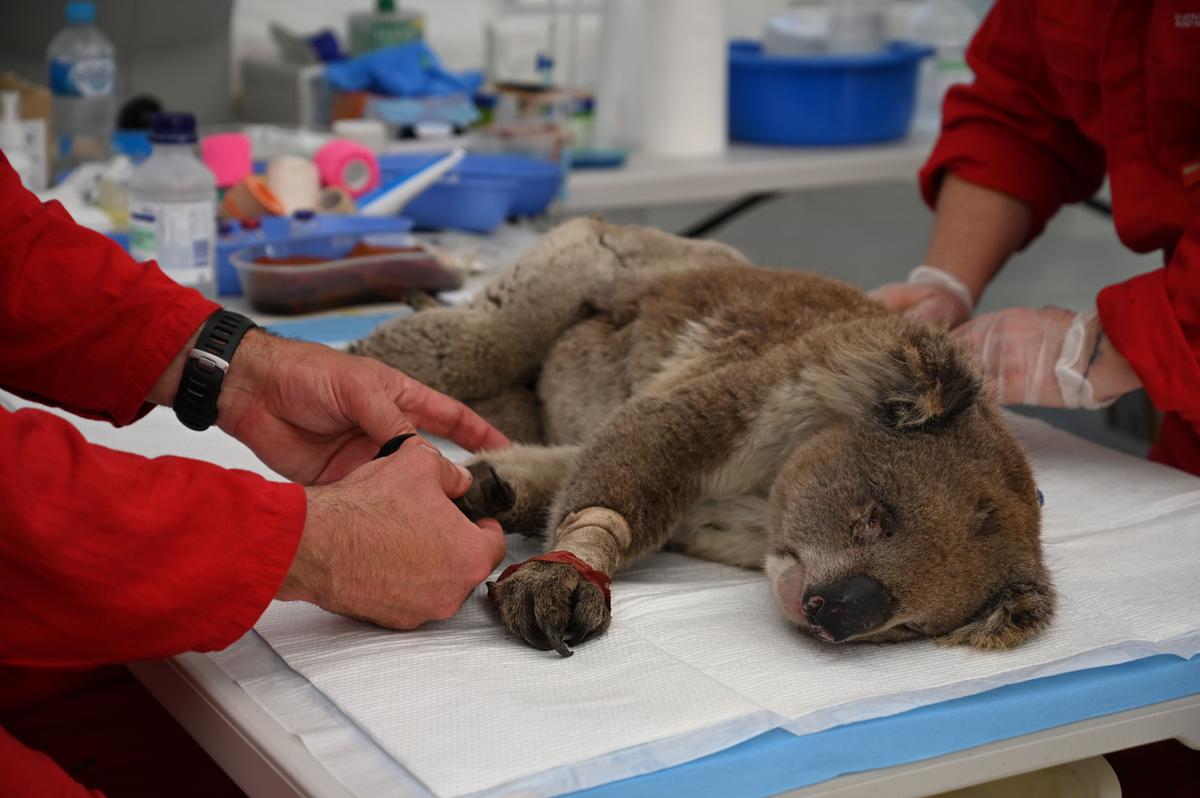
The 2019/20 bushfires were particularly devastating. Up to 19 million hectares were burnt, with 12.6 million hectares primarily forest and bushland.

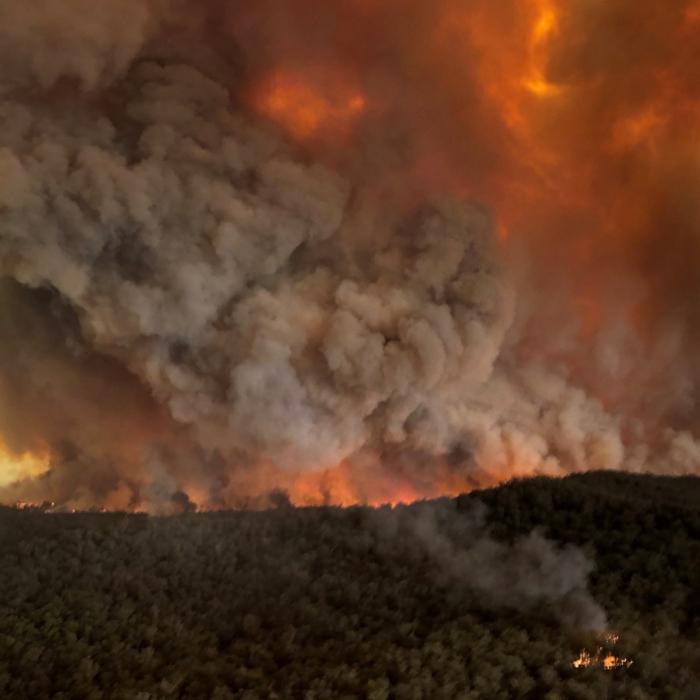
Thirty-three lives were lost, and around 3,094 homes were destroyed.
A second study, from UNSW Sydney, found damage caused by such fires isn’t confined to burning, as they also significantly increase the risk of flooding.
That connection has long been claimed, but actually establishing it has proven difficult.
But a team of researchers, led by Professor Ashish Sharma from the University’s School of Civil and Environmental Engineering, say they have confirmed the correlation and determined there is a very significant increase in risk of bush canopies are destroyed.
“What we have shown is that the probability changes from a one-in-64 year flood event, to a one-in-eight year flood event if there has been deforestation,” Sharma explained. “So we can say there is an eight-fold increase in the likelihood of there being a flood.
The results of the research were based on information related to three mega forest fires in south-east Australia—in 2003, 2007, and 2009—as well as streamflow data in the same region covering 50 years during which no major forest fires were reported.
Data from years when El Niño (characterised by lower-than-average rainfall) or La Niña (characterised by higher-than-average rainfall) were excluded, as these weather patterns can dramatically alter the risk of flooding on their own.
Tae-Ho Kang, a senior researcher at the K-water Institute in South Korea, said the question has been raised since the 1600s but the answer has been hard to lock down.
“What we were able to do was utilise the data when we knew there was complete tree loss from major forest fires and compare that to historical records from the same catchment areas when we could see the climate was very similar and the forest canopy was in place,” he said.
“That really allowed us to contrast the data with regard to the risk of significant flooding.”
When healthy trees are in place, the branches and leaves help block the rain from reaching the ground. If there is heavy rain, the canopy can also disperse the water over a wider area and over a longer time, which reduces the peak amount of moisture reaching the ground and therefore lowers the potential flood levels.
Secondly, there are also more fallen leaves, which dampen the flow of any rain that does reach the ground.
When there is significant deforestation, the water goes straight into the soil, which then becomes saturated more quickly. And when that happens, the risk of a flood subsequently goes up.
Sharma says he hopes the research will be taken on board by anyone involved in the process of man-made deforestation, given the devastating impact flooding can have on human populations living in areas at risk.
“The data is collected from south-east Australia, but we see no reason why the conclusion does not apply in the same way anywhere else where forest canopy is being removed,” he says.