Countries from around the world have begun repatriating their citizens from the Middle East, amid escalating tensions in the region since the start of the war with Iran.
Travelers have found themselves stranded in the region after the United States and Israel began their operations against the Iranian regime, with much of the airspace being closed or restricted for days.According to an X post shared by the official White House Rapid Response account, State Department principal deputy spokesperson Tommy Pigott told CNN on March 5 that the department was working “24/7” to bring Americans home.
“Over 20,000 Americans have been able to return to the United States since this began, including the provision of direct assistance to nearly 10,000 by our 24/7 task force,” Pigott said.
Over in Europe, Spanish Foreign Minister José Manuel Albares said in a March 5 post on X that the latest group of Spanish citizens who were in the Middle East had landed at Torrejón Air Base, and that his office is continuing to work to ensure that “all ongoing evacuation operations conclude successfully.”
Australian Prime Minister Anthony Albanese told Parliament on March 4 that his government was deploying six crisis response teams to the Middle East.


Japan Issues Travel Warning
Japan is also working to evacuate its citizens, with Prime Minister Sanae Takaichi issuing do-not-travel advisories for several Middle Eastern countries.Takaichi said in a post on X on March 5 that the travel warning was issued “in light of the deteriorating situation in the Middle East” and extends to countries surrounding Iran that are under attack; specifically, Bahrain, Kuwait, Oman, Qatar, the eastern region of Saudi Arabia, and the United Arab Emirates.

She said that her government would transport Japanese nationals currently residing in Bahrain, Kuwait, Qatar, and the UAE who wish to return home over land to Oman and Saudi Arabia, where chartered flights will fly them to Tokyo.
Israel Brings Citizens Home
The Israeli Ministry of Transport said in a March 5 post on its Telegram channel that the first two flights had landed that morning at Israel’s Ben Gurion International Airport to bring stranded Israelis home, after airspace had been closed to air travel.The ministry stated that the first El Al flight took off from Athens and landed at Ben Gurion with 170 passengers.
An Israir flight from Rome landed with another 170 passengers.
Countries Aiding Foreign Nationals
Some countries are offering support to foreign nationals stranded in their countries, including Oman, which is organizing flights for visitors trying to get home.Oman’s top diplomat, Badr al-Busaidi, said in a post on X that his country is working with other governments and international airlines to organize flights for those wanting to leave the region.
“We mean everyone, whatever passport you hold. The citizens of all countries have the human right to safety and security,” al-Busaidi said on March 5.
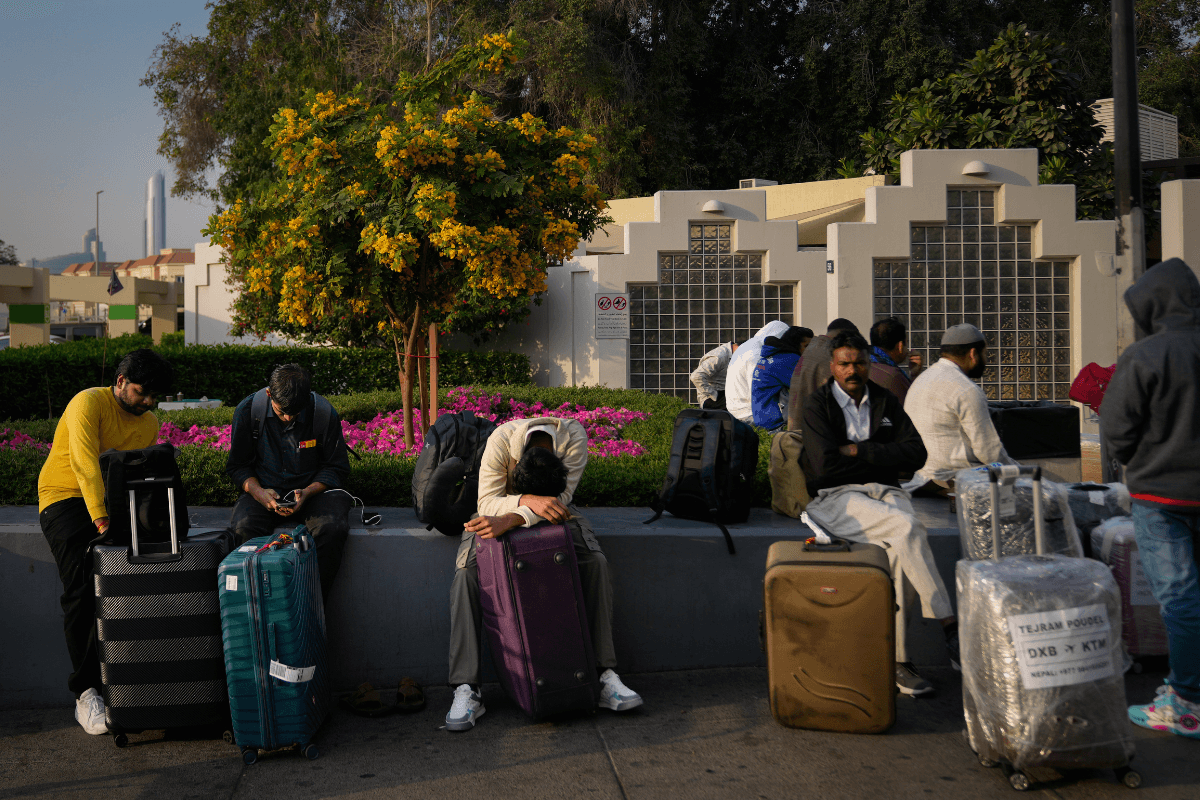
Qatar Airways said in a post on X that it will start operating a limited number of “relief flights” from March 5 to “support passengers who are stranded due to the current situation across the region.”