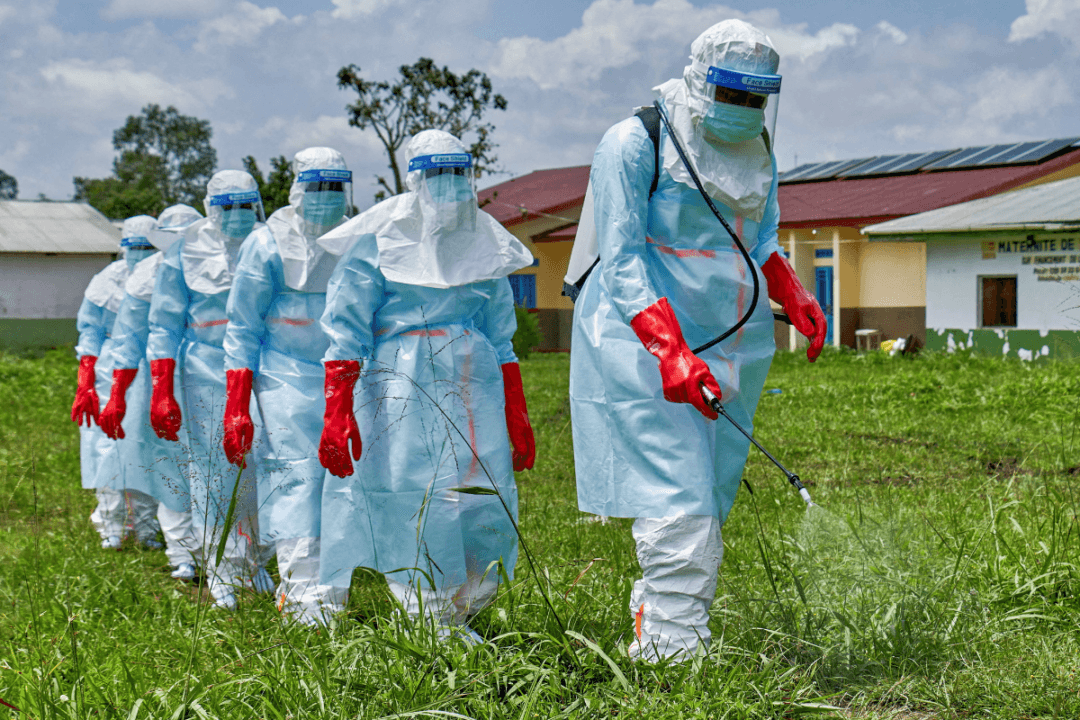
The Ebola outbreak in Congo is on track to become the deadliest in history, the World Health Organization (WHO) has said, surpassing the West African outbreak from a decade ago that saw more than 11,000 fatalities.
“It’s already the second-biggest Ebola epidemic on record, and it’s moving faster than any previous Ebola outbreak,” WHO Director-General Tedros Adhanom Ghebreyesus told a press conference on Aug. 12.
“At its current pace, it’s on track to eclipse the West African Ebola outbreak of 2014 to 2016.”
Tedros said that officially, there are 4,449 confirmed cases, with 2,061 deaths across five provinces and 53 health zones.
“The outbreak had a big head start, still way ahead of us, and we’re playing catch up,” he said.

Around 90 percent of all cases and 80 percent of deaths are in the province of Ituri, the WHO official said.
He said that two vaccines developed for the Bundibugyo virus are now being tested in people. The health body is also planning to test whether an existing Ebola vaccine can protect people against the virus, following studies in animals that showed promising results.
Outbreak May Last 12 Months
Abdi Rahman Mahamud, director of WHO’s Health Emergency Alert and Response Operations, said the organization expects the outbreak to peak in six months, but that this was considered the “moderate scenario.”
“There is a worst-case scenario where this outbreak may last nine months to 12 months,” said Mahamud, who was also at the press conference.
“We are doing everything possible to shorten that.”
He said that this is a “highly dynamic outbreak,” which needs the community on the health authorities’ side to contain it, and without that support, “we will be struggling.”
“The last previous outbreak, which happened in a security compromise, lasted about two years. We don’t want to repeat of that, and under the leadership of government, we are doing everything possible to reduce that, and hopefully in the next six months,” the WHO official said.
According to the U.S. Centers for Disease Control and Prevention, people can contract Ebola if their mucous membranes in the eyes, nose, or mouth, or their broken skin, come in contact with the bodily fluids of an infected person or contaminated objects.
Ebola does not spread like respiratory viruses such as influenza; a person cannot become infected by being near someone with the disease.