This copy is for your personal, non-commercial use only. Distribution and use of this material are governed by our Subscriber Agreement and by copyright law. For non-personal use or to order multiple copies, please contact The Epoch Times Reprints.
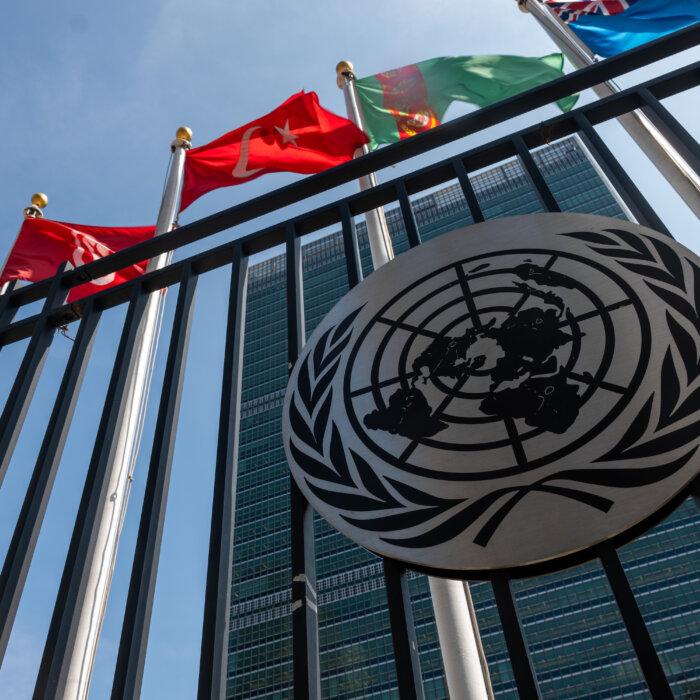
Colombian President Gustavo Petro Urrego addresses the 80th session of the U.N. General Assembly at the U.N. headquarters in New York City on Sept. 23, 2025. Pamela Smith/AP
Colombia’s foreign minister renounced her U.S. visa on Sept. 29 to protest a decision by the U.S. government to revoke the visa of the country’s president after he called on U.S. soldiers to disobey orders during his visit to New York.
Colombian Foreign Minister Rosa Villavicencio said in a post on X that she had “decided to renounce the U.S. visa.”
“It is an act of dignity in the face of the unacceptable decision to revoke the visa from the President of Colombia. Our sovereignty does not kneel. Colombia demands respect,” Villavicencio wrote.
A statement from the Colombian foreign ministry—published shortly thereafter on X—accused the United States of “violating international diplomatic norms,” adding that it was not interested in “diplomatic visas that restrict opinions or restrictions on sovereignty.”
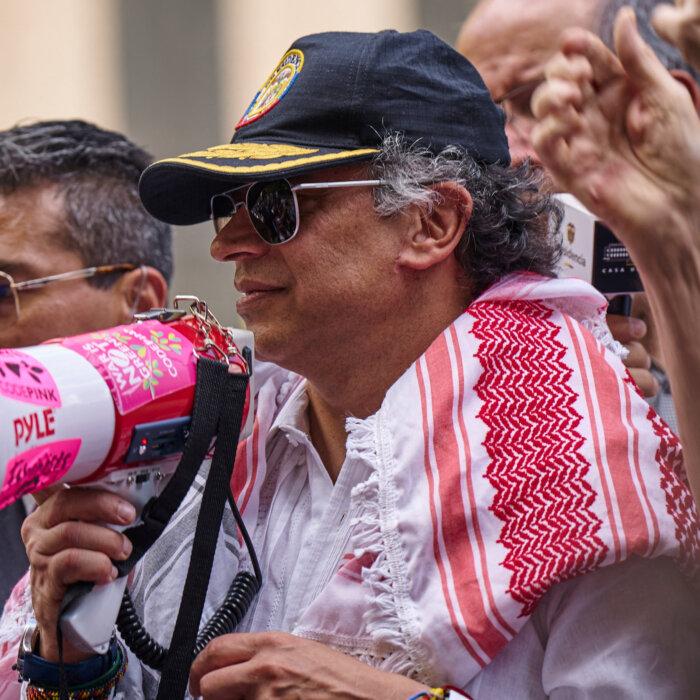
On Sept. 26, Colombian President Gustavo Petro gave a speech to a crowd of pro-Palestinian protesters gathered outside the U.N. headquarters in New York City and urged U.S. soldiers to “disobey” President Donald Trump’s orders and “obey the orders of humanity.”
The remarks came after Petro’s Sept. 23 address to the U.N. General Assembly, in which he called on other nations to form an army to defend Palestinian territories in the Israel–Hamas war, which has been ongoing since Hamas’s deadly terrorist attack on southern Israel on Oct. 7, 2023.
Petro said that diplomacy had failed to resolve the war, adding, “We need a powerful army of countries that do not accept genocide. That is why I invite nations of the world and their peoples more than anything, as an integral part of humanity, to bring together weapons and armies to defend Palestine.”
Israel has consistently denied that it is committing genocide in the Gaza Strip.
On Sept. 29, Trump and Israeli Prime Minister Benjamin Netanyahu reached an agreement on a U.S.-proposed deal to end the war in Gaza, marking a breakthrough for Trump’s efforts toward a peace deal.
Petro’s Visa Revoked
The same day as Petro’s address to protesters outside the United Nations, the State Department announced that it was revoking the Colombian president’s visa.
“Earlier today, Colombian president [Gustavo Petro] stood on a NYC street and urged U.S. soldiers to disobey orders and incite violence,” the department stated on X on Sept. 26.
“We will revoke Petro’s visa due to his reckless and incendiary actions.”
On Sept. 27, Petro acknowledged in a post on X that he no longer had a visa to travel to the United States, adding that he did not care.
“I don’t need a Visa but an ESTA, because I’m not only a Colombian citizen but also a European citizen, and in reality, I consider myself a free person in the world,” he said.
The dispute over visas comes amid rising tensions between the United States and Colombia, over issues including the Israel–Hamas war and the South American country’s narcotics policy.
Earlier this month, Trump added Colombia to a list of countries he says are not cooperating in the effort to tackle the drug trade.
“In Colombia, coca cultivation and cocaine production have surged to all-time records under President Gustavo Petro, and his failed attempts to seek accommodations with narco-terrorist groups only exacerbated the crisis,” Trump said in a presidential determination.
Trump’s determination said coca cultivation and cocaine production have reached record highs under Petro and that his government has “failed to meet even its own vastly reduced coca eradication goals.”
“For this reason, I have designated Colombia as having failed demonstrably to meet its drug control obligations,” Trump wrote.
This was the first time that Colombia had been included on the list since 1997, four years after the death of the infamous leader of the Medellin drug cartel, Pablo Escobar.
Aldra Fregly and Chris Summers contributed to this report.
Victoria Friedman is a UK-based journalist covering a wide range of international stories, with a particular interest in technology, eastern Europe, and defense.