A former officer with Canada’s intelligence service told MPs the arrival of Chinese electric vehicles in Canada poses not only a surveillance threat but also a risk to the electrical grid.
Neil Bisson, who spent 18 years as an officer with the Canadian Security Intelligence Service (CSIS), assessed the threat from Chinese electric vehicles (EVs) during his appearance before the House of Commons industry committee on April 16.
“In effect, each Chinese manufactured EV is an extraordinary source of valuable data, the potential eyes and ears of the PRC, and we are on the verge of importing and dispersing tens of thousands of them across Canada,” Bisson told the committee.
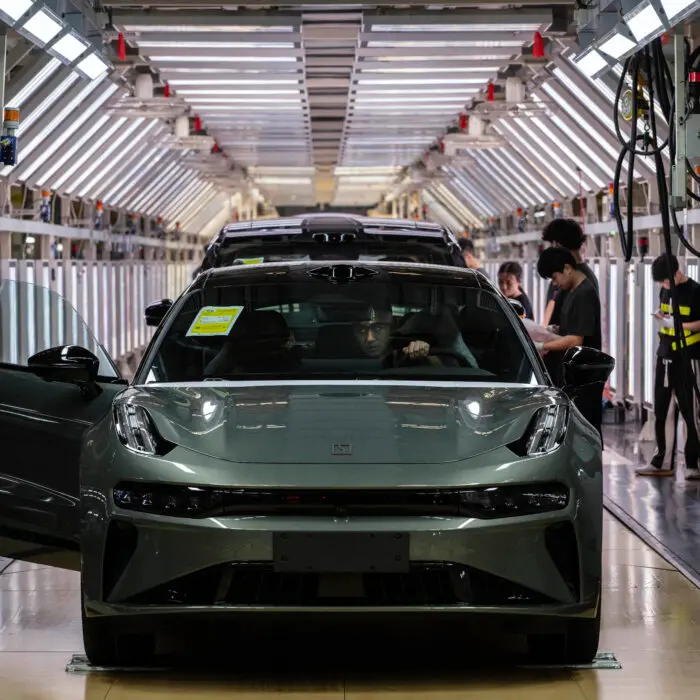
As part of a deal on tariffs with China, Canada earlier this year lowered the tariff rate on an initial 49,000 Chinese EVs from 100 percent to 6.1 percent.

Bisson noted that EVs are loaded with sensors to collect information on drivers and the vehicles’ surroundings, and that China is known for aggressively collecting information from all sources, including through hacking. China also has a law compelling domestic entities to support the state’s collection of intelligence.
Bisson said reports from CSIS and the Communications Security Establishment consistently identify China “as an enduring and sophisticated threat conducting widespread cyber espionage and influence operations against government, academia, private industry, and civil society to advance its strategic, military, and political goals.”
When asked about privacy concerns around Chinese EVs in recent weeks, Public Safety Minister Gary Anandasangaree said the incoming EVs would need to comply with Canada’s privacy laws.
Electrical Grid
Bisson said another risk surrounding Chinese EVs involves their connection to the electrical grid during charging.“Any system that is connected to critical infrastructure and capable of external communication introduces potential avenues of exploitation, including data collection, system access, or disruption,” Bisson said. “Once access is established, it becomes difficult to detect and even harder to reverse.”
Prime Minister Mark Carney made a deal with Chinese leaders during his visit to Beijing in January to allow Chinese EVs into Canada in exchange for China removing or reducing some tariffs on Canadian agricultural and seafood products.
The decision, at a time when the Canadian auto sector is struggling because of U.S. tariffs, has been controversial not only for the security risks, but also for impacts on local economy, geopolitics, and labour norms. Various House committees have been hearing from experts on these issues.
He said Canada’s decision to open its market to Chinese EVs shouldn’t be seen as a normal trade deal, but rather a “tactical gamble that risks deep entanglement with an increasingly totalitarian one-party state.”
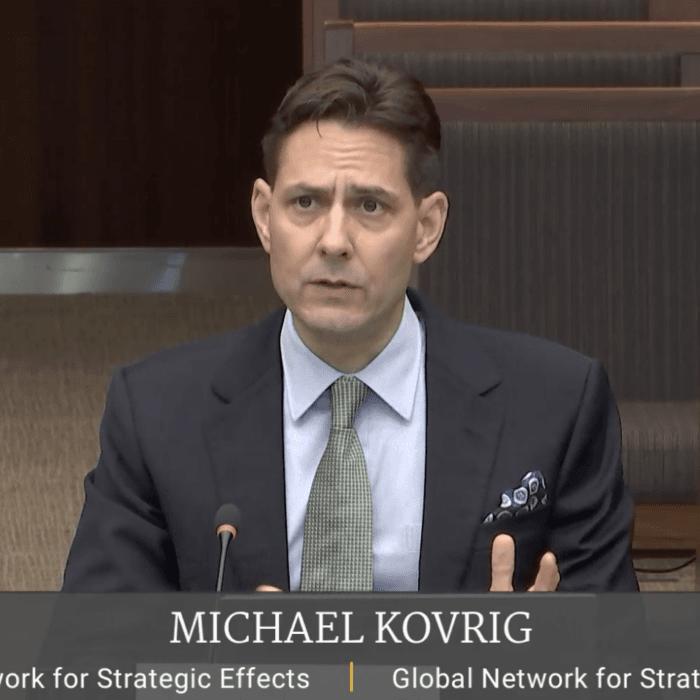
Kovrig and fellow Canadian Michael Spavor were detained for over 1,000 days in China in apparent retaliation for Canada executing a U.S. extradition warrant against Huawei executive Meng Wanzhou in late 2018.
The former diplomat told the committee that Ottawa’s plan to hedge uncertainty with the United States by deepening ties with China will provide no long-term benefits.
Ottawa says it needs to diversify trade due to issues such as increased protectionism from the U.S. administration. The federal government also wants to bring affordable EV options to the Canadian market as it seeks to reduce emissions.
The Canada Border Services Agency in 2023 detained six auto parts shipments from China on suspicion they may have been made through forced labour. The shipments were re-exported to China before a formal determination was made.
International Trade Minister Maninder Sidhu met this week with several Chinese EV manufacturers in China, including industry leader BYD. Global Affairs Canada said Sidhu discussed market-entry pathways for the EVs, longer-term investment in Canada, and “regulatory supply chain requirements.”