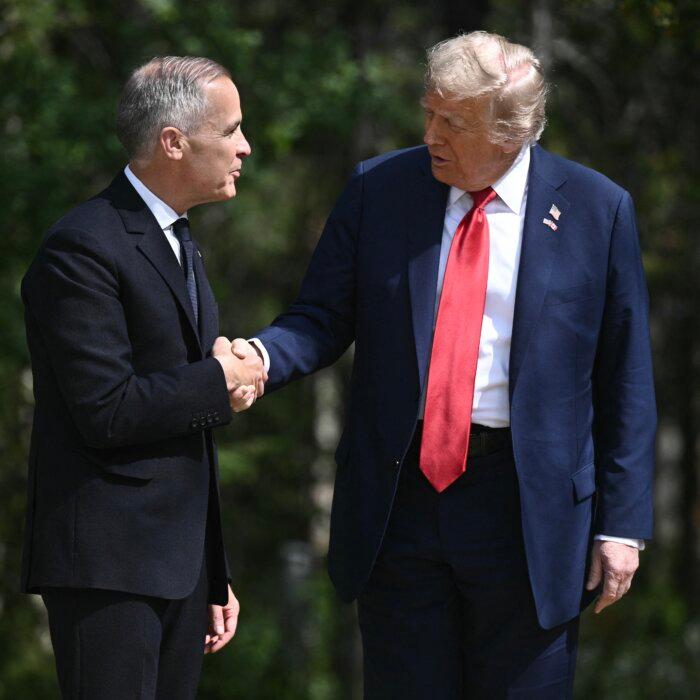
The bar has not been set high as Prime Minister Mark Carney goes to Washington to meet with U.S. President Donald Trump on Oct. 7.
Neither side has suggested there could be a major breakthrough from this meeting, aside from rumours circulating in Ottawa about potential adjustments to U.S. tariffs placed on Canada.
The Prime Minister’s Office (PMO) said the focus of the Carney-Trump meeting will be on “shared priorities in a new economic and security relationship between Canada and the U.S.,” a concept oft-repeated by Carney.
In other words, anything from current tariffs to the upcoming review of the United States-Mexico-Canada free trade agreement (USMCA) could be discussed in relation to the economy.
On the security side, border and defence issues are likely to be on the agenda, including Canada’s potential participation in Trump’s new territorial air defence system, the “Golden Dome.”
“I think he’s coming probably to talk about tariffs, because a lot of companies are leaving Canada to come into the U.S.,” Trump told reporters in Washington.
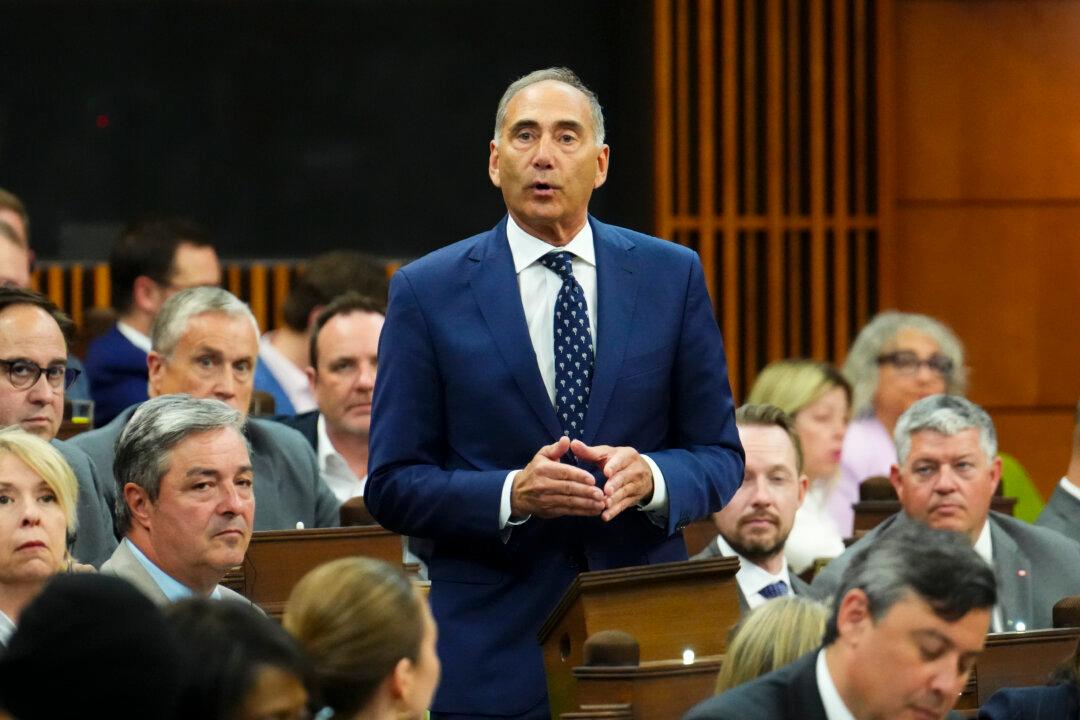
Canada-U.S. Trade Minister Dominic LeBlanc told the House of Commons on Oct. 6 that the focus of the D.C. meeting will be on trade issues and building a North American economy beneficial for both countries.
Second Washington Visit
The Oct. 7 meeting will be Carney’s second visit to the White House, five months after the first official meeting between the two leaders in the Oval Office. The two also met during G7 meetings in Canada in June.The first meeting in early May came shortly after Carney won the April federal election, campaigning on a promise to stand up to Trump and negotiate a new economic and security partnership after declaring that the “old” relationship with the United States is “over.”
The portion of the meeting in front of world cameras had been cordial, with the two leaders singing each other’s praises. It become uncomfortable at one point when Trump made his case on why Canada should join his country. Carney had pushed back saying some things are “never” for sale.
It remains to be seen whether the two leaders will still speak at length in front of the cameras. In any case, major discussions rarely happen in public, and are settled in private meetings.
What could be consequential is if an agreement is reached to remove some pressures on Canadian industries impacted by Trump’s tariffs on metals, autos, or the softwood lumber duties.
There have already been layoffs in the steel sector and Algoma Steel announced last week it would receive $500 million in liquidity support from Ottawa and the Ontario government. The company said Trump’s Section 232 tariffs on steel have “effectively closed the U.S. market to Canadian steel, undermining Algoma’s cross-border business model.”
Trade Deals
Canada was initially hopeful there could be movement on those tariffs. After Carney met with Trump at the G7 Leaders’ Summit in Alberta in June, the PMO said the two agreed to work towards reaching a deal by July 21. The deadline passed, and Trump raised the tariff rate on Canada from 25 percent to 35 percent on Aug. 1.Trump made several deals with major economies, such as the European Union and Japan, that kept the sectoral duties in place.
In light of those deals, and with Trump’s broad-based tariff of 35 percent on Canada exempting goods covered by USMCA, Carney has been repeating in past weeks that Canada currently has the best trade deal compared to other countries.
He said the White House was not just interested in renegotiating USMCA but wanted to make it into “something much bigger.”
“It’s obvious, at least at this point in time, that that’s not going to happen,” he said.
Meanwhile, Canada-U.S. Trade Minister Dominic LeBlanc said last week he remains “optimistic” that a deal could be reached before the USMCA review.
LeBlanc, along with Foreign Affairs Minister Anita Anand and Industry Minister Mélanie Joly, are accompanying Carney to Washington for the Oct. 7 meeting.
Poilievre said even though Carney campaigned on an “elbows up” approach to negotiations with the United States, he has since promised to rescind the Digital Services Tax—a trade irritant for the United States—and has pulled back on counter-tariffs “while winning nothing in return for Canada.”
Ottawa has said these measures were meant to move stalled trade negotiations forward.