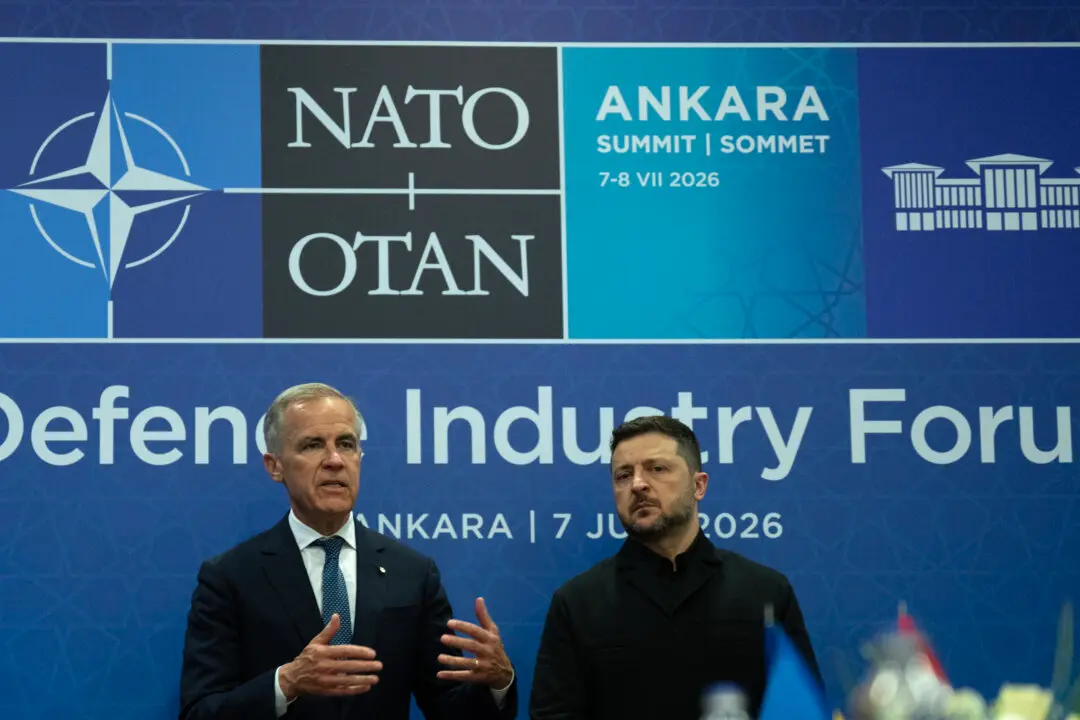
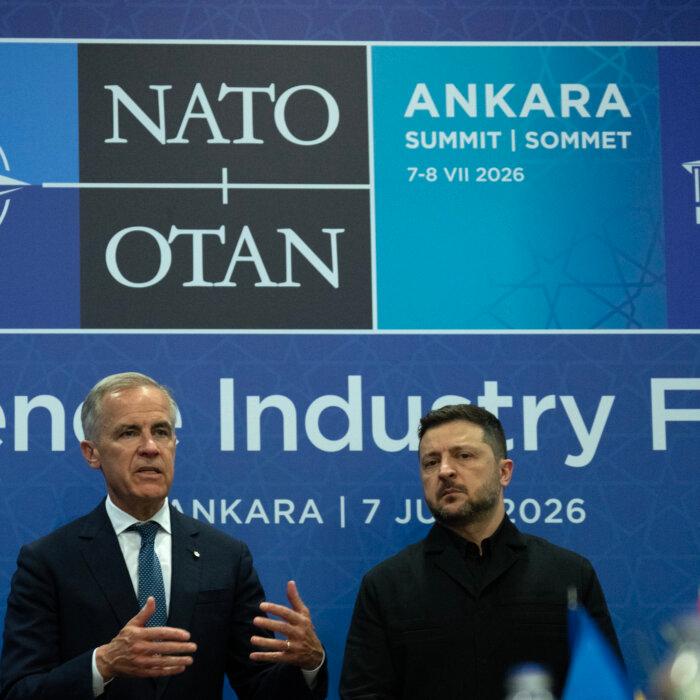
Canada secured the support of eight countries to launch a new defence bank this week at the NATO Summit in Turkey, but so far, all of its G7 allies have remained on the sidelines.
Ottawa is leading efforts to establish the Defence, Security and Resilience Bank (DSRB) at a time when NATO allies are accelerating defence spending and embarking on a broader phase of military rearmament.
The presence of other defence-financing initiatives already underway or emerging in Europe may help explain why some allied countries have been hesitant to join. Other factors may include the cost of the required start-up capital contribution, as well as a preference to take a cautious approach by first assessing how the mechanism develops and which countries ultimately participate.
Participation Hurdles
There are several reasons why more countries have not yet joined the defence bank, according to Kevin Budning, director of scientific research at the defence think tank CDA Institute.Budning pointed to the issue of duplication, noting that European countries already have various defence-financing mechanisms in place. He also said some countries may question the need for an additional institution given that some major economies already have established procurement systems and access to financing backed by strong credit ratings.
“There’s a lot of questions specifically around Germany, France, UK, Italy—whether there is a need for an additional mechanism. Whereas I think some of the smaller countries, or countries that are outside of the NATO like Ukraine, they’re seeing this a greater upside,” Budning told The Epoch Times in an interview.
There is a question of whether the bank will still succeed without attracting major players, Budning said, adding he believes it can, and that Canada should push for it because it serves its interests.
Joe Varner, a senior fellow of the Macdonald-Laurier Institute in Ottawa and the Center for North American Prosperity and Security in Washington, D.C., expressed a similar perspective. He said Canada is playing “catch up” in terms of defence spending and involvement.
“I think it’s good to see Canada leading an international initiative on defence and rearmament and resilience. I often think that we run behind in this country in terms of recognizing the threat and moving to address it,” he told The Epoch Times in an interview.
Varner said he suspects some countries are waiting to see what the “big players” do before joining. Even though no G7 countries have joined the bank yet, Varner argued there are some “consequential members.”
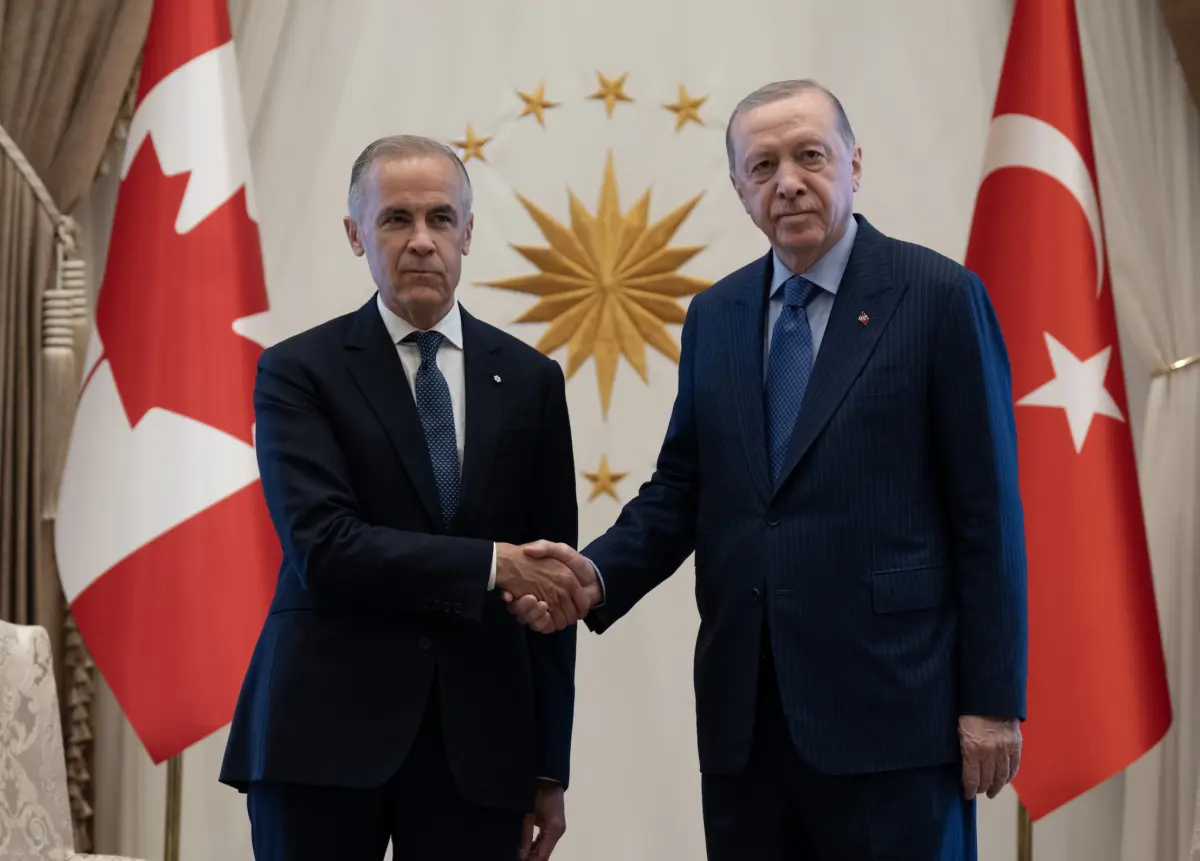
He noted the presence of Turkey, a regional power, and Ukraine, which has been fighting a full-scale war against Russia since 2022. He also said Latvia and Romania are “front line” countries as they share a direct border with Russia.
Competing or Complementary Mechanisms?
Varner notes that the UK’s own initiative to create a new defence financing mechanism has not attracted many countries. The iniative was announced in March and included Finland and Holland. Poland has since joined the group, called the Multilateral Defence Mechanism (MDM).
Prime Minister Mark Carney was asked by reporters on July 8 whether there’s been discussions to merge the two defence financing initiatives.
He said he spoke with his UK counterpart Keir Starmer the previous day about the initiatives, which he described as complementary.
“The MDM, the initiative of the United Kingdom, is pretty much a procurement initiative, sovereign procurement,” he said.
“There’s been discussions amongst our officials. I’m sure those will pick up. It’s an alliance after all, and we’re all looking for the best ways to move forward as these capacities build up,” Carney added.
Cautious Approach
Bryan Brulotte, a former Canadian military officer and current chairman of private equity firm Sterling-Trust, said the limited number of backers for the DSRB doesn’t necessarily suggest opposition to the initiative.“It may simply reflect caution,” Brulotte told The Epoch Times. “Countries are waiting to see whether this becomes a serious, well-governed NATO financing tool, or remains a Canadian-led concept still in development.”
Brulotte cited several factors that could explain this cautious approach, including the fact that the project is still not fully defined.
Brulotte said that pressure on NATO countries to significantly increase defence spending may also influence their decisions on whether to participate in the defence bank. “Before committing to a new financial institution, governments will want to know whether participation would count toward their NATO defence spending obligations,” he said.
Brulotte also noted that defence procurement is politically sensitive for governments, with some likely to have concerns about sovereignty and control. “Countries may hesitate to support a mechanism that could influence national industrial policy or direct capital toward projects outside their own defence sectors,” he said.
Erin O’Toole, a former Conservative Party leader and military officer, mentioned the strength of Canada’s “Big Six” banks as he raised doubts about the need for the DSRB.
“The lukewarm response in NATO seems to confirm this point,” added O’Toole, who now works as president and managing director of risk advisory firm ADIT North America.