Prime Minister Mark Carney has continued his trade diversification efforts during a visit to Germany, pledging to cooperate on critical minerals with Europe’s largest economy and opening the door to exporting liquified natural gas (LNG).
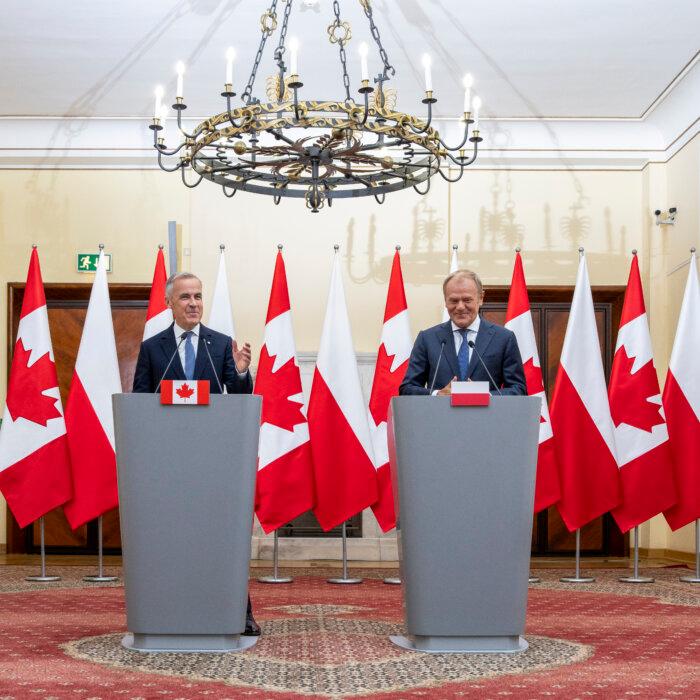
Carney made the stop in Germany on Aug. 26, after visits earlier this week in Ukraine and Poland. During the visit, Canada and Germany signed a Joint Declaration of Intent to increase cooperation in critical minerals, in order to secure supply chains, collaborate on research, and co-fund new projects.
Carney said that Russia’s invasion of Ukraine, COVID-19, and changes in the global trade dynamic have exposed vulnerabilities in supply chains for metals and critical minerals.
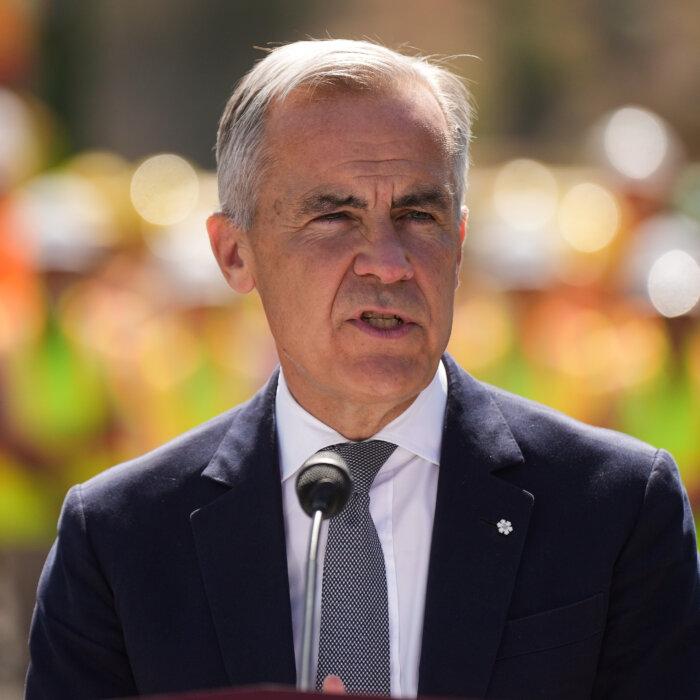
“Germany has been amongst the leaders in beginning that diversification away from China, particularly China and Russia,” Carney said during a press conference, adding that Canada can play a role in that diversification.
The joint declaration by Canada and Germany says the two countries will focus coordination on lithium, rare earth elements, copper, tungsten, gallium, germanium, and nickel. The declaration is not binding and does not impose any financial commitment on the signing parties.
Ottawa’s openness to explore LNG exports to Europe is a change from the previous Liberal government.
The new Liberal government has pledged to build new infrastructure to diversify trade and boost Canada’s economy. Carney cited this strategy when asked by a German reporter how he plans to supply Germany and Europe with raw materials when there are no pipelines or terminals.
“There’s a huge range of immediate opportunities with respect to critical metals and minerals, and there are medium-term opportunities with respect to all forms of energy, including LNG and hydrogen,” Carney said.
The prime minister added that his government is on the verge of “unleashing half a trillion dollars” on energy infrastructure, including in ports.
He said the formal announcements will be made in the next two weeks and will include expanding the Port of Montreal at Contrecoeur and the Port of Churchill in Manitoba. He also mentioned other unspecified East Coast ports.
This will “open up enormous LNG, plus other opportunities,” Carney said.
These moves are likely part of the major projects deemed in the national interest for which the approval and construction will be sped up under the One Canadian Economy Act, also known as Bill C-5, adopted by Parliament before the summer break.