Prime Minister Mark Carney said his government is paying close attention to fuel prices and looking at ways to mitigate the impact of increases on consumers.
Carney made the comment when taking questions from reporters in Brampton on April 7. The prime minister was asked why fuel prices are spiking in Canada when the country is a major oil producer.
Carney remarked that oil prices are set in a global market and impact all countries alike. West Texas Intermediate (WTI) crude oil was trading at US$65 a barrel before the start of the Iran war and has now surpassed US$110.
“And so the question becomes, and this is what the government’s focused on, is how long is this going to persist, and what can we do to help cushion the blow for Canadians,” Carney said. “That’s something we’re looking at.”
The prime minister did not say what measures are being considered to lower gas prices. His predecessor Prime Minister Justin Trudeau had implemented a GST tax holiday on some items in late 2024 to help with affordability.
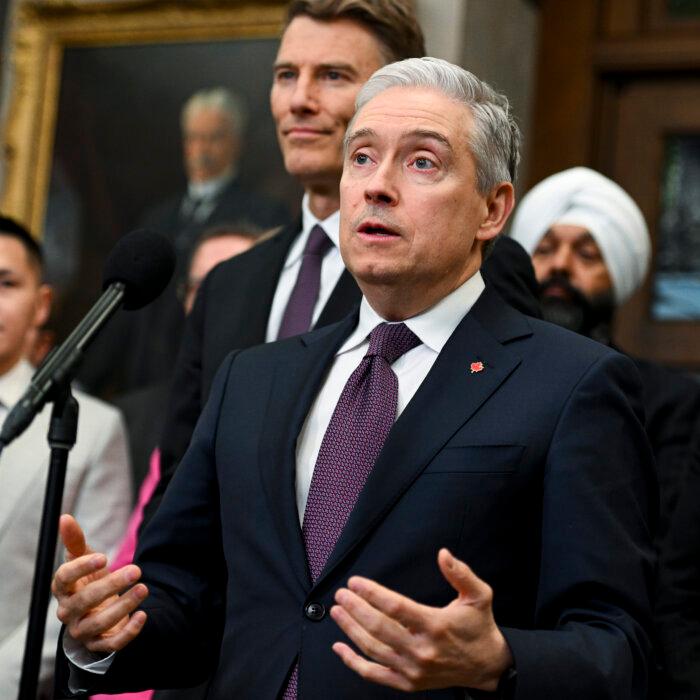
In an open letter to Carney on April 7, Poilievre reiterated his call for the removal of federal taxes. He said the federal government stands to collect much higher revenues from taxes due to higher oil prices.
“You should use $5 billion of the estimated $9 billion in additional revenue to remove all federal taxes on gas and diesel, giving Canadians a relief at the pumps until the end of 2026,” Poilievre said.
The Tory leader said the federal fuel excise tax and the GST on gas and diesel should be suspended, whereas the Clean Fuel Regulations (CFR) should be permanently abolished. Poilievre has described the CFR as the new “carbon tax” after Carney abolished the consumer-facing fuel charge.
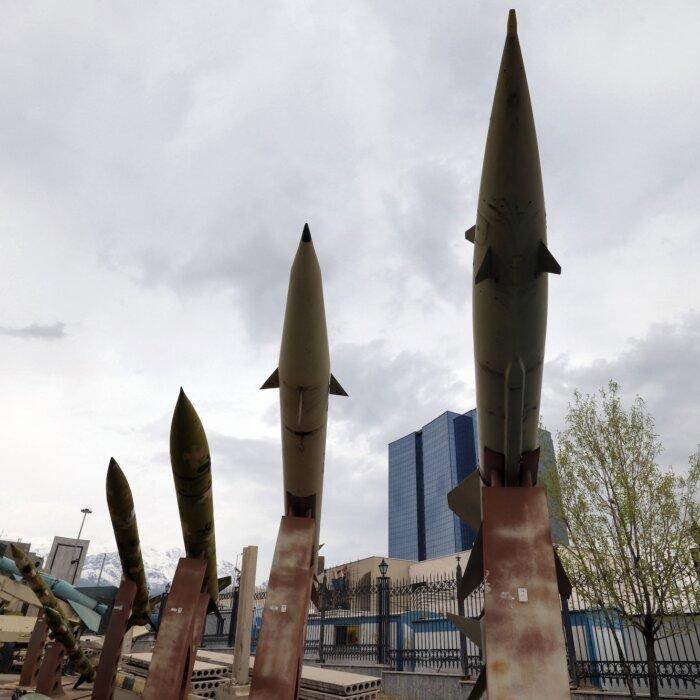
Oil prices have spiked since the United States and Israel launched their attack on Iran on Feb. 28. Iran has virtually closed the Strait of Hormuz, south of its territory, through which around 20 percent of the world’s oil ships.
U.S. President Donald Trump has threatened to attack Iran’s power plants and bridges if it doesn’t open the Strait of Hormuz. The president set the deadline of 8 p.m. on April 7 for Iran to strike a deal, but similar deadlines have shifted during the conflict.
Carney was asked to comment on the matter during his press conference and said he expects all parties in any conflict to respect international law, which he said includes not targeting civilians or civilian infrastructure.
“I'll just observe that there are some negotiations going on, and that there is often a gap between what’s said publicly and what’s happening privately,” he said.