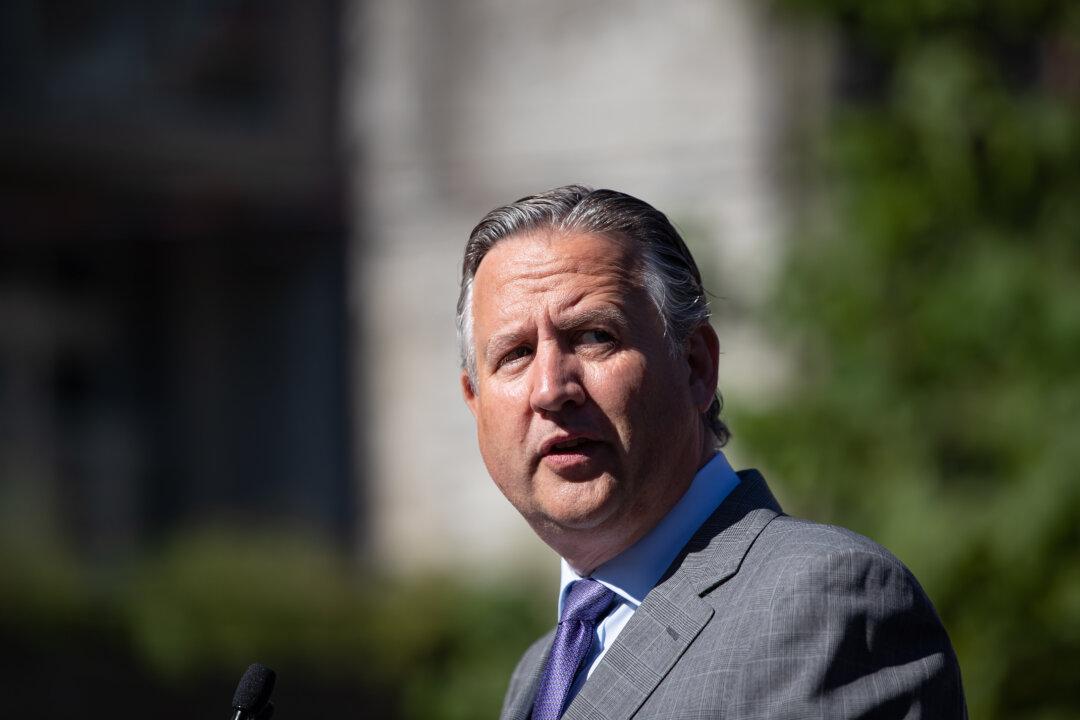
As Prime Minister Mark Carney deepens defence ties with the European Union, Canada’s Chief of the Defence Staff Gen. Jennie Carignan says Ottawa should resume its planned purchase of American F-35 fighter jets and work together with Washington on missile defence.
Carignan made the comments in a June 23 interview with the Toronto Star, where she expressed support for Canada’s continued purchasing of F-35s, which was put under review by Prime Minister Mark Carney earlier this year.
Canada originally committed to buying 88 of the fifth-generation Lockheed Martin fighter jets in 2022, with National Defence estimating the total cost at $19 billion at the time of the formal agreement in January 2023. However, a report from Auditor General Karen Hogan earlier this month determined the cost of the deal had increased from $19 billion to $27.7 billion due to rising inflation, fluctuations in exchange rates, and heightened global demand for munitions. An additional $5.5 billion was also said to be needed in order to upgrade infrastructure and purchase advanced weapons.
Ottawa finalized its purchase of 16 of the 88 jets before Carney put the deal under review just after taking office in March. Carignan said that changing policy at this stage to buy another kind of jet would come at significant additional costs, including to retrain pilots on new jets. She said it would also make it more complicated to run Canada’s fleet and find easily available parts.
The F-35s are intended to replace Canada’s aging fleet of CF-18 Hornets, which were first put into service in the 1980s.
Defence Minister David McGuinty told reporters on June 10 that Canada has already acquired 16 F-35s and will take possession by year’s end at the latest.
Carignan said buying more than 16 F-35s, but possibly not all 88, may be the best option in her view.
“Do we need the full 88? Do we need to stop before? That might be a decision for later on,” Carignan told The Star. “But from what we can see at the moment, those 16 (planes), and then, plus, is the way to go.”
Canada’s purchase of F-35s from the United States has been a polarizing issue over the years, with Conservative and Liberal politicians arguing about the size of the budget to replace Canada’s aging fleet and the fairness of the competition process. The debate was reignited in March after trade tensions with Washington and “51st state” comments from Trump.
Canada’s review of the deal has raised concerns from the Trump administration, with U.S. Ambassador to Canada Pete Hoekstra saying interoperability could be jeopardized if Ottawa pulls out.
In reaction, Carney said many factors impact interoperability and that the review is looking at “value for money” and “broader Canadian industrial impacts.”
Missile Defence
In addition to her support for buying more F-35s, Carignan said that the United States and Canada both benefit from working together on the North American Aerospace Defence Command (NORAD) and should collaborate on missile defence.Trump announced last month his plans to build the “Golden Dome” missile defence system and said it would cost around $100 billion for Canada to join. While Carignan hasn’t weighed in on whether Canada should join a future potential American air defence endeavour, she said that Ottawa needs to maintain cooperation with Washington.
“It’s easier to do it together, because missiles don’t know boundaries,” Carignan said. “A missile could come across the U.S. and then being targeted towards Canada — who defeats it, when, if our systems don’t talk to each other?”
Carignan’s comments come as Carney meets with NATO leaders on June 24 and 25 at the NATO summit in the Netherlands, where the 32 member nations are expected to commit to spending 5 percent of GDP on defence by 2035. Carney recently promised $9 billion in additional defence spending to help Canada meet NATO’s existing 2 percent target by the end of this fiscal year in March 2026.
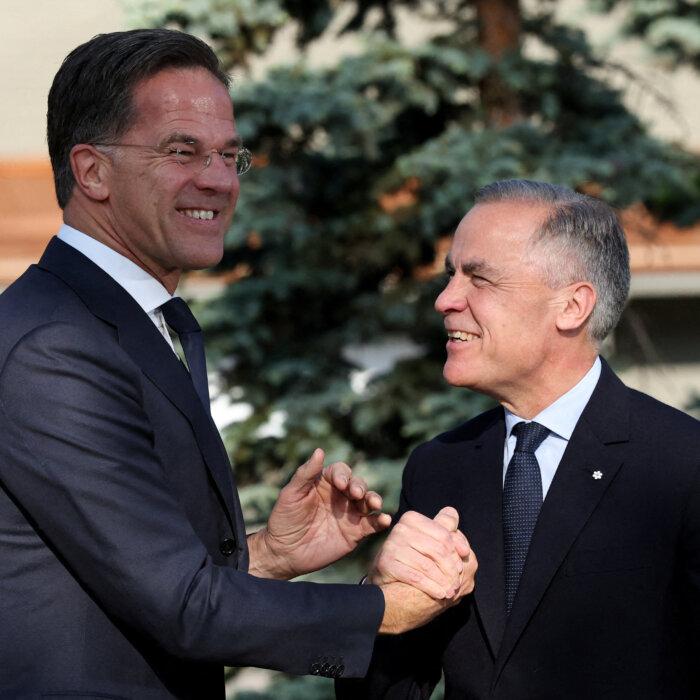
NATO Secretary-General Mark Rutte said ahead of the summit that particular threats from Russia and China make it necessary for the alliance to significantly boost defence spending and combat readiness.
Meeting on June 23 with European leaders, Canada also moved forward on closer defence cooperation with the European Union, with European Commission President Ursua Von der Leyen saying that talks will “swiftly” begin for Canada to enter and bolster the EU’s 150-billion euro ($240 billion) Security Action for Europe (SAFE) program contained within the ReArm Europe policy.
Noé Chartier contributed to this report.