Canada’s plan to replace its aging fleet of fighter jets with F-35s will cost much more than initially projected, according to the auditor general.
The agreement to buy 88 F-35 fighter jets from the United States had been finalized in 2022, with the Department of National Defence (DND) projecting the cost at $19 billion.
The auditor general said that by 2024, the estimated cost had risen to $27.7 billion, due to issues like rising inflation, fluctuations in exchange rates, and heightened demand for munitions globally.
The report said DND’s initial estimate were based on “outdated data” and that DND was only 50 percent confident in its 2022 estimate, with costs expected to be greater.
The projection of $27.7 billion does not include an additional sum of at least $5.5 billion to reach full operational capability, the auditor general said, to be used to upgrade infrastructure and purchase advanced weapons.
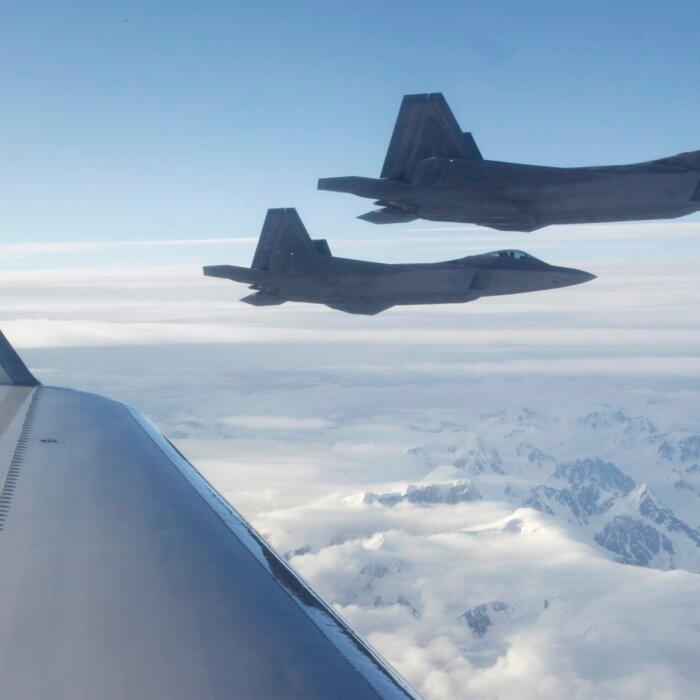

The F-35, a fifth-generation stealth fighter jet, is built by U.S. defence company Lockheed Martin. Canada is purchasing the F-35A version, which can be used on conventional airfields, and which will bear the designation CF-35A.
The advanced aircraft will replace the aging fleet of CF-18 Hornets, which were first introduced in the early 1980s. The aircraft had a life expectancy of 20 years and went through modernization in the early 2000s to extend their service up to 2020.
The initial choice of the F-35 had met with some controversy. Canada had been a partner in the Joint Strike Fighter (JSF) program to develop a fifth-generation fighter with the United States since 1997. The Stephen Harper government announced in 2010 it would acquire the F-35 without running a competition process.
Other countries part of the program include Australia, Denmark, Italy, the Netherlands, Norway, and the United Kingdom.
The purchase of the jets became a political issue in Canada, with the Liberal Party campaigning in the 2019 election on the promise of running a transparent competition to replace the CF-18s. The party said Canada needed an aircraft to defend North America and not for “stealth first-strike capability.”
Tensions With US
The F-35 purchase again became politicized in recent months amid “51st state” comments and tariffs from U.S. President Donald Trump aimed at Canada.Shortly after becoming prime minister in mid-March, Mark Carney said he asked then Minister of Defence Bill Blair to conduct a review of the F-35 contract to determine whether that aircraft or an alternative “is doing the best job to defend our country, getting the best value for money.”
“If Canadians are flying one airplane, we’re flying another airplane, it’s no longer interchangeable,” Hoekstra said. “And so, that might even threaten NORAD without talking about new alliances that promise even more security and safety to our people.”
Asked by reporters about Hoekstra’s comments, Carney said on May 21 that the contract review is ongoing.
Obstacles
Canada is expected to receive its first delivery of F-35s between 2026 and 2032, the auditor general’s report says, but the first eight aircraft will be sent to an airbase in the United States where pilot training will begin. The rest of the delivery is planned to start in 2028.Defence Minister David McGuinty told reporters on June 10 that Canada has already acquired 16 F-35s and will take possession by year-end at the latest. He said pilots would start training but didn’t specify whether this would be in Canada.
The planned delivery had already hit some snags, with the auditor general reporting that construction of the fighter squadron facilities in Bagotville, Que., and Cold Lake, Alta., is more than three years behind schedule. In response, DND developed an interim plan to be able to operate and maintain the new aircraft in 2028. The Joint Strike Fighter Program Office assessed the plan and determined some “significant issues remained unresolved,” including the lack of plan to keep the pilots’ knowledge and skills current.
The issue of pilots is also noted by the auditor general, which found that a shortage remains one of the biggest obstacles.
McGuinty reacted to the auditor general’s report by saying his government takes the findings “seriously.”
He said Ottawa has taken measures to address the findings, including reviewing cost estimates on an annual basis, updating a risk management plan, and increasing transparency with the public.
Regarding longstanding military procurement issues in Canada, Carney said the establishment of a new office overseen by a secretary of state would help streamline defence acquisitions.