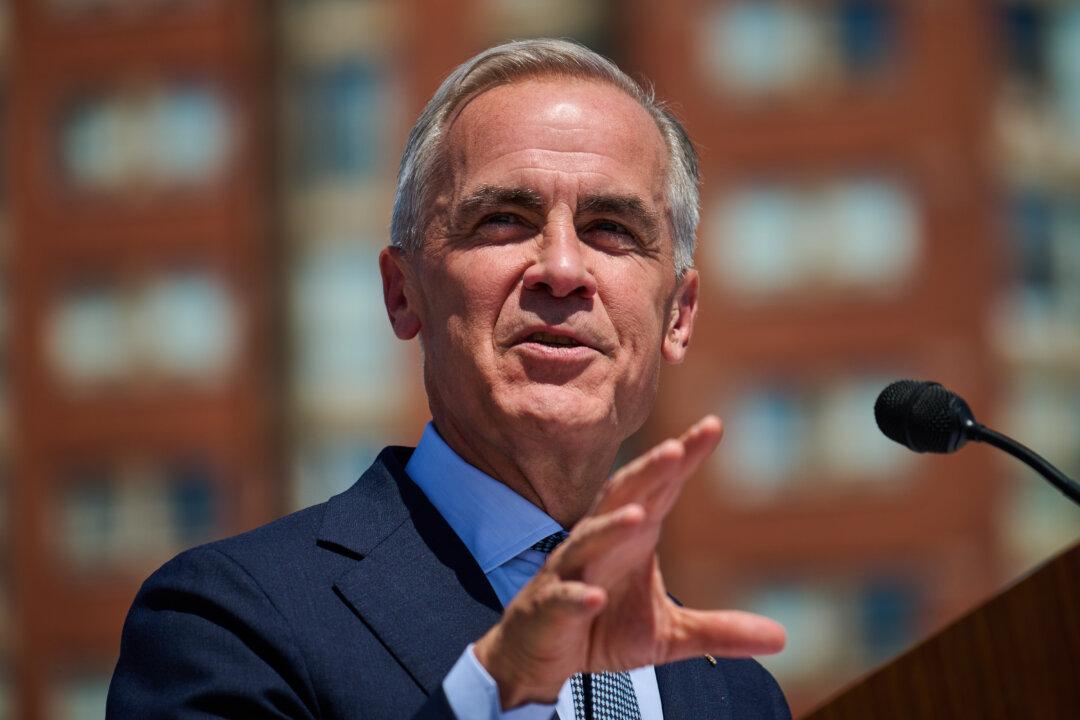
Prime Minister Mark Carney and Mexican President Claudia Sheinbaum have signed a broad strategic partnership agreement between the two countries.
The deal, signed Sept. 18, will entail expanded ocean trade routes, enhanced security cooperation, and provision of more short-term work visas for Mexicans to work in Canada, along with increased ties in energy, finance, and health care.
Carney’s Mexico Trip
Carney arrived in Mexico City at 10:45 a.m. CST Sept. 18 and met with Sheinbaum for a working lunch, which lasted until 3:30. The two leaders then participated in a roundtable discussion with Canadian and Mexican business leaders.The leaders’ agenda also reportedly covered organized crime, including efforts to counter narcotics and firearm trafficking. Foreign Affairs Minister Anita Anand and Finance Minister François-Philippe Champagne joined the discussions.
Carney also revealed plans for an upcoming Canadian trade mission to Mexico, to be headed by Minister responsible for Canada‑U.S. Trade Dominic LeBlanc, as well as $9.9 million in funding for a U.N.‑led programs aimed at supporting migrant integration in Mexico and addressing the illegal production and trafficking of fentanyl.
When asked about Mexican cartels having a presence in Canada, Carney said transnational crime is a reality in today’s world, including “Canadian gangs that operate in Mexico,” and that the two countries will deepen their security cooperation to crack down on organized crime.
“The needs for security for our countries go broader than that. They include cybersecurity, foreign interference, defense cooperation. And we have enormous opportunities to cooperate there,” Carney said, with a press release from his office noting the two countries will also strengthen efforts to fight human trafficking and money laundering.
‘A New Era of Cooperation’
Sheinbaum said the agreement will strengthen Canada and Mexico’s economic, cultural, and security ties.The initiative outlines joint Mexican-Canadian efforts to develop ports, rail lines, and energy corridors, while also tackling cross-border crime. Sheinbaum said it’s important to expand temporary work visas for Mexicans in Canada and enhance maritime trade routes across both the Pacific and Atlantic.
Carney and Sheinbaum said the deal will also expand investment opportunities across sectors like energy, infrastructure, agriculture, and critical minerals, as well as collaboration on environmental and conservation initiatives.
Carney said the deal marks “a new era of elevated cooperation,” highlighting opportunities for Canadian workers, businesses, and investors, while reinforcing North America’s role as a globally competitive region.
“The world economy is going through a period of deep change. Supply chains are fragmenting. Capital is moving, looking for sustainable returns, and climate change is a daily risk for businesses, workers, and communities,” Carney said. “We have had free trade between our economies for over 30 [years], and that partnership has improved the livelihoods of our workers and families, and helped make North America the economic envy of the world.”Deepening Ties With Mexico
Prior to leaving for Mexico, Carney had said on X that the country is Canada’s third-largest trading partner, and therefore Ottawa must “seize the opportunity to elevate this strong partnership and create more opportunities for our workers and businesses.”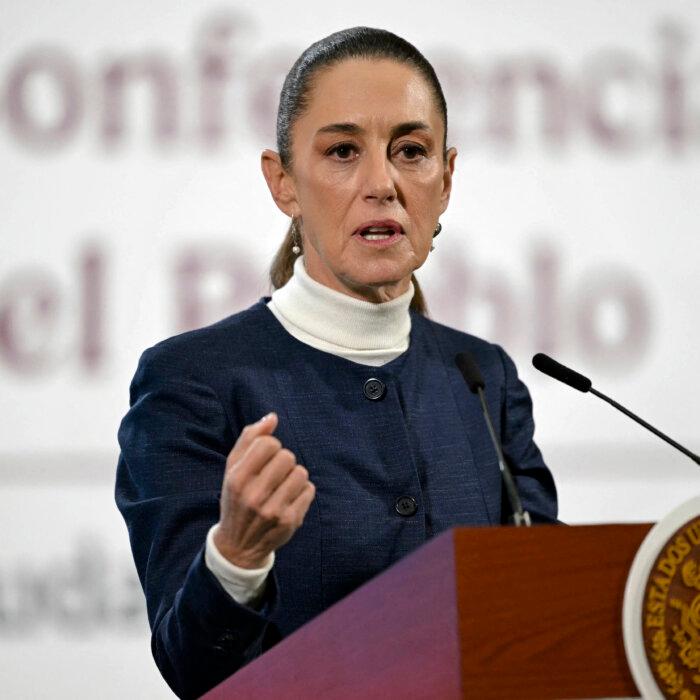

Ottawa cited almost $56 billion in two-way merchandise trade in 2024 and $46.4 billion in direct investment in Mexico to highlight the strong economic relationship between the two nations.
On Aug. 5, Anand and Champagne travelled to Mexico for discussions on economic development, security, and trade, accompanied by a group of Canadian and Mexican business representatives.
Following the meeting, Sheinbaum commented at the time that there was “no need” for a bilateral trade deal with Canada due to the existing U.S.-Canada-Mexico Agreement (USMCA).
However, speaking at a press conference Sept. 17, Sheinbaum said that despite wanting to maintain the USMCA, “we want to strengthen trade with Canada,” a sentiment she reiterated at the Sept. 18 press conference with Carney.
Renegotiation of USMCA
When asked about the upcoming renegotiation of the USMCA in July of next year, Carney said the bilateral agreement reached Sept. 18 “complements” USMCA and lead to overall strengthening of Canada, the United States, and Mexico. He said any chances for improvement to the agreement will be pursued by Canada.
Sheinbaum said she is confident the USMCA will “prevail” and be renegotiated with “goodwill” when the review comes up.
“Most of our trade with the U.S. is still tariff-free and that’s because it’s competitive for all three countries,” Sheinbuam said, adding she believes the review of USMCA will lead to results that are in the best interests of all of North America going forward.
On the related topic of whether Canada and Mexico developed a joint strategy to respond to U.S. tariffs following their Sept. 18 talks, Sheinbaum said Mexico is still exporting the majority of its products at a high level, as is Canada. However, she said looking for ways to enhance “competitiveness” will be sought through bilateral or trilateral meetings including “obviously” looking for a better deal regarding Mexican steel, which is subject to a 50 percent U.S. sectoral tariff, as is Canadian steel.
The United States imposed a 25 percent tariff on automobiles and auto parts imported from all countries, including Mexico and Canada, this past spring. However, vehicles and parts that comply with USMCA exemptions are not subject to tariffs. Sheinbaum and Carney said the priority will be in protecting this supply chain and working together with the United States to develop a solution in the best interests of all three countries.
Mexico recently put tariffs on Chinese-made automobiles and goods at the behest of the United States without receiving any concessions or benefits in return.
A planned North American leaders’ summit is not currently being planned, with the last one having taken place in January 2023 in Mexico City.
Conservative Leader Says Canada Falling Behind Mexico
Canadian Conservative Leader Pierre Poilievre criticized Canada’s negotiations with the United States compared to Mexico’s just hours prior to Carney’s Sept. 18 press conference.
“The U.S. gave Mexico a 90-day trade deadline extension in July after increasing their year-over-year trade with them by 8.2 percent,” Poilievre posted on X. “What did Prime Minister Carney get? A 10.4 percent drop in trade, doubled tariffs and no deal in sight. What did Mexico get right that Mark Carney got so catastrophically wrong?”
In comments in the House of Commons Sept. 18, Poilievre also criticized Canada’s economic performance in relation to Mexico, which was rebutted by Minister of Innovation, Science and Industry of Canada Mélanie Joly as “talking down Canadian workers.”
Canada currently has a 7.1 percent unemployment rate, while Mexico’s unemployment rate is 2.7 percent.