Ottawa and New Delhi agreed to expand trade in hydrocarbons as Energy Minister Tim Hodgson visited India.
Hodgson and Indian Petroleum and Natural Gas Minister Hardeep Singh Puri have agreed to deepen bilateral energy trade, with Canada supplying liquefied natural gas (LNG), liquefied petroleum gas (LPG), and crude oil. Meanwhile India, having the fourth largest refining capacity in the world, could supply refined oil products to Canada. The statement adds that Hodgson and his counterpart recognize the “importance of climate-related objectives.”
Hodgson, a former public utility executive, became energy minister after the April 2025 election and has since relayed elevated interest in Canadian energy during his travels abroad.
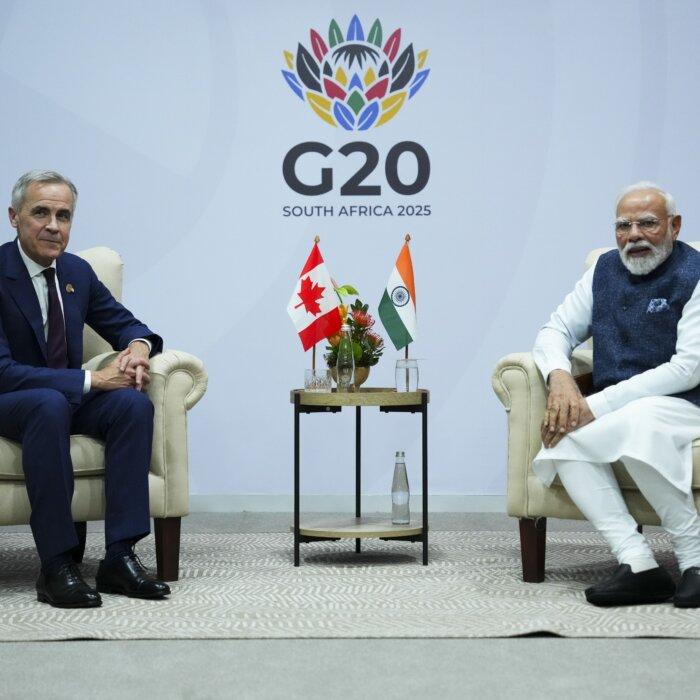
The joint statement with India on energy is part of the rapprochement between Ottawa and New Delhi that began after Prime Minister Mark Carney took office. The statement notes the meeting between Hodgson and Singh Puri follows the direction provided by Carney and Indian Prime Minister Narendra Modi when they met at the G7 Summit in Alberta in June 2025.

Canada is a major oil and gas producer with most of its exports destined for the U.S. market. In 2024, 96 percent of Canadian crude oil exports were sent down south, according to Natural Resources Canada, and 100 percent of Canadian natural gas exports were as well.
The proportion of natural gas exports destined for the United States began dropping last year with Canada’s first LNG export terminal becoming operational in British Columbia. LNG Canada in Kitimat is a joint venture between multinationals Shell, Mitsubishi, Korea Gas Corporation, Petronas, and PetroChina.
Ottawa referred the second phase of LNG Canada to the Major Projects Office in September 2025 to increase the country’s export capacity. LNG Canada owners have not made a final investment decision on the project.
As for LPG, Canada has two export terminals in B.C. currently online, with two more in construction.
Ottawa and Alberta signed a memorandum of understanding in November for the construction of a new bitumen pipeline to the West Coast to increase exports to Asia. Alberta is currently working on the proposal, for which Ottawa has set a number of conditions, including the pairing of a carbon capture and storage system, increasing the industrial carbon tax, and negotiations with the B.C. government and First Nations.