The government should look to its spending before increasing taxes, business groups have told the Senate Economic Committee, which is scrutinising Labor’s overhaul of wealth creation vehicles.
The Income Tax Rates Amendment (Tax Reform No. 1) Bill 2026 alters the capital gains tax (CGT) regime, which applies to the profit of an asset sale. Previously a 50 percent discount was available, meaning an investor was liable for a tax on the remaining half of the profit.
That has now been replaced with a 30 percent minimum tax on the full profit earned, as well as inflation-adjusted gains.
Further, the Labor government has moved to discourage the use of discretionary trusts by imposing a 30 percent tax on all income placed in one—trusts are a popular vehicle for business owners to reduce their tax burden via income splitting.
“This is a very large new tax, raising more than $40 billion over 10 years, a significant amount of which will impact on investment in business,” said Bran Black, chief executive of the Business Council of Australia.

Black said increasing revenue would only mean “locking in” government spending.
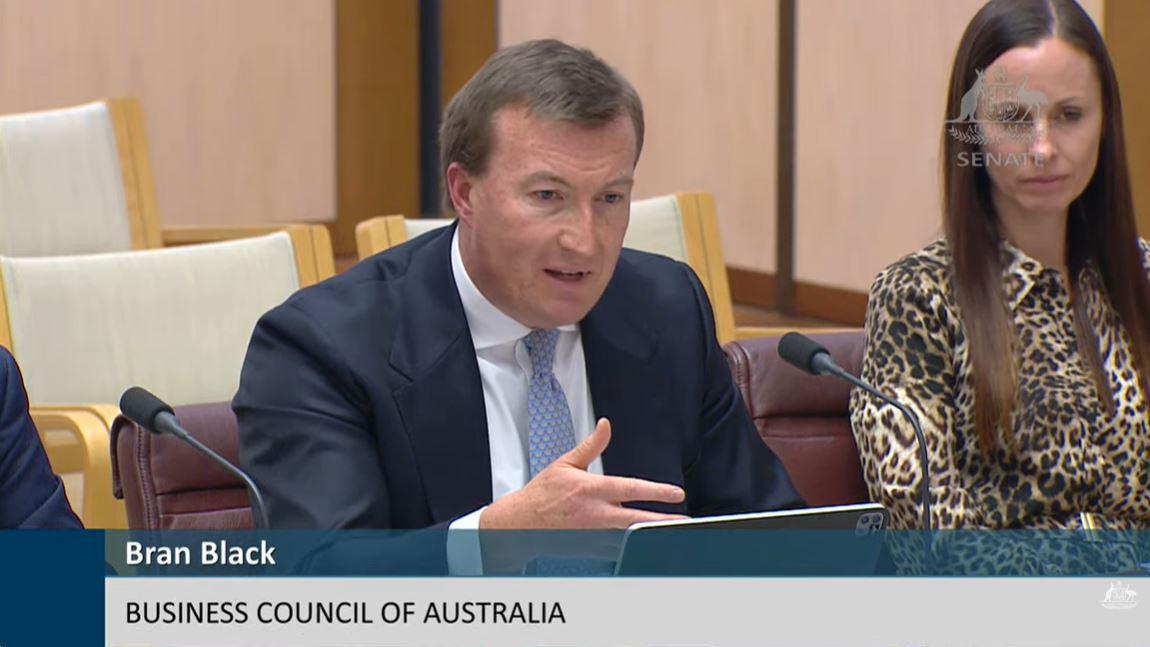
“The growing transfer of resources from the high-productivity private sector to the low-productivity public sector will act as a drag on the economy,” he said.
Businesses with the highest productivity that generate the highest capital gains would be taxed the most, he pointed out.
The changes would also affect Australia’s competitiveness, which is already poorly rated on tax.
“We are close to 30 year lows with respect to business investment.”
Black pointed to companies like Woodside and BHP as examples of local companies going offshore due to the uncompetitive nature of Australia.
Compliance costs were also an issue, he argued.
Chamber of Commerce Says No Reason to Target Business
The Australian Chamber of Commerce and Industry (ACCI) told the committee that it is “alarmed” by the speed at which the government is progressing the legislation.Andrew McKellar, the organisation’s chief executive, argued that the government could not push “such consequential legislation through Parliament within a few weeks of its announcement, without proper consultation with affected stakeholders, or a clear understanding of the consequences.”
He said that whenever the government was asked about the impact on business, the answers often relate to the residential real estate market, which are a “different story.”
Call for Small Business Concessions to be Broadened
Matthew Addison, chair of the Council of Small Business Organisations Australia (COSBOA), called for thresholds for the small business CGT concessions to be increased to an annual turnover of $10 million, in line with the Australian Tax Office.The organisation’s chief executive, Skye Cappuccio, said the organisation was “deeply concerned” that the proposed changes “risk undermining entrepreneurship, investment, and business growth at a time when Australia is already facing significant productivity challenges.
“The proposed reforms change the risk and reward equation for those Australians who choose to start, build, and grow a business. The changes disproportionately affect founders who start with little capital and who have created value through hard work, innovation, and persistence,” she said.
All three business organisations said suggested changes to the legislation, such as introducing income averaging, would not be sufficient to remedy problems with the legislation and supported a complete overhaul of the tax system.
“If people think the economy isn’t working for them and they’re working their guts out and they’re not getting an opportunity, I'll tell you what, they will turn to more simplistic, grievance-based politics,” he said.