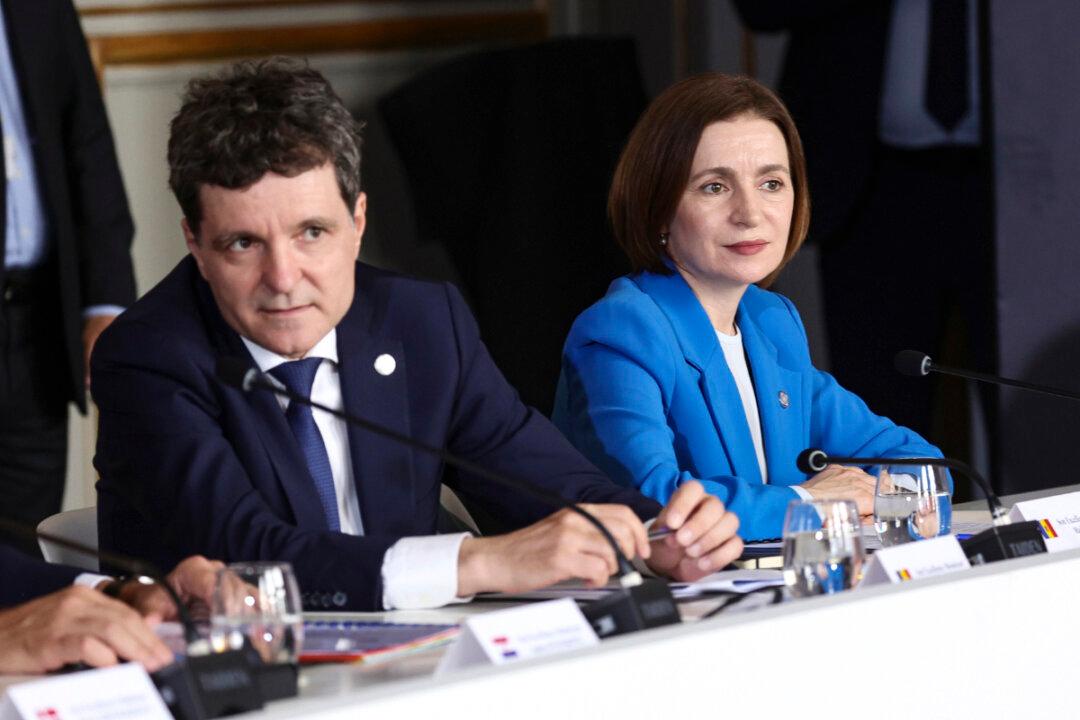
Bulgaria’s prime minister has reaffirmed his country’s commitment to spending 5 percent of gross domestic product (GDP) on defense, saying Europe needed to do more to boost its own defense capacity.
Prime Minister Rumen Radev did not specify when his country would achieve that target, but said on May 28 that the government was consistently making progress.
“We have reached the 2 percent threshold,” Bulgarian National Radio quoted Radev as telling NATO Secretary General Mark Rutte in a meeting in Brussels. “We are determined to take the next step by gradually increasing our budget to 5 percent to meet our defense commitment.”
After the bilateral meeting, Rutte wrote in a post on X that Bulgaria is a “valued ally making important contributions to our shared security,” with the country having a key role on the alliance’s eastern flank, which includes the Black Sea.
The NATO secretary-general also acknowledged that Sofia was stepping up on defense spending and increasing production, which he said was a “top priority” for the upcoming NATO summit.
Poland Calls for 2030 Deadline
In June 2025, NATO allies agreed to raise defense spending targets from 2 percent of GDP to 5 percent by 2035, with 3.5 percent for core defense, such as troops, arms, and equipment.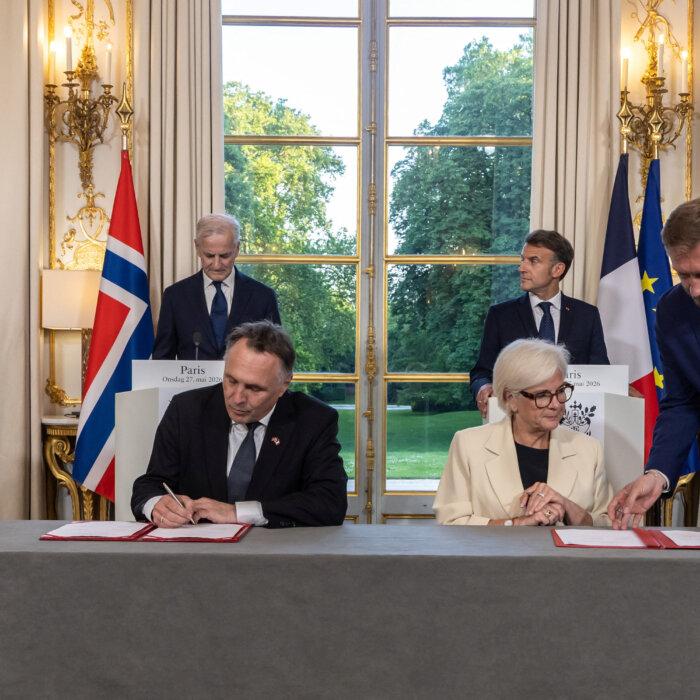
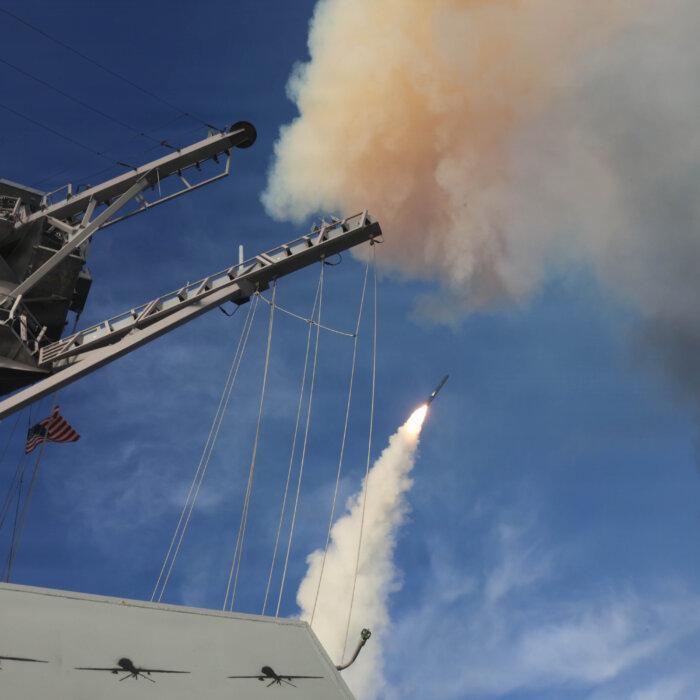
The other 1.5 percent should be spent on other related areas, such as security and infrastructure. This could include protecting energy pipelines and undersea cables as well as cyber-proofing civilian assets such as airports, computer servers, and banks.
“There’s no point in waiting until 2035 for 5 percent—it must be achieved by 2030, because later may be too late,” Polish Deputy Prime Minister Wladyslaw Kosiniak-Kamysz said on May 6.
The push for Europe to do more to secure its own defense came as the United States reoriented its defense and security priorities.
NATO Has to Work for Everyone: Rubio
In recent months, the Trump administration has vocalized its frustration with NATO due to members’ lack of support during the Iran war. This includes Spain, which closed its airspace to U.S. aircraft involved in the conflict.“Like any alliance, it has to be good for everyone who’s involved. There has to be a clear understanding of what the expectations are,” Rubio said.
“I don’t think anyone is shocked to know that the United States and the president, in particular, is very disappointed at NATO right now. ... Why is NATO good for America? Because it gives us bases in the region that allow us to project power during a contingency in the Middle East or somewhere else,” he said.
“So, when that is the key rationale for why you’re in NATO, and then you have countries like Spain denying us the use of these bases, well then why are you in NATO?”
“Yes, there has been some disappointment from the U.S. side, but Europeans have listened,” Rutte told reporters at a European Political Community summit in Armenia on May 4.
“They are now making sure that all the bilateral basing agreements are being implemented.”