Vietnam is proposing measures that would see under-16s restricted from sharing, commenting on, or reacting to posts on social media, amid a wider global trend of countries limiting or banning minors from using the platforms.
The measures were discussed at a July 23 workshop held at the Vietnamese Ministry of Culture, Sports, and Tourism attended by representatives from the government and organizations and businesses engaged in digital services.
According to a statement from the ministry, “parents or guardians will continue to be the entities responsible for registering and managing children’s accounts; at the same time, social media providers must apply technical solutions to identify child users, distribute age-appropriate content, enhance privacy protection, and proactively prevent harmful content.”
Deputy Culture Minister Phan Tam, who chaired the session, said the objective of the plans “is not to ban or excessively restrict children’s access to social media, but rather to ensure that when children use social media services, they are placed in an age-appropriate environment and protected from inappropriate risks.”
The draft decree says that social networks must have technical solutions to “ensure that child users (under 16 years old) are not allowed to post, comment, share, or express emotions on the social media platform provided.”
They must also “proactively detect, warn, and prevent children from accessing violent, pornographic, gambling, drug, suicide, dangerous challenges, and other harmful content.”

The draft decree has not yet been finalized, and could be revised before it is formally adopted.
France Restricts Social Media
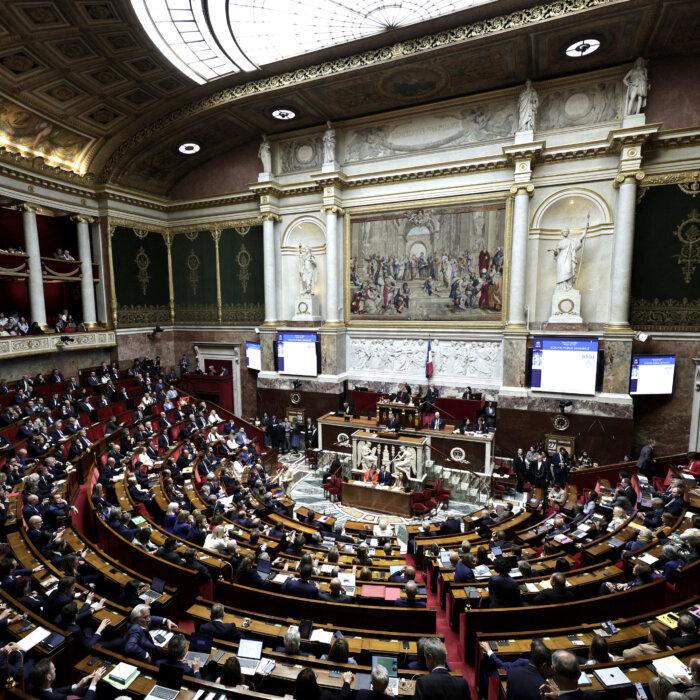
The French parliament on July 21 gave its final approval to the legislation, which will bar children younger than 15 from social media. The ban covers new accounts from Sept. 1, and platforms have until Jan. 1, 2027, to close accounts already held by under-15s.
However, some in the French legislature have said that the restrictions could put civil liberties at risk.
Alexandre Allegret-Pilot, a National Assembly member with the conservative Union of the Right for the Republic Party, who voted against the bill, told The Epoch Times that the law “offers no safeguards for fundamental freedoms and no guarantee that the state will refrain from policing online speech.”
“Beyond the law, raising children is the responsibility of parents, not of the state,” Allegret-Pilot said.
National Rally member of Parliament Laure Lavalette told the National Assembly that while there is support for banning access to social media by minors, the bill “at this stage represents a potential infringement on the civil liberties to which we are deeply committed.”
Australia First
So far, Australia is the only country that has had such restrictions in place for a period of time long enough to give an early assessment of whether the measures are working as intended.
Researchers found that between 15 and 19 percent of children surveyed, depending on the age group, had said they used a fake account to access the platform. Between 6 and 11 percent said they got onto social media by using private browsing tools.
Despite the findings, researchers cautioned that the study had only looked at the first few months after the legislation had come into effect, and that in the long term the efforts of tech platforms to strengthen their enforcement measures might yield better results.