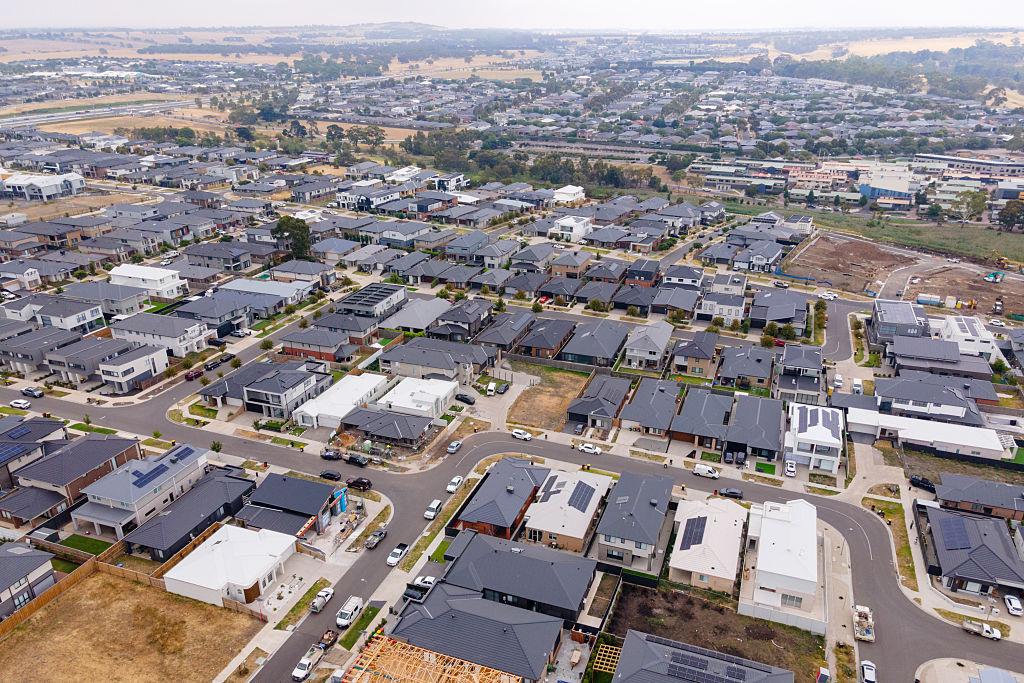
Australia should incorporate solar panel recycling into its critical minerals strategy and introduce a national product stewardship scheme to prevent a looming surge in photovoltaic waste from ending up in landfill, according to a submission to a Senate inquiry.
The Australian Academy of Technological Sciences and Engineering (ATSE) was giving evidence to the Standing Committee on Climate Change, Energy, Environment and Water on Aug. 3, which is looking into solar panel reuse and recycling.
Australia has one of the highest take-ups of solar energy, with about 1 in 3 households with rooftop panels.
Yet disposal is an issue with only a small fraction of end-of-life panels recycled with high logistics, recycling costs, and limited processing capacity stand in the way.
ATSE Acting CEO Peter Derbyshire explained that the imperative for solar panel reuse and recycling is growing. By 2035, end-of-life solar panel waste is projected to exceed 100,000 tonnes annually—an 18-fold increase since 2019.
“While this seems like a large number, it’s actually a large opportunity,” Derbyshire told the committee.

“The cumulative value of Australia’s end-of-life panels is predicted to exceed $1 billion (US$700 million) by 2035. If we can reuse, repair, recondition, and recycle our old solar panels, we can unlock not just the value of their minerals, but a new industry and circular economy.”
Time Running Out
But he warned that Australia has a narrow window to establish a viable recycling industry before the volume of discarded panels accelerates sharply and overwhelms capacity.
“It’s a second chance for us to become a solar powerhouse,” he said, but to achieve this, Australia needs to support the reuse, repair, and reconditioning of old solar panels.
“Ninety percent of solar panels are currently sent to e-waste and landfill. Repowering panels can extend their lifespan, and solar panels with reduced efficiency can still be deployed for secondary use off-grid or in community projects.
“Where reuse or reconditioning is not possible, systems should be recycled. Around 95 percent of components in solar panels themselves are actually recyclable.”
Australia currently recovers only the aluminium frames and junction boxes, amounting to about 17 percent of each panel.
Glass, silicon and polymer backing materials are typically discarded because domestic facilities lack commercially viable processes to recover them.
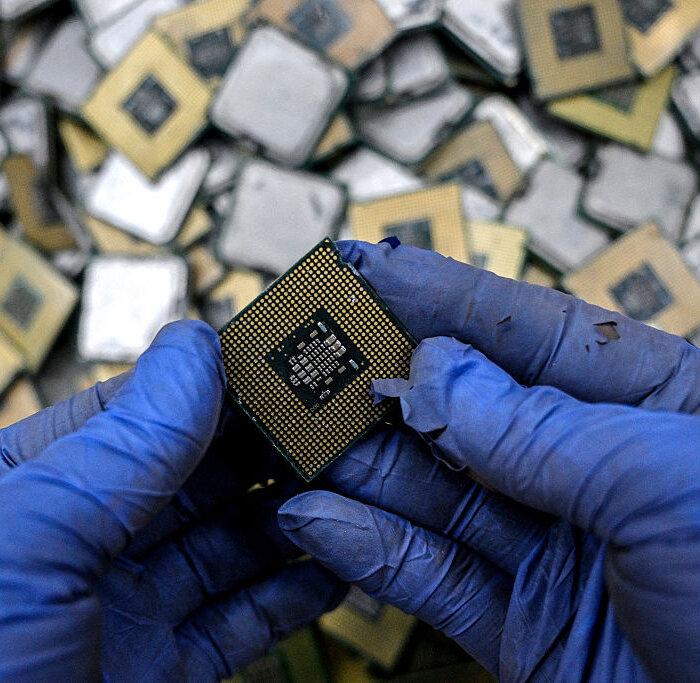
Discarded panels also contain strategically important materials, including small quantities of high-purity silver. The University of Newcastle has developed a method of recovering the metal without using conventional acid-based processes.
$20 to $30 of Material Per Panel
ATSE estimates that a typical 20-kilogram solar panel contains recoverable materials worth between $20 and $30, with the cumulative value of end-of-life panels expected to exceed $1 billion by 2035 if recycling technologies can be deployed at scale.
It recommends incorporating solar panel recycling into the next review of the federal Critical Minerals Strategy, arguing that the move would broaden the investment case for recovery facilities.
Central to ATSE’s recommendations is the creation of a national product stewardship scheme that would make manufacturers, importers and users responsible for managing panels at the end of their lives.
It notes the Productivity Commission has estimated that such a scheme for small-scale solar systems would deliver a net economic benefit of $7.3 billion.
Looking further ahead, ATSE recommends Australia require imported solar panels to meet design-for-recycling standards and establish a national material inventory to track the components used in photovoltaic systems.