Despite needing to be placed into administration by the Commonwealth government, the Construction, Forestry and Maritime Employees Union (CFMEU) maintains its actions have no bearing on the shortfall of Australian housing.
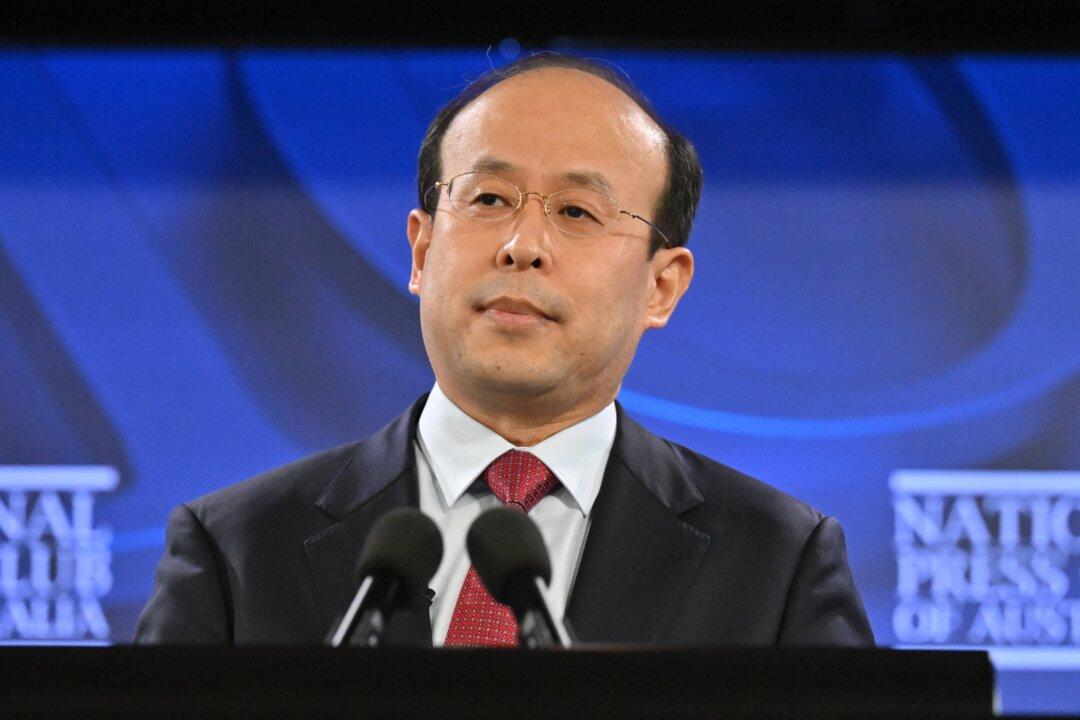
Michael Crosby, the CFMEU’s current administrator, appeared before the Select Committee on Productivity in Australia and responded to questions on the union’s approach and disruptions to the home building sector.
“I don’t know that there’s [been] a huge negative impact on it,” Crosby responded to inquiries from centre-right Liberal Senator Andrew Bragg.
“The fact is that there’s a shortage of 300,000 construction workers in Australia at the moment. There’s an absolute boom happening, and it will only increase with the Tasmanian Stadium, T2D in South Australia [the state’s largest-ever roading project], and the Olympics in Queensland.
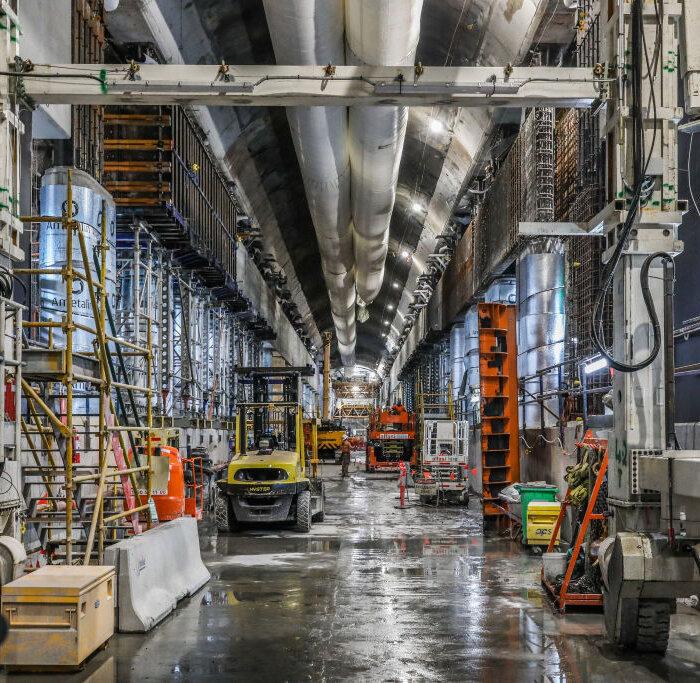
The union had never attempted to organise in the housing industry, instead focusing its attention on major infrastructure projects such as hospitals, high schools, stadiums, airports and metro stations, he said.
In those sectors, productivity was “terrible,” but after the efforts of his predecessor, Mark Irving, an “extraordinary” job was done to weed out disruptive elements, cut 27 leaders—“if you can call them that,” Crosby said—and around 150 staff, mostly organisers.
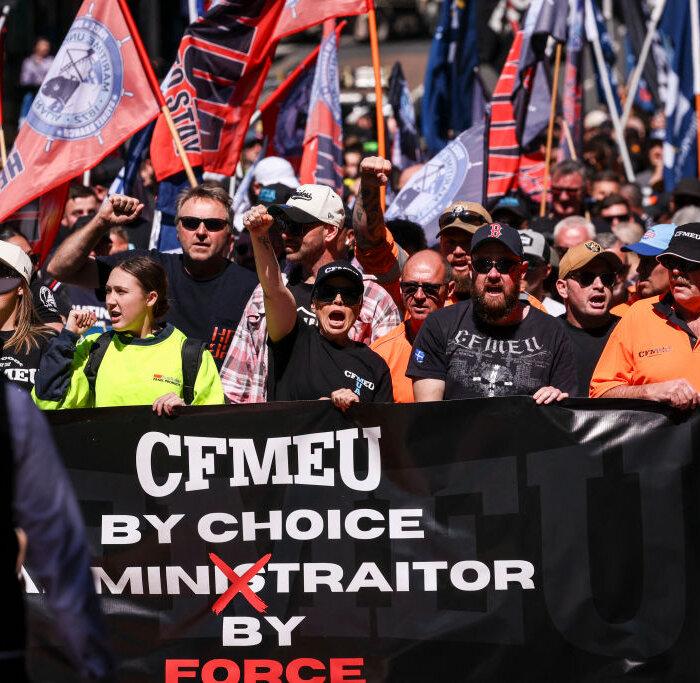
“I certainly have my eye on every branch of the union, and I’m pretty ruthless. I think I have to be. If I see bad behaviour, the bad behaviour is going to end pretty quickly.”
Yet Crosby said the enterprise bargaining agreements (EBAs) negotiated by the union on major infrastructure projects were the cause, which offered high wages and good conditions and contributed to the housing shortage by attracting tradespeople away from home building.
“It’s not just a question of the union pushing up rates to an unreasonable level. These workers are in short supply, they’re highly skilled, [and] there’s not enough of them, and that’s why, frankly, the union has got the power to get decent money for its members,” Crosby said.
Meanwhile, Cosby said it was “regrettable” that the union had not become involved in high-rise residential construction because, when organisers have gone onto those sites, they’ve found “appalling levels of unsafe work.”
“There’s a cost to safety. It’s very, very rare on a unionised site for anybody to die. It’s quite common on a non-unionised site for people to die,” Crosby said.
“The reality is actually that in the housing sector—and I’m only talking about high-rise residential here—there is an extraordinary level of sham contracting, underpayment, and appalling safety.”