China’s ambassador to Australia, Xiao Qian, has been farewelled by a small crowd at the embassy in Canberra.
After four-and-a-half years, he gave only a week’s notice of his departure, saying that Australia-China ties had emerged from a “low point” and achieved a “comprehensive turnaround.”
When he presented his credentials in Canberra in early 2022, he had spent 36 years inside the Chinese Communist Party’s (CCP) Ministry of Foreign Affairs being stationed in four continents.
His introduction to Australia came at the frostiest moment in the bilateral relationship in half a century.
Relations had taken a further downturn when Beijing imposed trade barriers on Australian coal, barley, wine and other exports in response to calls from the Morrison government for an independent investigation into the origins of COVID-19.
Ministerial contact was also frozen.

Aggressive Comments
Within weeks of arriving Xiao said Beijing wanted to open communication channels and was willing to “go halfway” to put ties back on track.
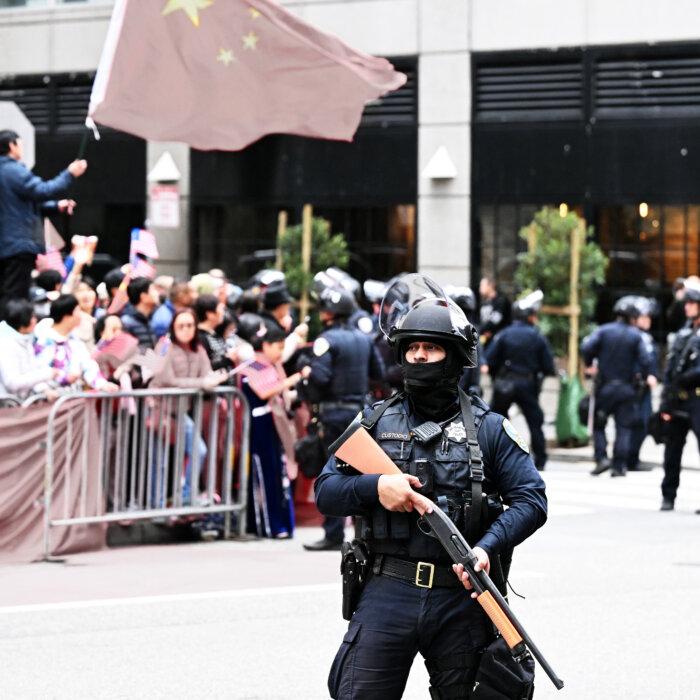
Then-U.S. House Speaker Nancy Pelosi was officially visiting Taiwan, and Xiao was pressed by Australian journalists on the prospect of CCP military action against the island.
He said the use of force was the last thing Beijing wanted but that it could never rule out other means, and suggested that after any “reunification” there might be a process for Taiwan’s people to gain, what he called, a “correct” understanding of the mainland—remarks widely reported as an endorsement of “re-education.”
In 2024, he warned Australia against supporting Taiwan’s newly elected president, Lai Ching-te (William Lai), and the governing Democratic Progressive Party.
“If Australia is tied to the chariot of Taiwan separatist forces, the Australian people would be pushed over the edge of an abyss,” Xiao said.
With the change of government in May 2022, Xiao would spend the subsequent years advocating for the ongoing “stabilisation” of Australia-China ties.
He framed successive years in Beijing’s preferred vocabulary: 2022 as the “Year of Stabilisation,” 2023 as “Exchange and Dialogue,” 2024 as “Comprehensive Turnaround”—and consistently pushed for the relationship to move beyond stabilisation into what he termed “development.”
In terms of his future replacement, there are suggestions Liu Jinsong may be in line.