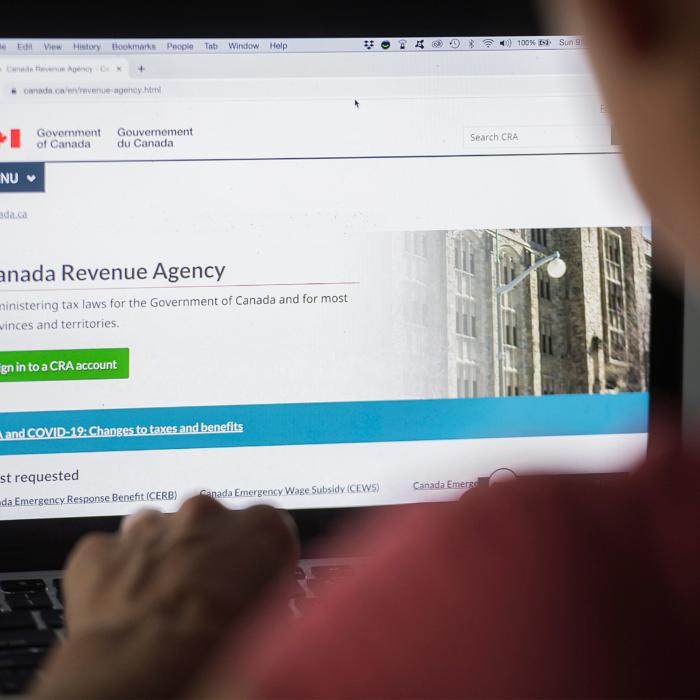
The Canada Revenue Agency’s contact centres are not providing callers with timely and accurate information about taxes and benefits, the auditor general says.
Auditor General Karen Hogan tabled six reports in the House of Commons on Oct. 21, including one specifically on the Canada Revenue Agency (CRA). It says that while the agency’s standard is to answer 65 percent of calls within 15 minutes, callers waited on average 31 minutes to speak with an agent in the 2024-25 fiscal year.
Only 18 percent of callers spoke with a contact centre agent within 15 minutes. Meanwhile, only 5 percent of calls met the 15 minute standard in June 2025.
Auditors from the auditor general’s office placed test calls to the CRA’s contact centres to examine the accuracy of their responses to general tax questions. They found the agents accurately responded to business tax or benefits questions 54 percent of the time, while responses to individual tax questions were accurate only 17 percent of the time. Answers to account specific questions were much more accurate.
Moreover, the audit found that when assessing contact centre agents’ performance, the agency placed greater importance on how closely agents adhered to their shift and breaks schedule than on the accuracy of the information provided to callers.
100-Day Plan
On Sept. 2, Finance Minister François-Philippe Champagne directed the CRA to implement a 100-day action plan to address its call centres’ service delays, which he called “unacceptable.”Champagne said he asked the agency to take “concrete” steps to improve its service through measures such as reallocating and adding personnel, implementing a new call-scheduling system, and expanding digital services.
Additionally, the agency said it has made other adjustments such as extending its online chat hours and updating its web content. The agency has also implemented a new “register again” option for users who lost access to their CRA account to be able to regain access without needing to call.
Cybersecurity, Indigenous Services
The auditor general also tabled a report the same day that concluded “important gaps” remain in Canada’s cyber security defence systems, monitoring, and response during active cyberattacks, despite the tools the government has put in place to protect its networks and systems.The audit found that the use of cyber security services is inconsistent across federal organizations, which has resulted in a “fragmented” cyber security landscape across the federal government. Coordination between organizations was found to be “insufficient” during active cyberattacks, extending the time attackers have access to public servants’ personal information.
“A coordinated and comprehensive approach to the government’s cyber security posture, better collaboration and a current inventory of IT assets are key to safeguarding Canadians’ information and maintaining their trust in government IT systems,” Hogan said in an Oct. 21 statement, noting cyberattacks are becoming “more sophisticated and frequent.”
Hogan also tabled a report indicating Indigenous Services Canada has made “unsatisfactory” progress in addressing long-standing issues such as those related to drinking water, emergency services, and other programs.
The department had committed to implementing 34 recommendations in audits from 2015 to 2022, but the auditor general found the department hadn’t made sufficient progress in addressing 53 percent of the recommendations.
Child Care, National Defence
The auditor general’s office also carried out an audit that found that while Employment and Social Development Canada has achieved its goal of lowering the cost of early learning and child care spaces, it may not be on track to achieve its target of sufficiently increasing the number of spaces. Additionally, the audit found the department was more than four years behind in reporting its results to the public.Hogan’s office also found that the Department of National Defence is not managing living accommodations to meet the needs of members of the Canadian Armed Forces (CAF) and their families. The department doesn’t have reliable information about its accommodations and many of its accommodations were found to be in poor physical condition.
In addition, the auditor general found the CAF has not recruited and trained enough members to meet its operational requirements. Hogan said the CAF’s challenges in attracting and training enough recruits could impact the army, navy, and air force’s ability to respond to threats, emergencies, or conflicts.