The rapid rise of deepfakes is making it increasingly difficult for people to tell what is real online, but new research from the Australian National University suggests humans can be trained to better detect AI-generated faces at a time when digital impersonation and fraud are escalating.
Researchers from the ANU Emotions and Faces Lab found that targeted training significantly improved people’s ability to distinguish between real and AI-generated faces, with some participants achieving near-perfect accuracy after instruction.
Security analysts warn that the problem is no longer hypothetical.
Deepfake-enabled scams have been linked to billions of dollars in losses globally, with criminals using AI-generated video and audio to impersonate trusted individuals, including executives, public figures, and even family members.

Training People to Spot What Machines Generate
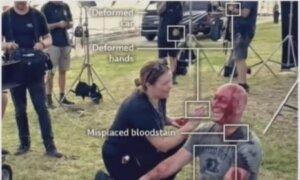
Against this backdrop, the ANU study tested whether humans could be trained to recognise AI-generated faces more reliably.Participants were taught to focus not on obvious visual flaws—such as distorted hands or irregular earrings—but on more subtle patterns in facial structure.
Lead researcher Associate Professor Amy Dawel said traditional “spot the glitch” approaches were becoming less effective as generative AI improved.
“AI faces tend to be more symmetrical, more proportional and more attractive, but without training we often interpret these features as signs of being human,” she said.
The training focused on six perceptual cues: distinctiveness, memorability, proportionality, symmetry, attractiveness and expressiveness.
After training, participants significantly improved their detection accuracy, with high performers reaching near-perfect results when identifying AI-generated faces produced by advanced systems such as StyleGAN.
“It was amazing to see the dramatic improvement in people’s ability to detect AI faces,” Dawel said.