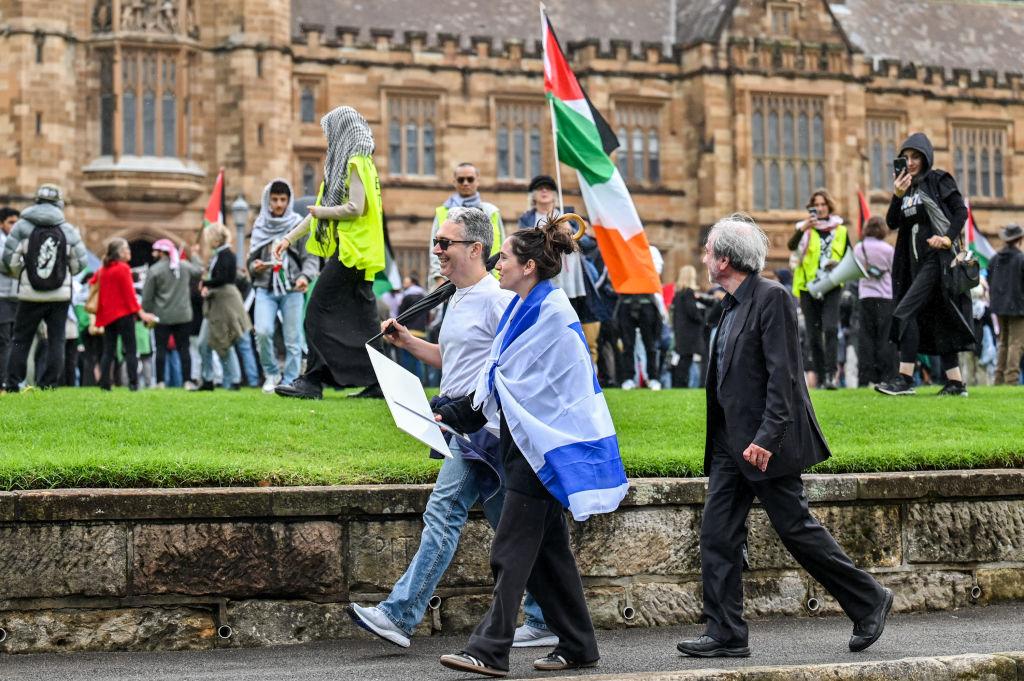
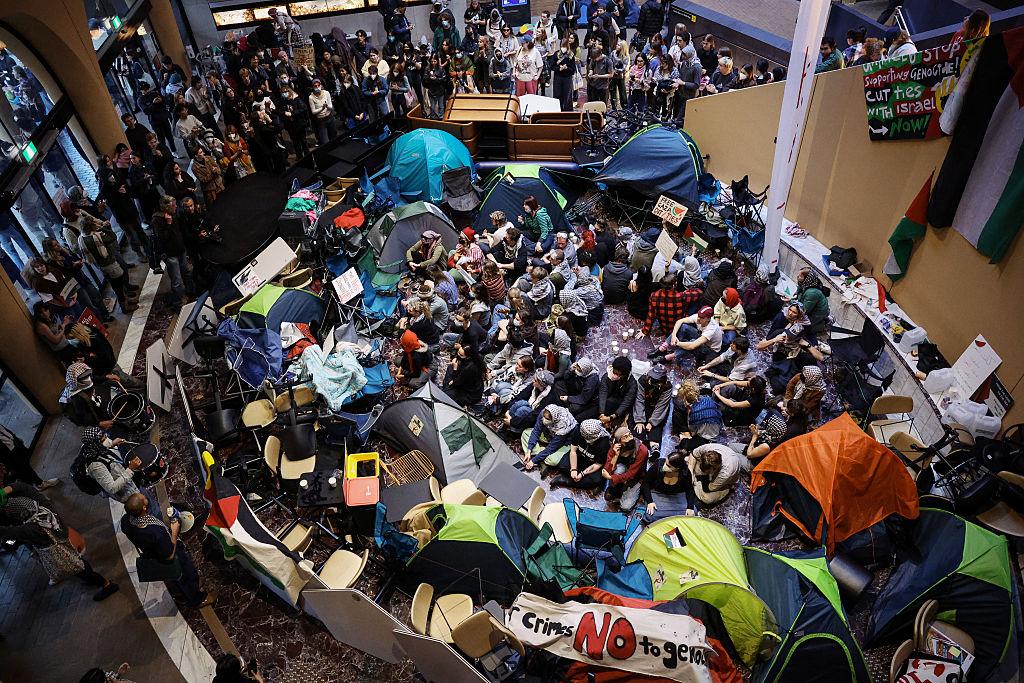
A senior academic administrator at the Australian National University (ANU) has admitted that the university’s response to the pro-Palestinian encampment on its campus in early 2024 may have been “naive or inadequate.”
Lasting 110 days, the ANU encampment was the longest-running of those established at 21 Australian universities.
At a hearing of the Royal Commission on Anti-Semitism and Social Cohesion, ANU Acting Provost Joan Leach echoed evidence given by other university leaders, saying the university did not try to forcibly remove protesters after seeing what had happened at overseas campuses.
“There was a great awareness about encampments around the world, and you may remember from that time there was media attention on U.S. universities and some images around students being pulled by police off campuses,” she said.
“I think colleagues were very aware of that, very concerned not to bring violence here to Australia.
“From that moment at that time, there was attention to how to bring the encampment to a close peacefully, without violence, and with some agreement with the students.”
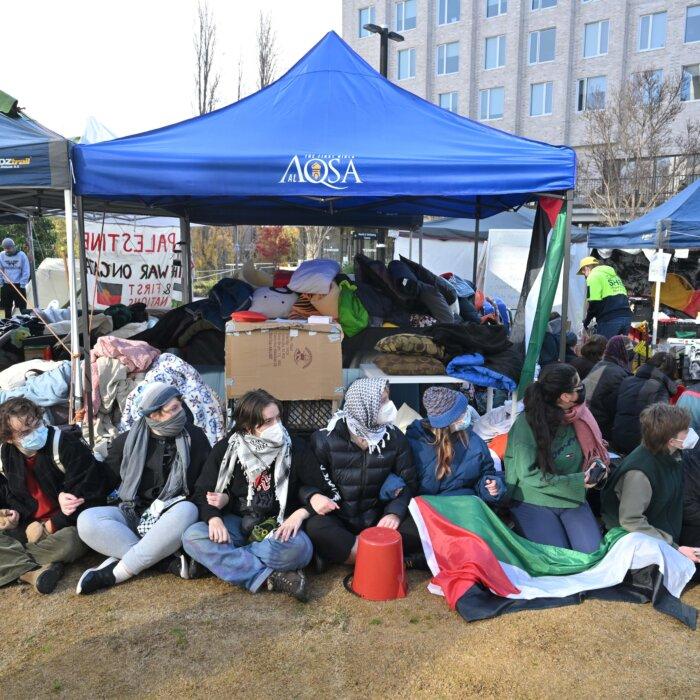
Leach admitted that, with hindsight, the university’s response might appear “naive or inadequate” but needed to be seen in the context that, at the time, “there was a hope that the encampment could be brought to a peaceful end.”
The deputy vice chancellor responsible for academic matters held a “series of conversations” with students at the encampment “to understand what their purpose was, what they wanted out of the encampment, and to try to encourage them to leave,” Leach said.
Meanwhile, she and the vice chancellor met regularly with the university’s leadership team to discuss what it would take to bring the encampment to an end.
How ANU Ended the Encampment
Eventually, the university decided to cut off the camp’s electricity after protesters refused to allow staff to inspect the site for safety hazards.
At the same time, the ANU Council reviewed its ties to weapons manufacturers, bringing the university more in line with community expectations. Leach noted that the encampment’s protesters believed the move brought the university closer to meeting their demands.
“Students should be able to walk through campus without that kind of, what I would refer to as, harassment,” Leach said. She also agreed that levelling those accusations at a Jewish student constituted anti-Semitism.
“Because it was asking her, as a member of the Jewish community, to take responsibility for something [that happened] many miles away, and [they] shouted at her in a harassing tone,” she said.
Leach told the commission that ANU has since introduced mandatory anti-Semitism training for all students who live on campus, and off-campus students will be trained via video link in the future.
However, Scott acknowledged the impact of the university’s decision on Jewish students and staff and apologised.
“I can see that our Jewish students and staff paid the price for that as the encampment dragged on, and I am sorry to them that it took that long for us to get it done, and I’m sorry we did not keep them more closely engaged and listen more intently to them as it was going,” he said.