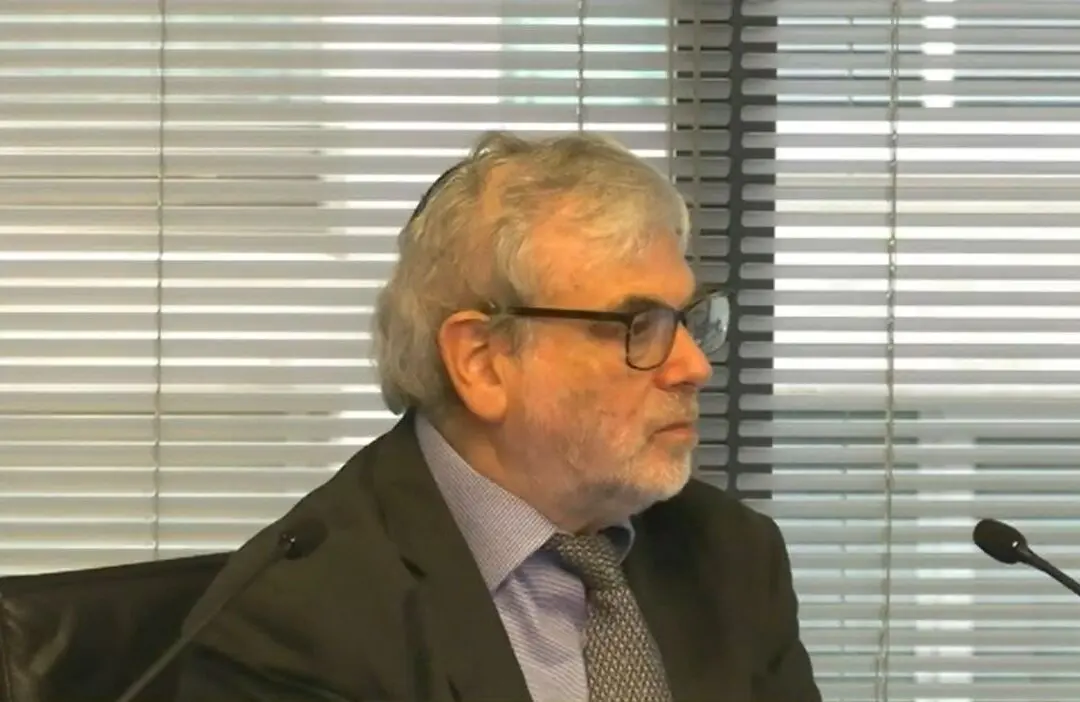
The University of Melbourne’s interim vice-chancellor, Glyn Davis, has told the Royal Commission on Anti-Semitism and Social Cohesion that it was “honourable and reasonable” to engage in negotiations with pro-Palestinian protesters, including revealing its funding and research partnerships with weapon manufacturers.
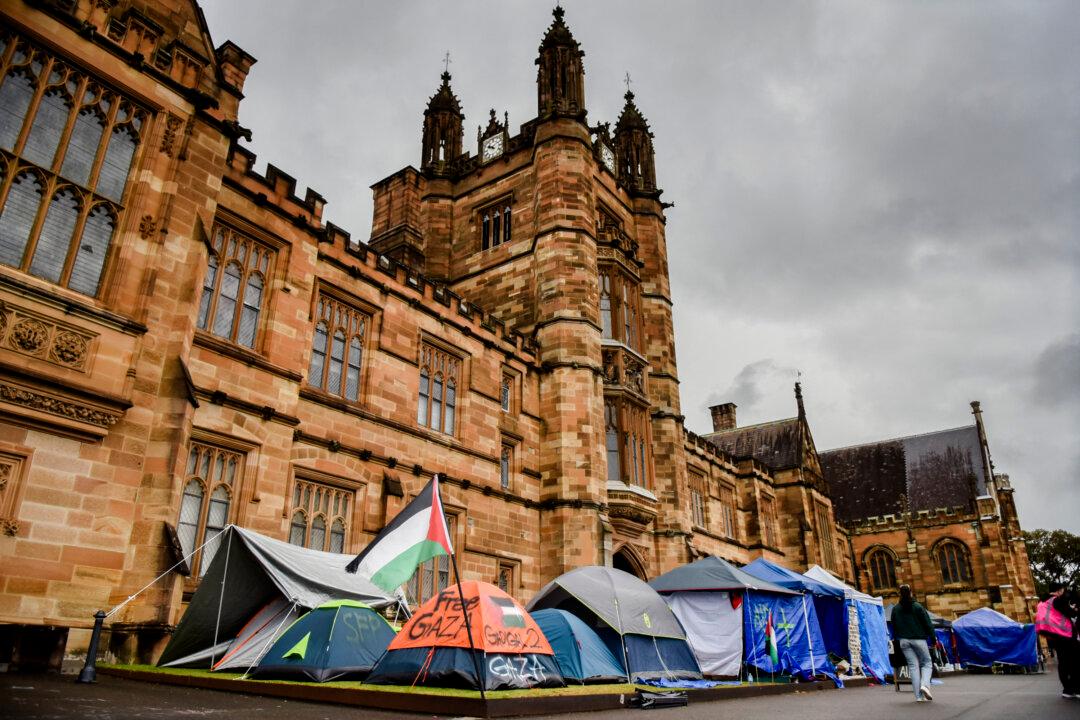
The deal brought an end to an encampment, which had occupied the university’s most prominent open space for a month, and a week-long occupation of one of its buildings.
Davis, who was not in the role when the events occurred, said the vice-chancellor at the time, Duncan Maskell, had set out “clear requirements” that the encampment would only be tolerated while it was peaceful and there was no harassment of students who had to pass by on their way to classes or the library.
Davis said pro-Palestinian activity at the university began peacefully but “changed dramatically” when it expanded to the occupation of the entire Arts West building by around 100 people in May 2024.
“The university’s responses changed quite sharply as a result,” he said, citing changes to its bylaws to ban future encampments.
“A large presence of protesters in the middle of the campus, and lots of chants and singing and waving of banners and so on, and regular marches off the encampment towards the central administrative building of the university made people nervous about their safety ... there were staff and students who felt a level of discomfort and fear,” Davis told the Commission.
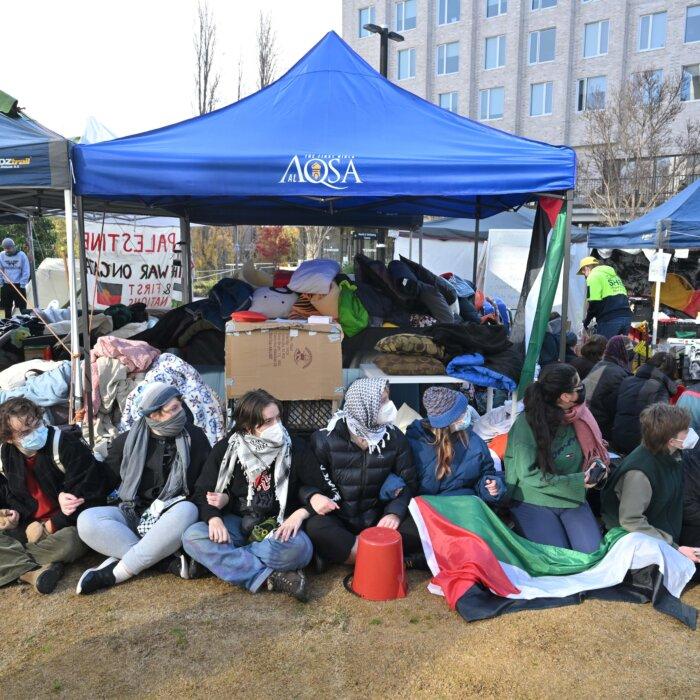
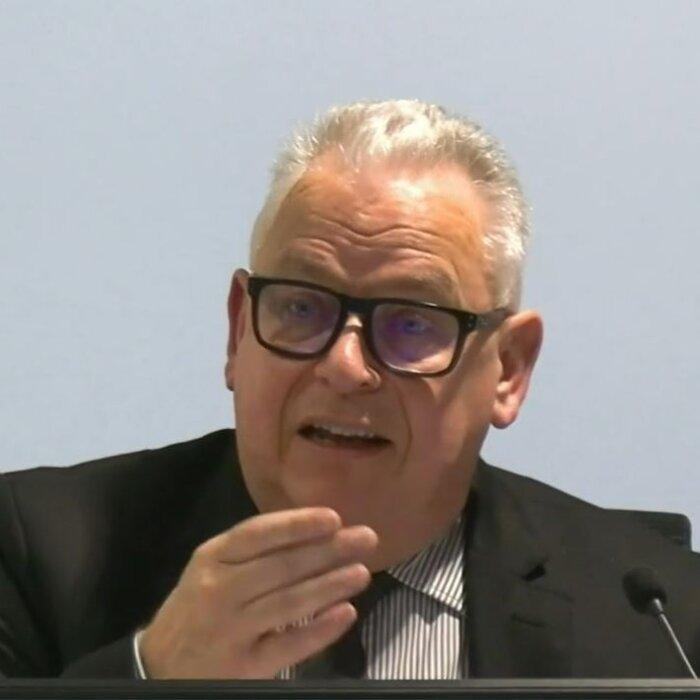
Negotiating with Protesters Was Necessary: Interim Vice-Chancellor
Davis—a former secretary of the Department of Prime Minister and Cabinet—said it was necesary to negotiate an end to protests, which he said had impacted more than 800 classes and over 16,000 students.“Staff and students who work in that building [didn’t] just feel intimidated; they literally couldn’t get through the foyer to get to the facilities that they wished to use. There was significant damage to the building. There was damage in the adjacent building, which is the Baillieu Library. People coming in at night, throwing red paint through the library,” he said.
“The university made clear this was unacceptable. It put broadcasts over the PA [public address] system of the building to say this was unreasonable and students should leave the grounds.”
Dealing with such protests presented a dilemma for any university management, Davis added.
“On the other hand, the university does not have a police service, [it] doesn’t have an enforcement agency. Security guards who work at the university are not empowered to move people on [and] certainly not empowered to arrest people who are breaking the law,” he said.
“The police made the judgement—and it’s theirs to make—that they weren’t going to move on the occupation of the building, even though it was, from the university’s point of view, unsafe, damaging the building, [and] unfair to staff and students,” he said.
“The aim of the management at every point was to end these protests without violence. We had all seen what happened in the United States and in other places where these things had gone terribly wrong.”
The event took place just months after pro-Palestinian protesters ended their encampment at the university, with Prawer saying it left him fearing a terrorist attack.
The professor was also the subject of posters displayed around campus denouncing him over his association with a joint PhD program between the University of Melbourne and the Hebrew University of Jerusalem.
“This was a highly personal attack,” he told the Commission. “This was highly directed by persons that are unknown to me. It was an implication that my work as a physicist and as an academic was somehow selling my soul to the devil.”