This copy is for your personal, non-commercial use only. Distribution and use of this material are governed by our Subscriber Agreement and by copyright law. For non-personal use or to order multiple copies, please contact The Epoch Times Reprints.

The Epoch Times
The Epoch Times
AD
The Epoch Times
Social Issues

Sydney University Vice-Chancellor Apologises Over Prolonged Pro-Palestinian Encampment

Mark Scott apologised to Jewish staff and students but said forcibly removing the protesters risked inflaming the situation.
Google LogoMark Us Preferred on Google
Sydney University Vice-Chancellor Apologises Over Prolonged Pro-Palestinian Encampment
Members of the Australian Israeli community walk past members of the Australian Palestinian community at the Palestinian Protest Campsite at University of Sydney in Sydney on May 3, 2024. Ayush Kumar/AFP via Getty Images
Rex Widerstrom
Rex Widerstrom
7/16/2026|Updated: 7/16/2026
0:00

Mark Scott, vice-chancellor of the University of Sydney, has apologised for allowing a pro-Palestinian encampment to remain on campus for two months.

He was giving evidence to the Royal Commission on Anti-Semitism and Social Cohesion and was challenged on the issue by a lawyer representing seven Jewish community organisations.

“I can see that our Jewish students and staff paid the price for that as the encampment dragged on, and I am sorry to them that it took that long for us to get it done, and I’m sorry we did not keep them more closely engaged and listen more intently to them as it was going,” Scott said.

On two occasions, Commissioner Virginia Bell intervened to say he was not required to answer questions put to him by lawyer Gabi Crafti.

The lawyer argued that there were “very few universities in Australia that Jewish students and Jewish staff feel more unsafe than the University of Sydney” and that it was “probably one of the worst places to be a Jewish student.”

First Encampment in University’s History

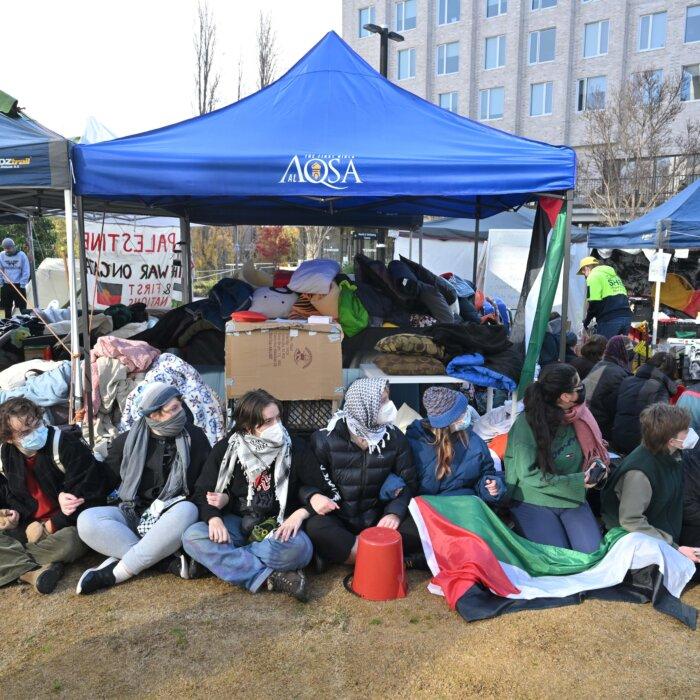
Scott said the university was caught off guard by the encampment because it was unprecedented in the institution’s history.

“We didn’t anticipate an encampment, and one of the reasons we didn’t anticipate encampments is that in our history, best part of 175 years, it hadn’t been part of the protest tradition at the university, he said.

Related Stories
The Epoch Times
Student Says She ‘Wouldn’t Use Her Name’ at University Amid Anti-Semitism Fears
The Epoch Times
Inquiry Questions Government’s Ability to Stop University Collaborations with Iran

“We‘d seen many protests over many issues for many years, but we’d never been turned into a campsite, and there was not a high sense of readiness or preparation in policy terms, in policy settings, but also in security settings for that kind of occupation of parts of our university campus.”

But as hundreds of protesters set up over 100 tents, something Scott watched with alarm as he became aware of the “destruction and turmoil” occurring on U.S. campuses.

“Attempts to forcibly shut down encampments at major universities like Columbia, like UCLA, saw many hundreds of students arrested, outbreaks of violence, second and subsequent levels of encampment and protest,” he said.
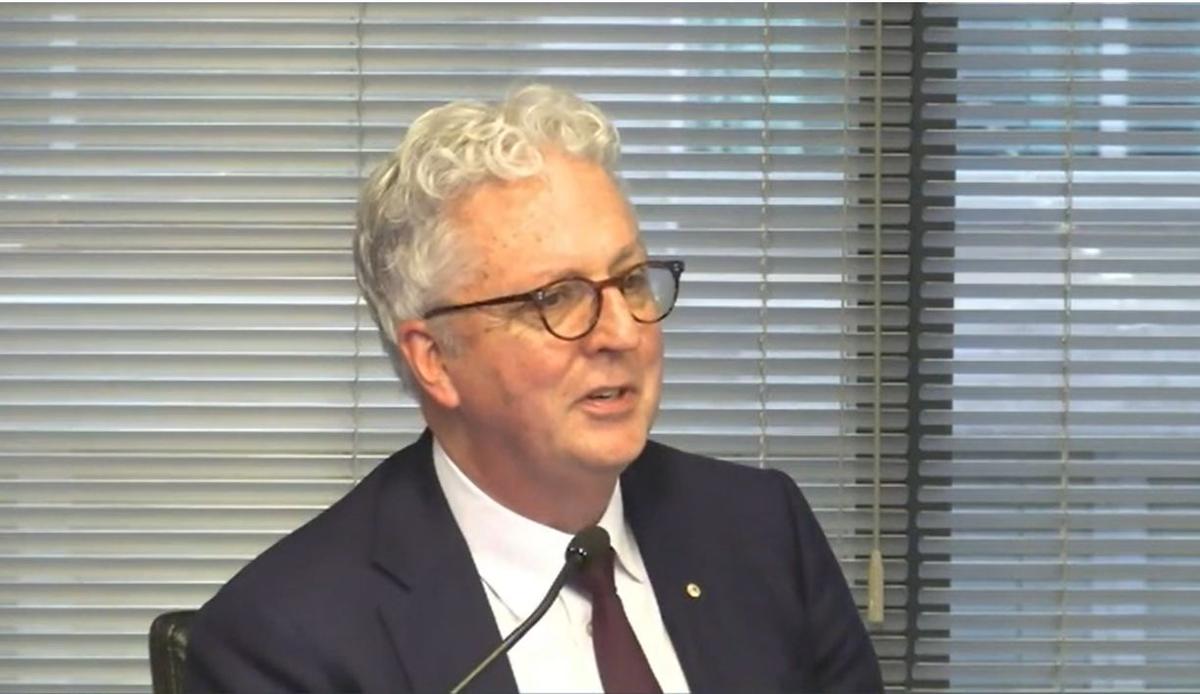
University of Sydney Vice-Chancellor Mark Scott gives evidence to the Royal Commission on Anti-Semitism and Social Cohesion in Melbourne. (Screenshot from the Commission's livestream)
University of Sydney Vice-Chancellor Mark Scott gives evidence to the Royal Commission on Anti-Semitism and Social Cohesion in Melbourne. Screenshot from the Commission's livestream

He said the focus of the university had been to de-escalate the situation, rather than forcibly evict the protesters, even after they refused an order to leave, because that might have led to “an encampment 10 times the size the day after.”

The university had asked New South Wales (NSW) Police to help monitor the encampment, particularly on a day when it feared a counter-protest involving several hundred people could take place. However, it had not requested police intervention.

Scott said university leaders chose not to ban chants such as “from the river to the sea” and “globalise the intifada” because they were not prohibited under NSW or national laws at the time. Preventing them on campus while they could be said elsewhere “seemed a disconnect that was hard for us to deal with,” he said.

Vice-Chancellor Says He Becomes More Aware of Anti-Semitism

Scott said that since the encampment concluded, he had become more aware of anti-Semitism.

“I think I understand better just how menacing and threatening some in our community found the presence of the encampment every day. If I had my time again, I would be convening more meetings, talking more regularly, getting more feedback, listening more to the lived experience,” he said.

The university has since banned camping or protesting inside buildings, and there are stricter rules on which flags can be waved at protests.

There were reports that participants at the encampment waved black flags bearing white Arabic script that were alleged to represent Hizb ut-Tahrir, an extremist Islamist group proscribed in Australia.

Scott said there was no evidence to support claims that members of Hizb ut-Tahrir had taken part in the protest, though he admitted that some outsiders were probably involved.

Allegations about a “relationship” between the university and the Islamist group’s Australian branch was scrutinised by Shadow Education Minister Julian Leeser in 2024, as he sought to reintroduce a bill establishing a commission of inquiry into anti-Semitism at Australian universities.

He alleged that when pro-Palestinian protesters were asked to leave the encampment, every group complied except Hizb ut-Tahrir, whose refusal ultimately led the university to make concessions.

The MP also said Hizb ut-Tahrir succeeded in securing a commitment from the university to establish a group to review its defence investments and research.


Google LogoMark Us Preferred on Google
Rex Widerstrom
Rex Widerstrom
Author
Rex Widerstrom is a New Zealand-based reporter with over 40 years of experience in media, including radio and print. He is currently a presenter for Hutt Radio.
Author’s Selected Articles
Melbourne University Was Forced to Negotiate With Pro-Palestinian Protesters: Vice-Chancellor
Jul 15, 2026
Melbourne University Was Forced to Negotiate With Pro-Palestinian Protesters: Vice-Chancellor
Nearly a Million Australians Have Cancer, Breast Cancer the Most Common
Jul 15, 2026
Nearly a Million Australians Have Cancer, Breast Cancer the Most Common
Jewish Professor Feared Terror Attack as Protesters Surrounded His Office: Inquiry
Jul 14, 2026
Jewish Professor Feared Terror Attack as Protesters Surrounded His Office: Inquiry
India, New Zealand Agree to ‘Strategic Partnership’ by 2030
Jul 14, 2026
India, New Zealand Agree to ‘Strategic Partnership’ by 2030
AD
Add to My List
Save
The Epoch Times
Copyright © 2000 - 2026 The Epoch Times Association Inc. All Rights Reserved.