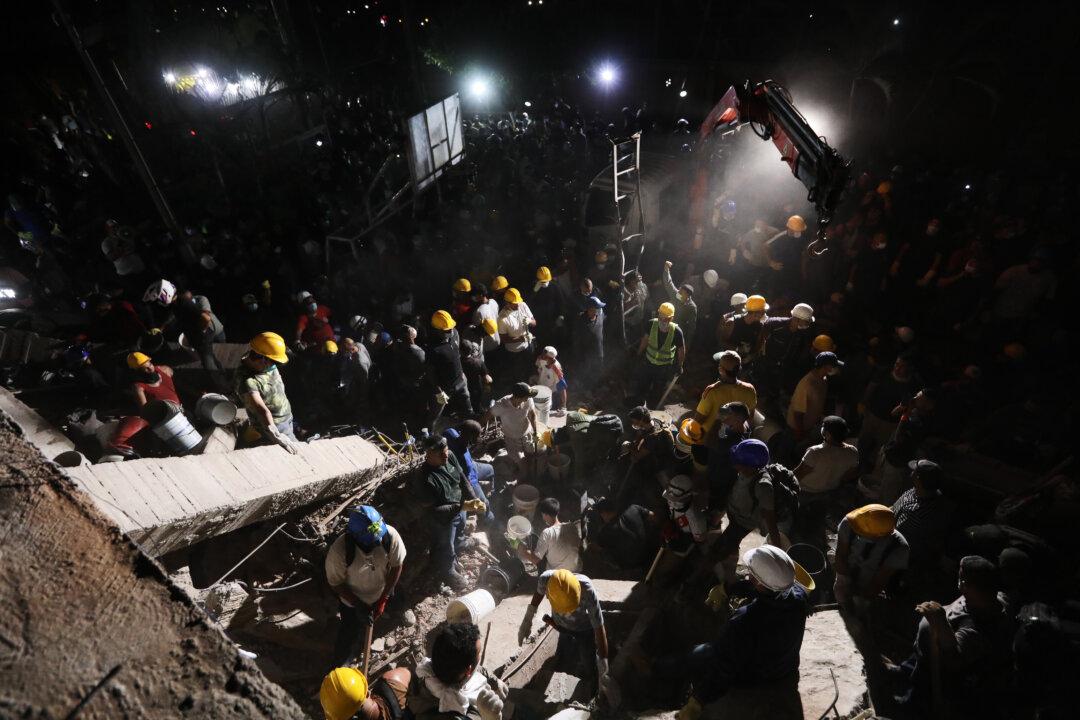
A powerful aftershock rattled southeastern Afghanistan on Sept. 2, triggering fears of fresh casualties after an earthquake killed 1,400 people and injured thousands more.
The magnitude 5.2 aftershock was close to the epicenter of the Aug. 31 quake, according to the U.S. Geological Survey. It occurred at a depth of six miles, the same level as the initial quake.
Save the Children, a nongovernmental organization, said one of its teams, carrying medical equipment, walked for 12 miles to reach villages cut off by rockfalls and landslides.
Ehsanullah Ehsan, the head of disaster management in Kunar Province, said dozens of Afghan commandos were airdropped into the quake-hit areas on Sept. 3 to help carry injured people to safer ground.
“A camp has been set up where service and relief committees are coordinating supplies and emergency aid,” Ehsan said.
‘Race Against Time’
The U.N.’s resident coordinator for Afghanistan, Indrika Ratwatte, said the rescuers were facing a “race against time” to reach trapped or injured villagers.Ratwatte, speaking to journalists in Geneva on Sept. 2, said the death toll was expected to rise.
“We cannot afford to forget the people of Afghanistan who are facing multiple crises, multiple shocks, and the resilience of the communities has been saturated,” he said. “These are life-and-death decisions while we race against time to reach people.”
Afghanistan is a mountainous country, and the eastern and northeastern parts are prone to earthquakes.
Geologists say that as the Indian tectonic plate moves northward, it thrusts against the Eurasian plate, triggering quakes.

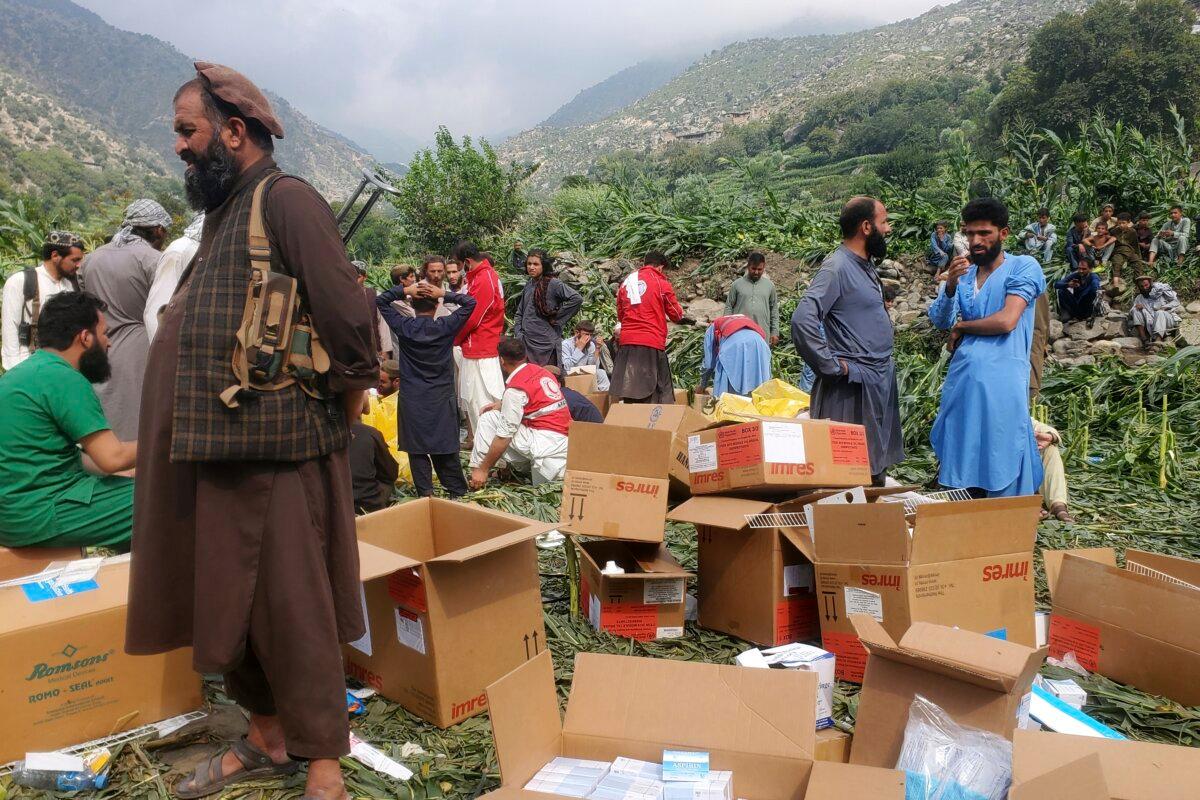
Afghanistan has since seen a big cut in international aid. The country is suffering from a weak economy and an influx of 2.2 million people who have been returned from Pakistan and Iran.
UN Response
U.N. spokesperson Stéphane Dujarric said the organization had released $5 million from its emergency fund for Afghanistan, which would be matched by $5 million from the Afghanistan Humanitarian Fund, which is also funded by the U.N.British Foreign Secretary David Lammy said the UK remains committed to the people of Afghanistan.

“This emergency funding will help our partners to deliver critical healthcare and emergency supplies to the most hard-hit,” Lammy said. “The UK remains grateful to the aid workers on the ground, who help us to provide support to Afghanistan’s most vulnerable people.”
China, India, and the United Arab Emirates have also pledged disaster relief support.