This copy is for your personal, non-commercial use only. Distribution and use of this material are governed by our Subscriber Agreement and by copyright law. For non-personal use or to order multiple copies, please contact The Epoch Times Reprints.
Toronto police made two arrests at the Al-Quds Day rally outside the U.S. Consulate in Toronto this weekend, after an Ontario judge dismissed the provincial government’s move to stop the event.
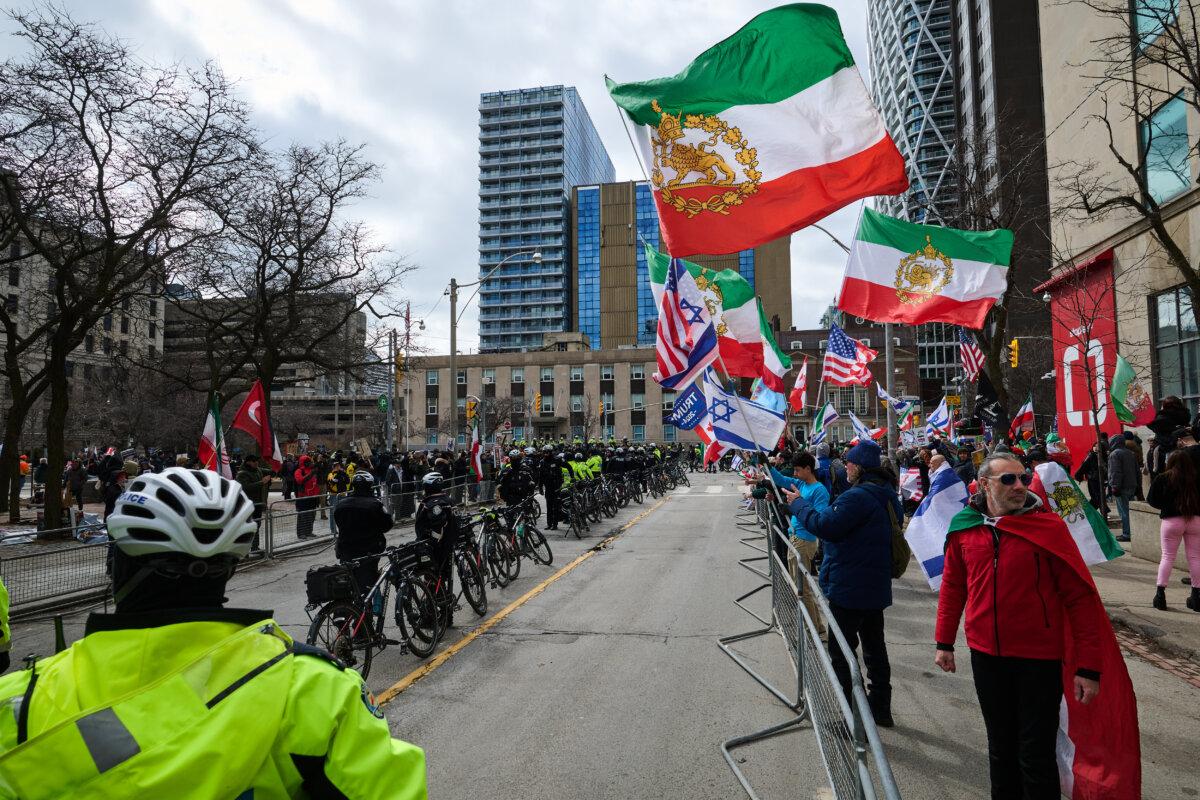
Approximately 4,500 people attended the rally, according to police, with protestors waving Palestinian and Iranian regime flags while chanting “Free Palestine,” and counter-protestors carrying flags of Israel and pre-revolution Iran.
Police had earlier in the day announced road closures for the event. Subsequently, it said on social media around 3 p.m. that it had made one arrest, and about an hour later, it said a second arrest had been made.
In a news release the next day, the TPS said both of the individuals were participants in the counter-demonstration and both had engaged with participants in the Al-Quds demonstration. They were both men and were arrested during two unrelated incidents, and both incidents are being treated as “suspected hate-motivated offences,” the March 15 release said.
The Al-Quds Day protest is an annual event in support of Palestine and against Israel that began in 1979 by the founder of the Islamic Republic of Iran Ayatollah Ruhollah Khomeini.
The protest received heavy criticism by community leaders amid increasing attacks on the Jewish community in the Toronto area and amid the ongoing war in Iran.
Protesters and counter-protesters demonstrate during an Al-Quds Day rally outside the U.S. Consulate in downtown Toronto on March 14, 2026. The Canadian Press/Sammy Kogan
Injunction Denied
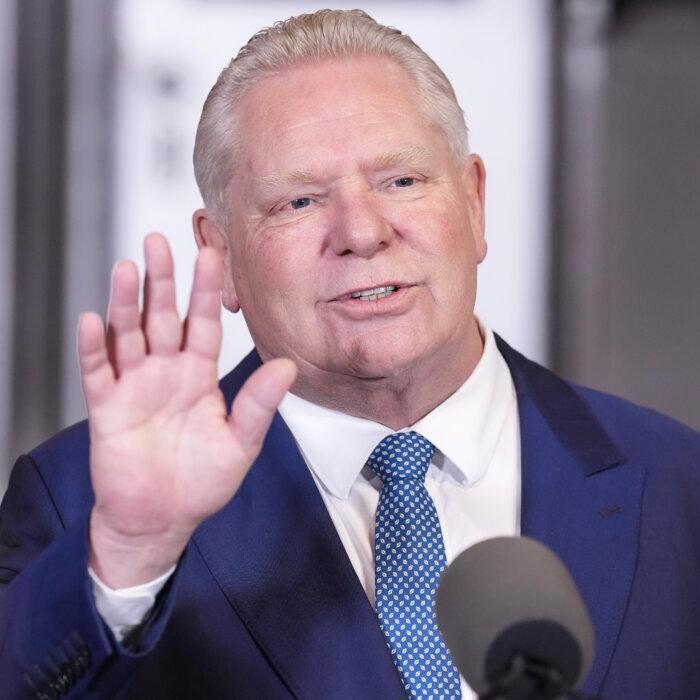
Less than an hour before the rally began, an Ontario court dismissed a request by Ontario Premier Doug Ford’s government for an injunction against the event.
“This demonstration is nothing more than a breeding ground for hate and anti-Semitism. It glorifies violence. It celebrates terrorism. It has no place in Ontario. It has no place in Canada,” Ford had said in a March 13 video posted on social media.
The province’s decision to file an emergency injunction was applauded by Jewish groups. The move came a day after Toronto Councillor Brad Bradford urged the City of Toronto to take legal action to prevent the rally.
Besides Jewish places of worship, the U.S. Consulate was also recently targeted with gunshots. The RCMP described the March 10 incident as a “national security incident.” The shooting remains under investigation by the RCMP and Toronto police.
Ford said on March 14 that he was “extremely disappointed” the court refused to stop the rally.
“While the judge cited Canada’s Charter of Rights and Freedoms, when we talk about rights we need to be clear that every person has the right to safety and security,” Ford said in a March 14 post on X. “We need to be clear that no one in Canada has the right to incite violence or free licence to intimidate and hate.”
Interim NDP Leader Don Davies, for his part, reacted to the judge’s decision with an opposite view, calling it a “victory for freedom of expression and association.”
“Peaceful protest is a cornerstone of a democratic society,” Davies said in a March 14 post on X. “To see a Conservative government misuse its authority to try and shut it down for political purposes is disappointing.”
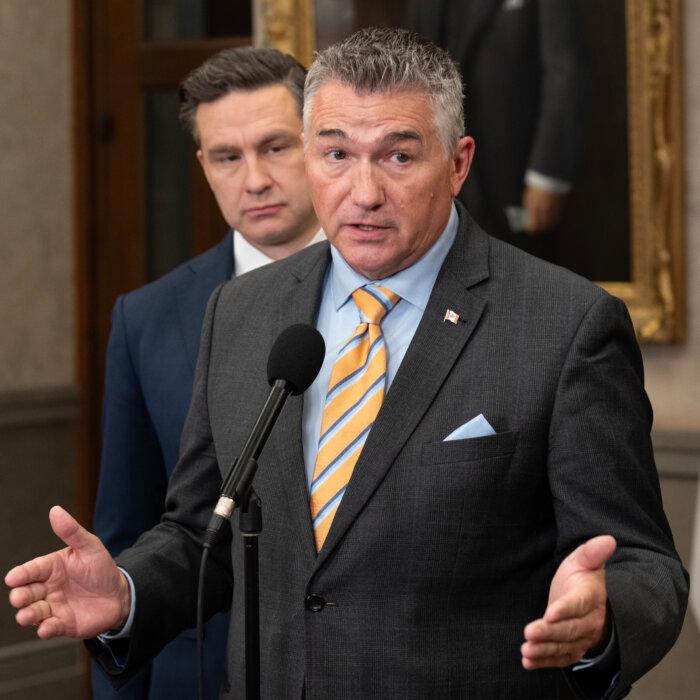
Conservative MP Roman Baber also commented, saying that while he is a “free speech guy,” he also knows “where the line is.”
“The line is incitement violence,” Baber said in a March 14 post on X. “That’s what Al Qudz Day is. It’s incitement to violence. And it emanates directly from the evil Regime in Teheran.”
Violence Following Strikes on Iran
Acts of violence in Canada have escalated following strikes on Iran by the United States and Israel.
The two countries launched airstrikes against Iran on Feb. 28 after negotiations over Iran’s nuclear program broke down. The attack killed Iranian regime leader Ayatollah Ali Khamenei as well as several leaders of the Islamic Revolutionary Guard Corps (IRGC), and Iran responded with retaliatory missile and drone strikes against Israel and neighbouring countries hosting U.S. military positions.
In the days following the onset of the joint operation, multiple shootings have taken place at synagogues in the Toronto area. Police responded to reports of gunfire at two differentsynagogues on March 7, after a similar shooting targeting a synagogue on March 2.
A Toronto-area gym owned by an Iranian-Canadian activist was shot at 17 times on March 1.
The shooting investigations are ongoing and police have not arrested any suspects.
In addition, the RCMP launched a homicide investigation in early February after an Iranian activist who had been critical of the Iranian regime went missing in British Columbia last month. The remains of Masood Masjoody was found March 6. The RCMP said in a March 14 update that the BC Prosecution Service has approved one count of first-degree murder against each of two individuals charged in connection with Masjoody’s murder.
Jennifer Cowan and The Canadian Press contributed to this report.