Al-Quds Day is a global pro-Palestinian event held on the last Friday of Ramadan each year to express support for Palestinians and oppose Israeli control over Jerusalem. The annual event was started in 1979 by Ayatollah Ruhollah Khomeini, founder of the Islamic Republic of Iran.
“It has been an event that unfortunately has been associated with hate and potentially violence for many years, and we just cannot afford that in the City of Toronto right now,” Bradford said, citing three incidents of gunfire targeting synagogues in the city within the last two weeks.
The Ward 19 Beaches-East York city councillor has written a letter to Toronto’s lawyers asking them to go to court on March 13 to seek the cancellation of the weekend rally, similar to the outcome in London, England, where the Al-Quds parade was terminated by the UK government following a request from the Metropolitan Police.
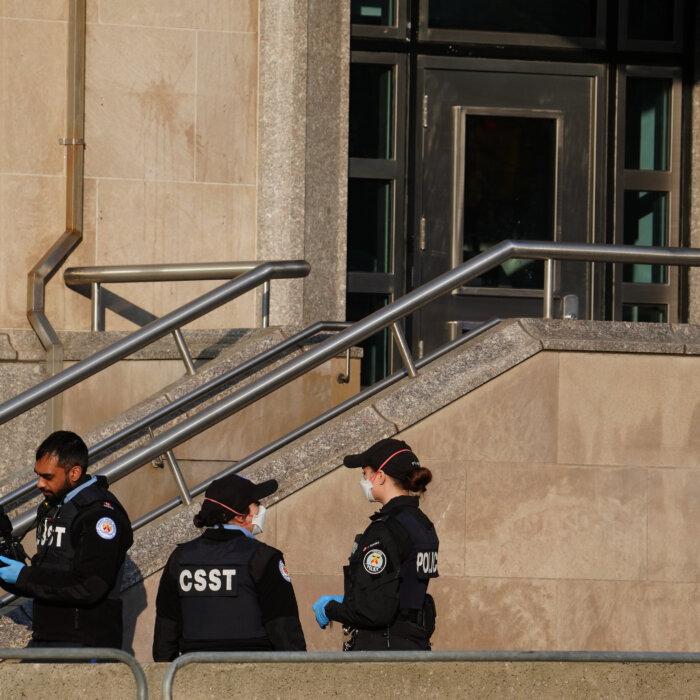
The embassy became the scene of what the RCMP is describing as a “national security incident” after two suspects opened fire on the building during the early morning hours of March 10.
Ontario Solicitor General Michael Kerzner has also voiced concern about the upcoming Al-Quds Day protest planned in front of the U.S. embassy on University Avenue, calling it “synonymous with antisemitism” in a statement posted on X.
‘Plan in Place’
The Toronto Police Service said it has plans in place to protect both the U.S. consulate and the public this weekend.Those plans include restricting the airspace around the U.S. consulate throughout the weekend. The restriction will apply to all drone operations, including anyone operating micro drones, Young said.
Police will also be working with municipal, provincial, and federal partners, along with intelligence agencies, to monitor potential risks tied to the event, he said.
“Our major incident command centre will be activated to support this event, allowing us to monitor developments in real time and coordinate resources as needed,” said Young, who oversees Emergency Management and Public Order for the Toronto police.
The police are also preparing for counter-protesters to also be in attendance at the weekend demonstration, Young said, noting that there could be several thousand people in the area.
“Our initial estimates were around 3,000 (people), but given the geopolitical tensions and the situation around the world, we anticipate that there may be a few more,” Young added.
“Our priority, as always, is to ensure the safety of everyone involved, including the participants, counter-protesters, residents, visitors, and our officers.”
Young stated that international developments and recent synagogue shootings in the region have amplified safety concerns throughout the city.
“Developments in the Middle East, including recent military actions involving Iran, have increased emotions and sensitivities within many communities here in Toronto,” he said.
Escalation of Violence
Tensions have escalated since the United States and Israel launched airstrikes against Iran on Feb. 28 to dismantle the country’s nuclear program. The attack killed Iranian leader Ayatollah Ali Khamenei as well as several leaders of the Islamic Revolutionary Guard Corps (IRGC).Violence has also picked up in the Toronto area since the conflict started. The U.S. embassy shooting in Toronto on March 10 remains under investigation by the RCMP and Toronto police.
Violence also continues in the Middle East. A large explosion shook a region of Iran’s capital on March 13, where thousands had assembled for a state-organized rally in support of the Palestinians and to demand the end of Israel. Israel had issued a warning that it would strike the area in central Tehran.
There were no immediate reports of casualties. However, the choice to move forward with the mass demonstration, which was attended by several senior government officials, along with Israel’s threat to target the area, highlighted the intense resolve on both sides nearly two weeks into a conflict that exhibits no signs of abating.
Iran has persistently conducted extensive missile and drone assaults on Israel and adjacent Gulf nations, while effectively sealing off the Strait of Hormuz, a crucial passage for one-fifth of the global oil trade, despite U.S. and Israeli aircraft striking military and various other objectives throughout Iran.