In his new book “Rage and the Republic: The Unfinished Story of the American Revolution,” law professor and media presence Jonathan Turley again and again echoes this question first raised by Frenchman Michel Guillaume de Crèvecoeur. In 1765, de Crèvecoeur became a citizen of colonial New York, and to symbolize his new status, he changed his name to J. Hector St. John de Crèvecoeur. He won renown both at home and abroad for his book of essays, “Letters From an American Farmer.”
In one essay, de Crèvecoeur asks “What then is the American, this new man?” He responds with answers like this one: “Here individuals of all nations are melted into a new race of men, whose labours and posterity will one day cause great changes in the world.”
De Crèvecoeur concludes his essays with this comparison of the old world and the new:
“The American is a new man, who acts upon new principles; he must therefore entertain new ideas, and form new opinions. From involuntary idleness, servile dependence, penury, and useless labour, he has passed to toils of a very different nature, rewarded by ample subsistence.—This is an American.”
With the 250th celebration of the signing of the Declaration of Independence at hand, now is a fine time to look back at our ancestors, near and far, and listen to what they had to say about being an American.
A New World


Before America became the land it is today, There was a dream: A dream that men could say The things they wished to say.
Before America became to us a nation, There was hope, A hope that men could come and go at will, And without fear.
Before America was born, and here to stay, There was a prayer, A prayer that men could speak of God And worship each in his own way.
And so that dream, that hope, that prayer Became America.
John Adams presents a similar vision of liberty and escape from entrenched customs and classes in his diary entry, Feb. 21, 1765:“I always consider the settlement of America with Reverence and Wonder—as the Opening of a grand scene and Design in Providence, for the Illumination of the Ignorant and the Emancipation of the slavish Part of Mankind all over the Earth.”
Novelist Thomas Wolfe wrote a long passage in his novel “You Can’t Go Home Again” about the promise of America, which ends with these words:
“So, then, to every man his chance—to every man, regardless of his birth, his shining, golden opportunity—to every man the right to live, to work, to be himself, and to become whatever thing his manhood and his vision can combine to make him—this, seeker, is the promise of America.”
A Declaration Unique in History
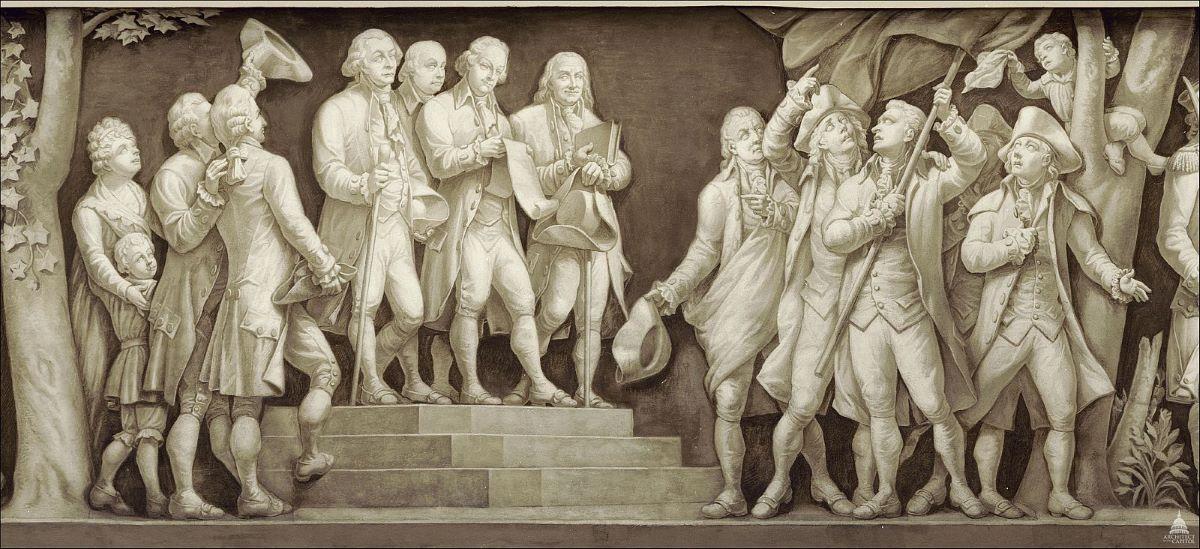
The signatories of the Declaration of Independence knew full well that they were not only sundering the ties between the colonies and the mother country but were also risking execution or imprisonment as traitors. Sensing the last-minute reluctance of some delegates to take this step, New Jersey delegate John Witherspoon offered this ringing endorsement:
“There is a tide in the affairs of men, a nick of time. We perceive it now before us. To hesitate is to consent to our own slavery. That noble instrument upon your table, which ensures immortality to its author, should be subscribed this very morning by every pen in this house. He that will not respond to its accents and strain every nerve to carry into effect its provisions is unworthy the name of freeman. For my own part, of property I have some, of reputation more. That reputation is staked, that property is pledged, on the issue of this contest; and although these gray hairs must soon descend into the sepulchre, I would infinitely rather that they descend thither by the hand of the executioner than desert at this crisis the sacred cause of my country.”
Writing to Abigail immediately after the vote, John Adams reported:
“I am apt to believe that it will be celebrated, by succeeding Generations, as the great anniversary Festival. It ought to be commemorated, as the Day of Deliverance by solemn Acts of Devotion to God Almighty. It ought to be solemnized with Pomp and Parade, with Shews, Games, Sports, Guns, Bells, Bonfires and Illuminations from one End of this Continent to the other from this Time forward forever more.”
To Love America, You Must Know America
Great men have gone before us, Great men will follow after. Time’s vaulted arches echo With their brave-hearted laughter.
The valiant men before us Left all mankind their debtor. They found life good in living And sought to leave it better.
The men who follow after Loom like a gleaming tower. Can we be less than heroes In our appointed hour?
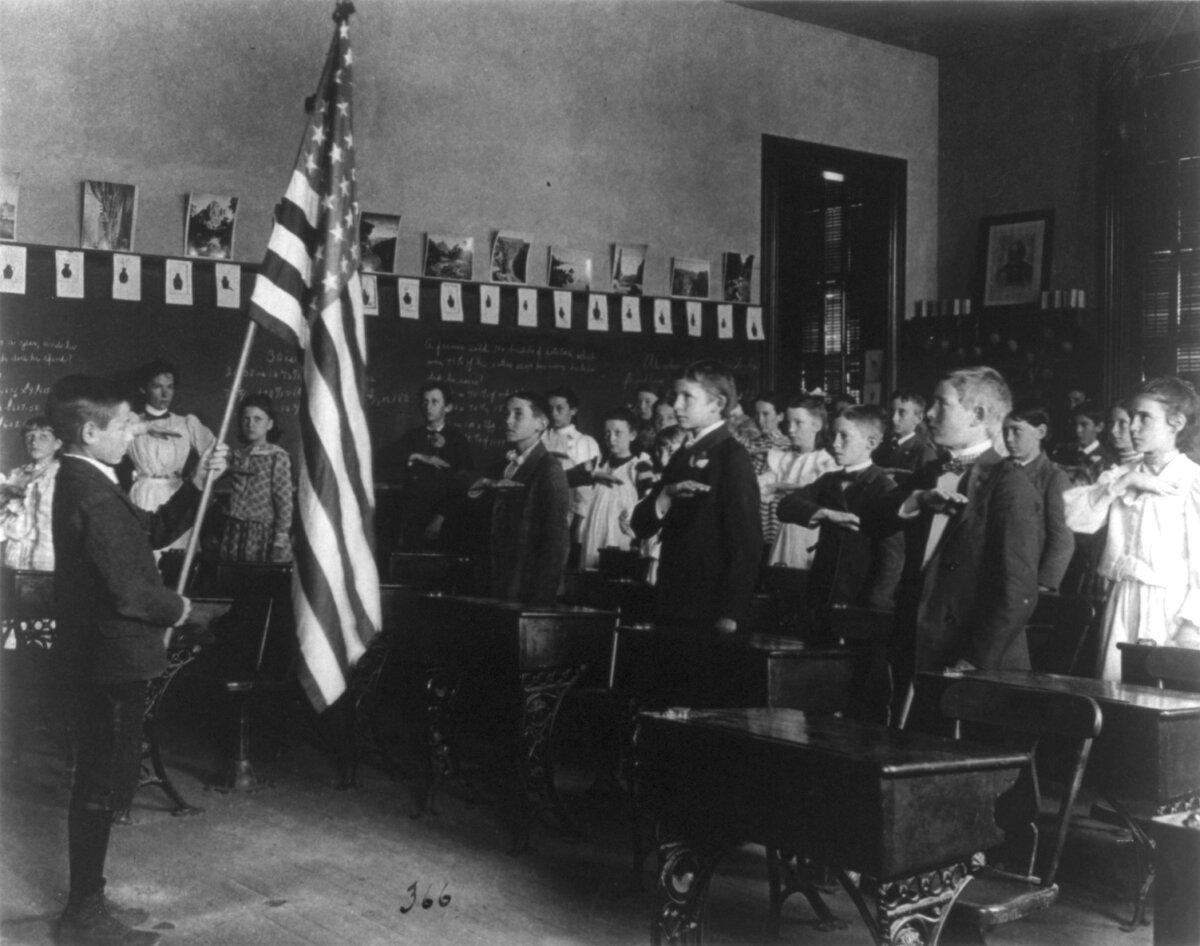
Americans understand that with liberty comes great responsibility. Because they know their history, they are aware of the earlier generations who honored that compact, like those who sacrificed their lives in war for the good of their country. Because they know their history, they recognize the names, words, and deeds of men and women like Patrick Henry, Sacajawea, Stonewall Jackson, Amelia Earhart, and Martin Luther King Jr. They’ve read the Preamble of the Constitution, understand the importance of the Bill of Rights, recognize “Four score and seven years ago” as the opening of Lincoln’s Gettysburg Address, and can find Pearl Harbor on a map.To be ignorant of this history diminishes an American. In “Time Enough for Love,” science fiction writer Robert Heinlein warned, “A generation which ignores history has no past—and no future.” In “Land of Hope: An Invitation to the Great American Story,” professor Wilfred McClay speaks of a clear and present danger to America today: “A culture without memory will necessarily be barbarous and easily tyrannized, even if it is technologically advanced.”
Consequently, all good Americans have a working knowledge of their country’s history. As John F. Kennedy wrote in 1962:
The Parent of All Virtues
The Roman philosopher and statesman Cicero wrote, “Gratitude is not only the greatest of the virtues, but the parent of all the others.” This axiom goes far in explaining our love for our country.A friend of mine, for instance, once urged by another friend to start buying lottery tickets, laughed a little and said: “I already won the lottery. I was born in the mid-20th century in America.”
My friend echoed a much earlier sentiment. In a letter written to James Monroe from Paris in 1785, newly appointed ambassador to France Thomas Jefferson wrote:
“I sincerely wish you may find it convenient to come here. the pleasure of the trip will be less than you expect, but the utility greater. it will make you adore your own country, it’s soil, it’s climate, it’s equality, liberty, laws, people & manners. my god! how little do my countrymen know what precious blessings they are in possession of, and which no other people on earth enjoy. I confess I had no idea of it myself. while we shall see multiplied instances of Europeans going to live in America, I will venture to say no man now living will ever see an instance of an American removing to settle in Europe & continuing there.”
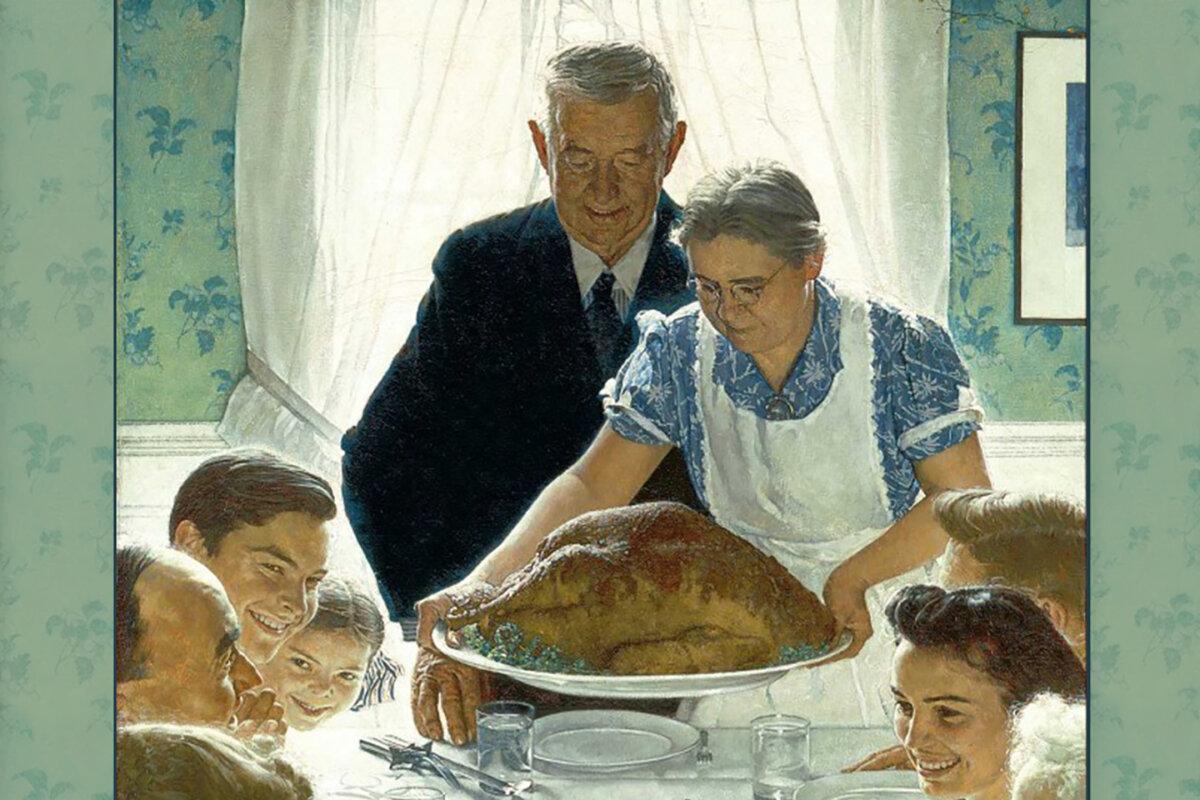
Thanksgiving this year falls on Thursday, Nov. 26. Wise and grateful Americans will make the Fourth of July—and every other day of the year—a mini-Thanksgiving, daily setting aside just a moment to offer up a prayer or thought of appreciation for our country and to seek always to preserve and protect our liberties.
That gratitude is at the heart of what it means to be an American.