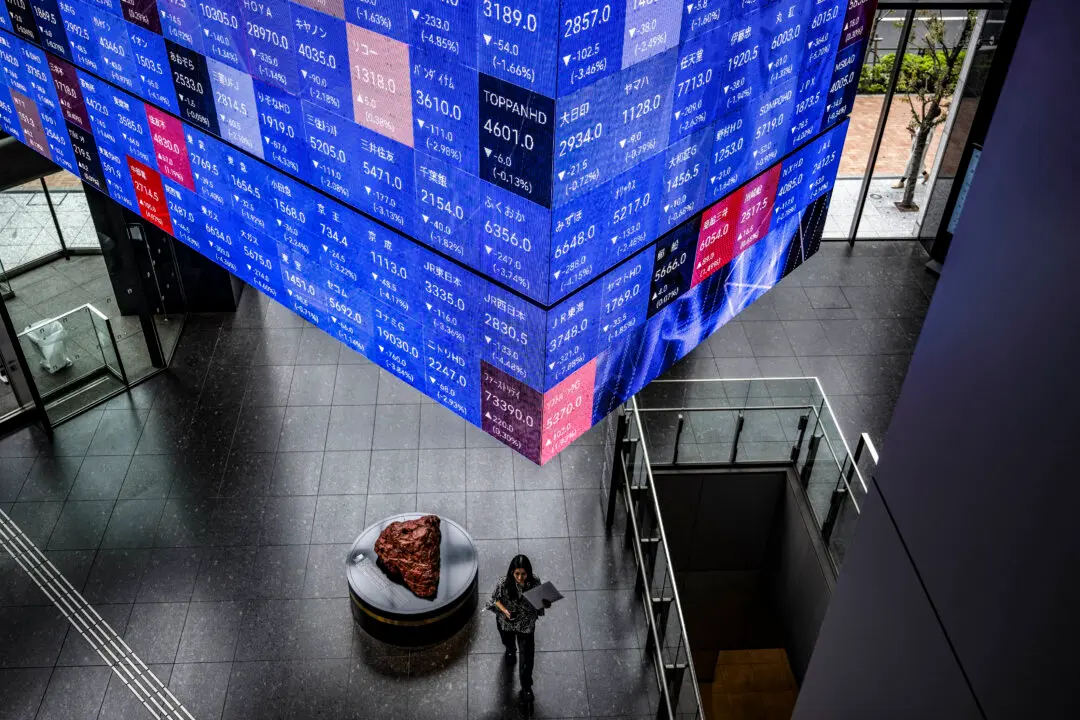
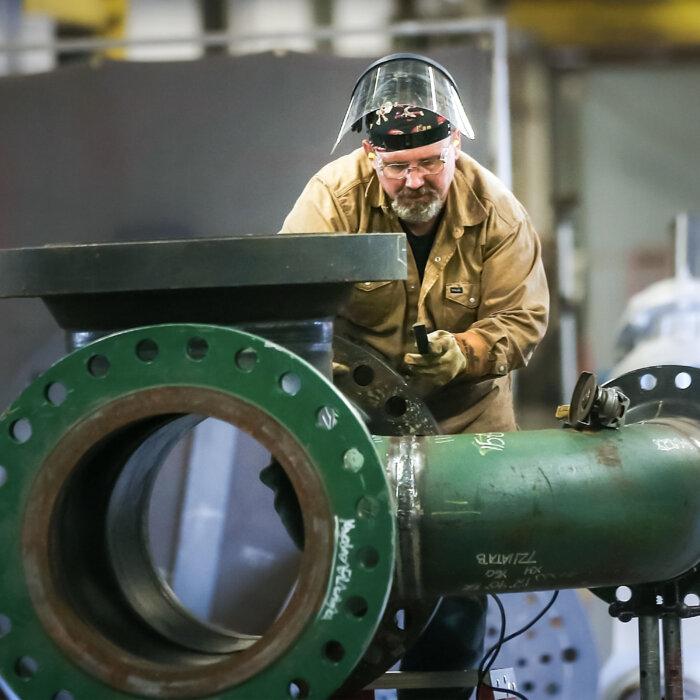
The U.S. manufacturing industry registered its seventh consecutive monthly expansion in July, with factory activity at its highest level in more than four years.
Last month’s purchasing managers’ index (PMI) rose to 55.6, from 53.3 in June, according to new data from the Institute for Supply Management’s widely watched monthly survey.
Economists had forecast a reading of 54.
This was the highest level since May 2022, highlighting the sector’s strength this year.
Factory activity has benefited from artificial intelligence-related investments and businesses front-loading orders to avoid potential supply chain disruptions and higher war-driven costs. Low business inventories also facilitated companies to replenish stockpiles.
Activity was fueled by a sharp increase in output, accelerating at the fastest pace since November 2021. Solid growth in new orders also edged higher.

Price pressures eased slightly, as the index slowed from 73 to a higher-than-expected 71.1.
Input costs have been prevalent since the start of the war in the Middle East. Whether this persists in the second half of the year remains unclear due to the on-again, off-again hostilities and negotiations between the United States and Iran.
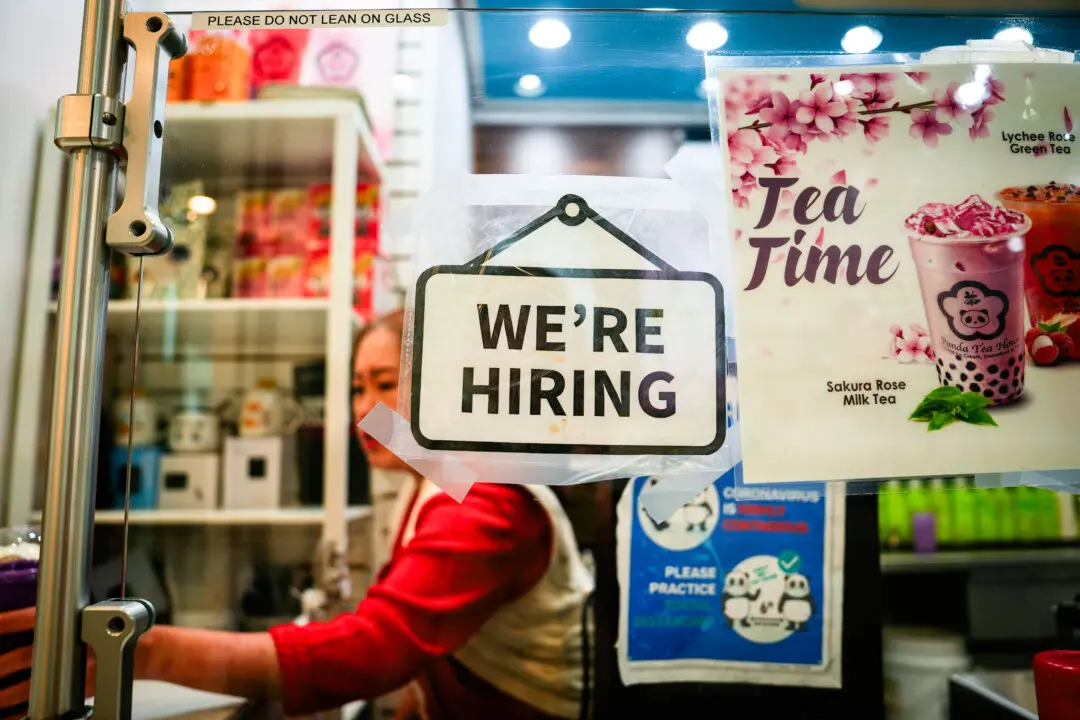
Manufacturing employment returned to expansion for the first time since January, with the index rising to a four-year high.
This could be a sign that manufacturing jobs could be going through a “long-awaited renaissance,” said Jeffrey Roach, chief economist at LPL Financial.
“The efforts to reshore manufacturing could be finally showing up in the data and will give a boost to overall hiring activity last month,” Roach said in an emailed note to The Epoch Times.
Fifteen manufacturing industries—appliances and components, electrical equipment, and computer and electronic products—registered growth. Chemical products was the only industry to post a contraction.
Growth could climb to about 2.2 percent in the third quarter, he adds, if trade proves to be less of a drag on the U.S. economy.
The Atlanta Federal Reserve upwardly revised its projections for third-quarter growth. The widely watched GDPNow Model forecasts the economy expanding more than 6 percent, fueled by consumer spending, business investment, and changes in private inventories.
Manufacturing accounts for almost 10 percent of the national economy.
Elevated inflation and strong growth could be enough to push the Federal Reserve to raise interest rates next month, Roach said.
“As a result of demand-induced inflation and energy supply shortages, the [Kevin] Warsh-led Fed will be pressured to raise rates on September 16.”
Futures markets suggest a 60 percent chance of a quarter-point hike in September.
Investment Commitments Continue
U.S. and foreign companies have committed to trillions of dollars in domestic manufacturing investments.
Pharmaceutical giant Eli Lilly and Resilience announced a $750 million investment in the Cincinnati region to bolster production of complex medicines in Ohio, they said in a July 30 news release.
Others, particularly in the semiconductor manufacturing sector, have updated their investment pledges over the last several weeks.
This comes as Democratic lawmakers introduced legislation—the Industrial Bank for American Manufacturing Act—last month that would redirect up to 50 percent of Section 301 tariff revenues collected on Chinese imports to fund the creation of a new American industrial bank that would rebuild U.S. factories.
“For decades, China has pursued an economic strategy designed to hollow out American manufacturing,” Rep. Ro Khanna (D-Calif.), the bill’s co-sponsor, said in a July 23 statement.
“I’ve heard firsthand from workers in America’s heartland about how China’s unfair practices hurt American industry and disrupt people’s lives,” he added. “That’s why we need an industrial investment bank to revitalize American manufacturing, compete with China, and we can do it funded by tariff revenue.”
Despite positive data, comments in the institute’s July survey were mostly negative, said Susan Spence, the chair of the group’s Manufacturing Business Survey Committee.
“Pricing volatility was mentioned in 57 percent of negative comments, the Iran war 43 percent, increasing lead times 22 percent and tariffs 18 percent,” Spence said.