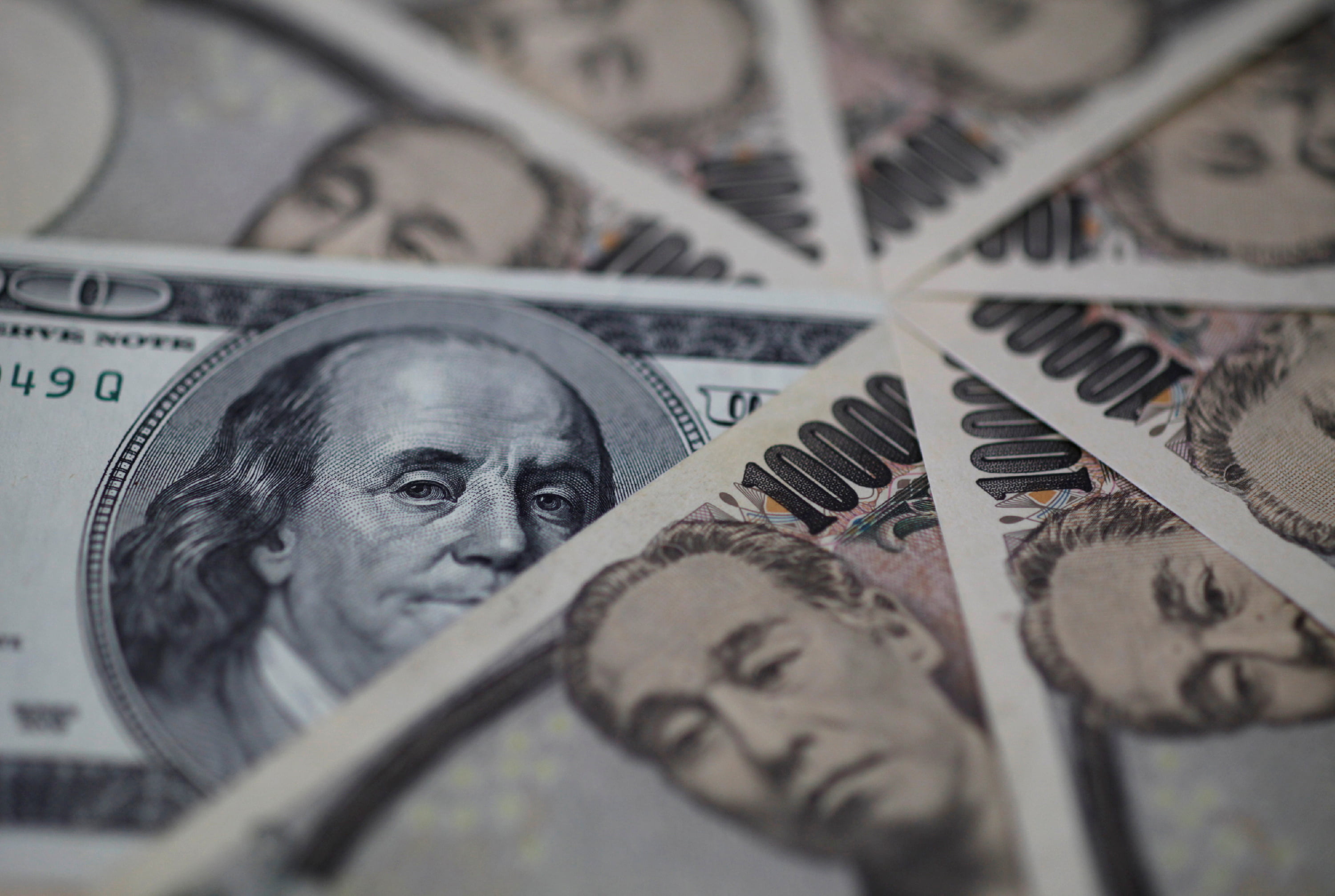

A series of headwinds—interest rates, the war in Iran, fiscal policy, and inflation—prompted the United States and Japan to conduct the first joint yen-buying operation since the Asian Financial Crisis in 1998.
The Japanese yen has now strengthened by almost 5 percent against the greenback over the past week. U.S. officials say they are prepared to further assist their Asian ally in global forex markets.
Here’s what to know about the U.S.–Japan coordinated intervention.
‘New Phase of Abenomics’
Japanese authorities had warned for weeks that they could take measures to stem the yen’s decline.
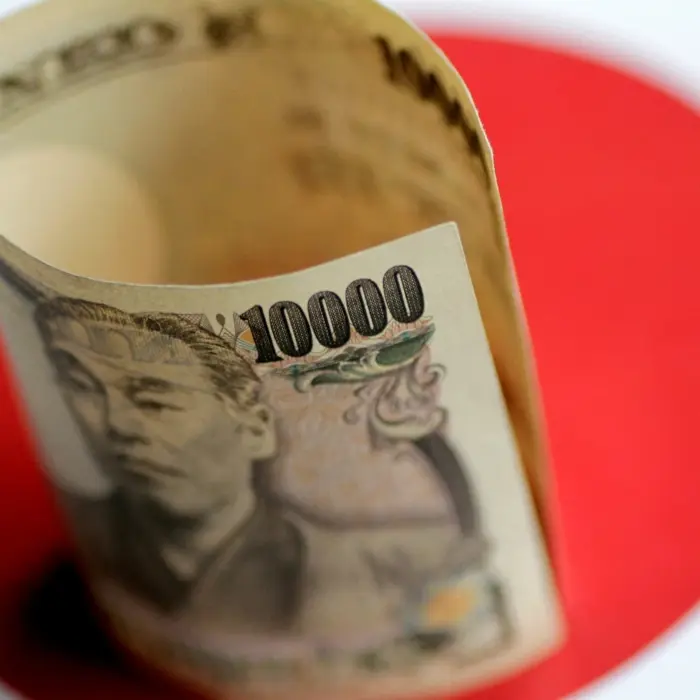

Investors suspected intervention on July 30 when the yen registered a 3 percent gain against the dollar, helping it recover after slumping to its lowest level since 1986. A day later, the yen rose another 1 percent.
Japanese Finance Minister Satsuki Katayama said on Aug. 3 that Tokyo worked with its U.S. counterparts to purchase yen, and future plans include using the Federal Reserve’s Foreign and International Monetary Authorities (FIMA) Repo Facility.
Estimates suggest Tokyo might have spent as much as $59 billion to prop up the yen.
During President Donald Trump’s July 31 Camp David Cabinet meeting, a photo of Treasury Secretary Scott Bessent’s “to-do” list was shared. The image revealed plans to spend up to $10 billion to support the yen.
In an August 2 post on X, Bessent confirmed that the United States recently participated in “coordinated foreign exchange actions” that “countered disorderly yen movements.”
“The FIMA Repo Facility is an important backstop. We would encourage it to be upsized in the coming months,” he said. “We strongly support Japan’s decisive market and monetary steps to correct the substantial undervaluation of the yen.”
Like the $20 billion swap line for Argentina last year, the White House aimed to support Japanese Prime Minister Sanae Takaichi’s government and its economic agenda.
“The Takaichi government is moving into an exciting new phase of Abenomics, as nearly 15 years of powerful stimulus have created durable, robust underlying economic dynamics,” Bessent said.
Abenomics is a nickname for the economic policies of then-Japanese Prime Minister Shinzo Abe, who deployed “three arrows” to end deflation and stimulate growth through fiscal and monetary policy.
Aboard Air Force One, the president told reporters that the administration bought the yen as “a signal of friendship.”

“They have a weakening yen, and they wanted a little bit of help. And we’re always there for Japan,” Trump said.
It is unclear whether the administration will encourage G7 or G20 partners to participate as well. The G7 engaged in forex coordination intervention to weaken the yen following Japan’s devastating 2011 earthquake to protect Japan’s export-driven economy and thwart extreme currency volatility
G20 finance ministers and central bank governors will gather in North Carolina later this month.
Road to Intervention
The yen’s weakness against the dollar did not spring out of nowhere. It has been on a downward trend since early 2022.
A core driver has been the interest rate gap between the Federal Reserve and the Bank of Japan.
The Fed’s key policy rate sits in a target range of 3.5 percent to 3.75 percent. Additionally, Wall Street has made a quarter-point rate hike this year its base case scenario.
While Japanese officials pulled the trigger on a 25-basis-point hike in June, they hit the pause button last month to review the impact of their gradual tightening campaign. Markets are betting on a 20-basis-point jump in October.
Still, the more than 200-basis-point chasm bolsters the carry trade. This has been a strategy used by seasoned traders who borrow cheap yen, purchase higher-yielding dollar assets, and earn the yield spread and currency depreciation.
As the rate gap persists, yen-selling pressure could persist.
“Investors continue to favor the U.S. dollar for its superior yield, while the yen remains under pressure as Japan’s monetary policy stays significantly more accommodative than that of the United States,” Rania Gule, senior market analyst at XS.com, said in an emailed note to The Epoch Times.
“As a result, any pullbacks in the pair still appear to be temporary profit-taking rather than the beginning of a sustained bearish reversal.”
Another factor has been the five-month-old conflict in Iran.
Japan is a major energy importer. With the Middle East driving up global oil prices, a weaker yen exacerbates the trade deficit by making imports costlier.
Tokyo registered back-to-back trade shortfalls in May ($2.4 billion) and June ($2.5 billion), with oil imports surging by almost 60 percent year over year. In the first half of 2026, the nation’s trade deficit was above $6 billion.
Bond Market Chaos
Japan and the United States have not been immune to volatility in the global bond market.
The benchmark 10-year Treasury yield is about 4.7 percent. The 30-year yield is 5.2 percent, the highest since the global financial crisis nearly 20 years ago.
In Tokyo, government bond yields have been steadily rising over the last four years. The 10‑year now sits at a 30‑year high of 2.67 percent, while the 30‑year is hovering near 4 percent—the highest level on record.
Further weakness could have potentially led to even higher U.S. interest rates.
For the United States, any move by Japan to defend the yen by selling part of its large U.S. Treasury portfolio could add upward pressure to yields, which are already rising amid fiscal worries and uncertainty over Federal Reserve policy. Japan’s U.S. debt holdings total more than $1.1 trillion as of May 2026.
“US participation raises more questions than answers, especially the very odd news that the US sold Euros to buy Yen,” Robin Brooks, senior fellow in economic studies at the Brookings Institution, said in an Aug. 2 Substack post.
“This kind of twist in my opinion undercuts the efficacy of US participation, because it invariably will have markets wondering why the US didn’t just fund Yen buying out of Dollars.”
It could also have been a political exercise, according to strategists at ING.
“We suspect the US Treasury might have sold EUR/JPY—in effect raising yen investments at the Exchange Stabilisation Fund at the expense of the euro—to avoid having to explain to the US public why it was selling the dollar,” ING strategists said in an Aug. 3 note.
Post-Intervention Outlook
What happens next for the USD/JPY currency pair might depend on U.S. monetary policy.
Futures markets widely expect the Federal Reserve will pull the trigger on a quarter-point rate hike at the September Federal Open Market Committee policy meeting.
The odds could shift as Federal Reserve Chairman Kevin Warsh and his colleagues will have fresh batches of inflation data.
“Inflation has remained stubbornly above 2 percent for more than five years, and I am not confident it will return to our objective on its own,” Hammack said in a July 31 statement, justifying her position.
“Supply-side factors, including energy prices, have boosted inflation this year, but I see inflationary pressures coming from the demand side of the economy, as well.”
But it is not just the U.S. central bank that matters, ING strategists said.
While the Bank of Japan has signaled that more policy tightening could be in the cards, Japanese government measures could be crucial for the yen.
“With the Japanese real policy rate deeply negative and only being adjusted gradually, it is hard to see BoJ policy having any meaningful impact on the USD/JPY trend,” ING strategists wrote.
“Instead, it will either be a Fed which avoids tightening (ING’s house call) or Japanese government measures to direct/encourage more investment in Japanese domestic assets, which finally turns this USD/JPY bull trend.”
Ultimately, the latest actions could be a “containment exercise” that buys time until currency measures and Fed policy decisions are put together, ING strategists said.