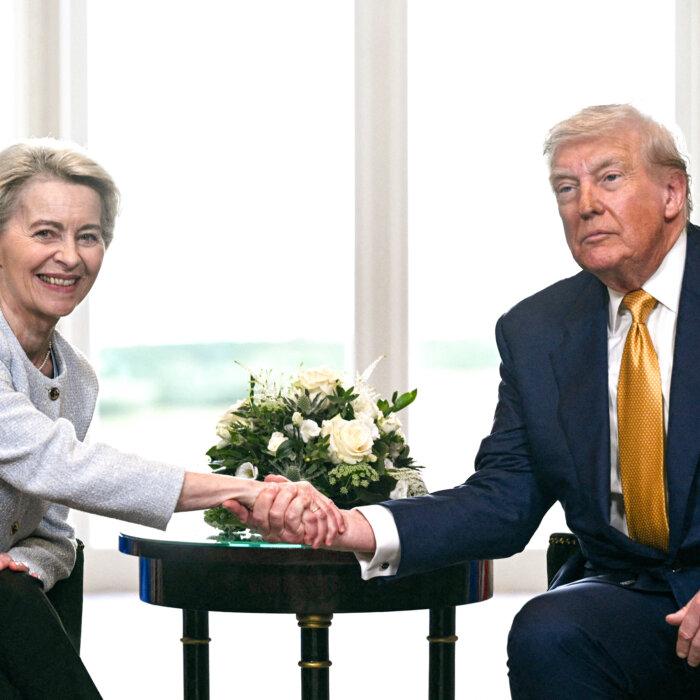
The Trump administration on Sept. 25 formally implemented its trade deal with the European Union, thus confirming a 15 percent tariff on automobiles and automobile parts coming from the bloc.
The document also specifies hundreds of other products from EU countries that will be exempt from new tariffs, including products in the aircraft and pharmaceutical industries. Other exempted items include aluminum, nickel, and cobalt ores and concentrates, and other metals and minerals.
In a preview of the deal, Trump said the bloc would purchase $750 billion worth of U.S. energy, and that tariffs on European imports entering the United States, including automobiles, would be set at 15 percent.
The Trump administration had imposed a baseline 10 percent tariff on the EU in early April, with 25 percent tariffs on automobiles.

‘Important Step’
Germany’s car lobbying group on Sept. 25 welcomed the news that the United States was retroactively lowering tariffs on vehicles.“At the same time, it should be noted that even the U.S. tariffs now in force ... remain a tangible challenge for the German automotive industry.”
She called on the EU to continue lobbying for improved transatlantic trade conditions.
Trade Deficit
After the announcement of the trade deal in July, senior figures in the EU reacted with a combination of relief and criticism.De Wever said he hoped that the United States would “turn away again from the delusion of protectionism and once again embrace the value of free trade—a cornerstone of shared prosperity.”
François Bayrou, the French prime minister at the time, called the deal a “dark day for Europe,” criticizing it as “submission” to the U.S. president.
Merz said on July 27 that Germany’s export-oriented economy, with its large automotive sector, would have been hit hard without this agreement.
“We have thus been able to safeguard our core interests, even if I would have certainly welcomed further easing of transatlantic trade,” he said.
On April 2, the Trump administration announced that dozens of countries would be subject to reciprocal tariffs to correct what the president has described as the unfair treatment of U.S. exporters.
Those tariffs were meant to come into effect on April 9, but Trump later introduced a 90-day pause, which was then extended to Aug. 1, to allow more time for negotiations.
According to the Office of the U.S. Trade Representative, the United States had a total goods trade deficit with the EU of $235.9 billion in 2024, a 13.6 percent increase over 2023.