



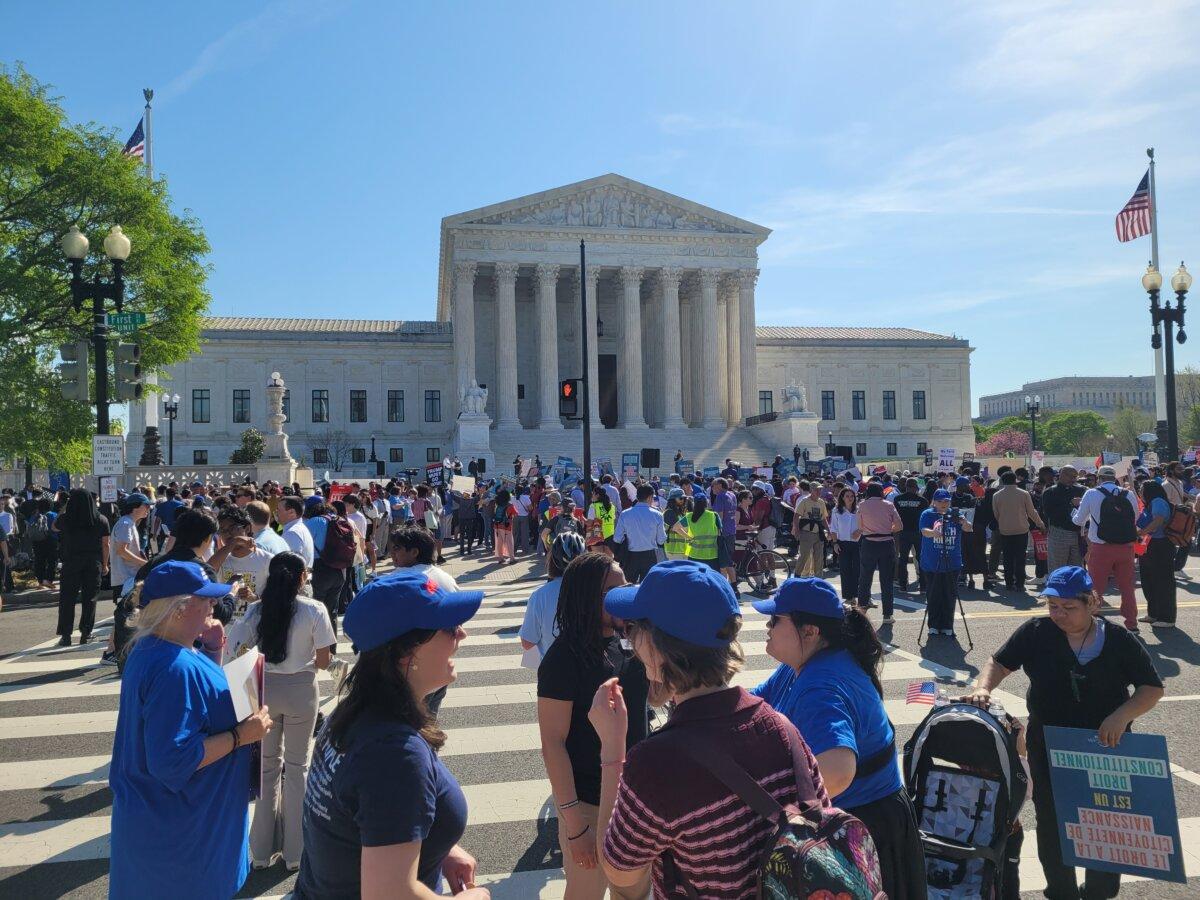


Demonstrators representing both sides of the birthright citizenship issue gathered in front of the Supreme Court steps on Wednesday morning ahead of oral arguments.
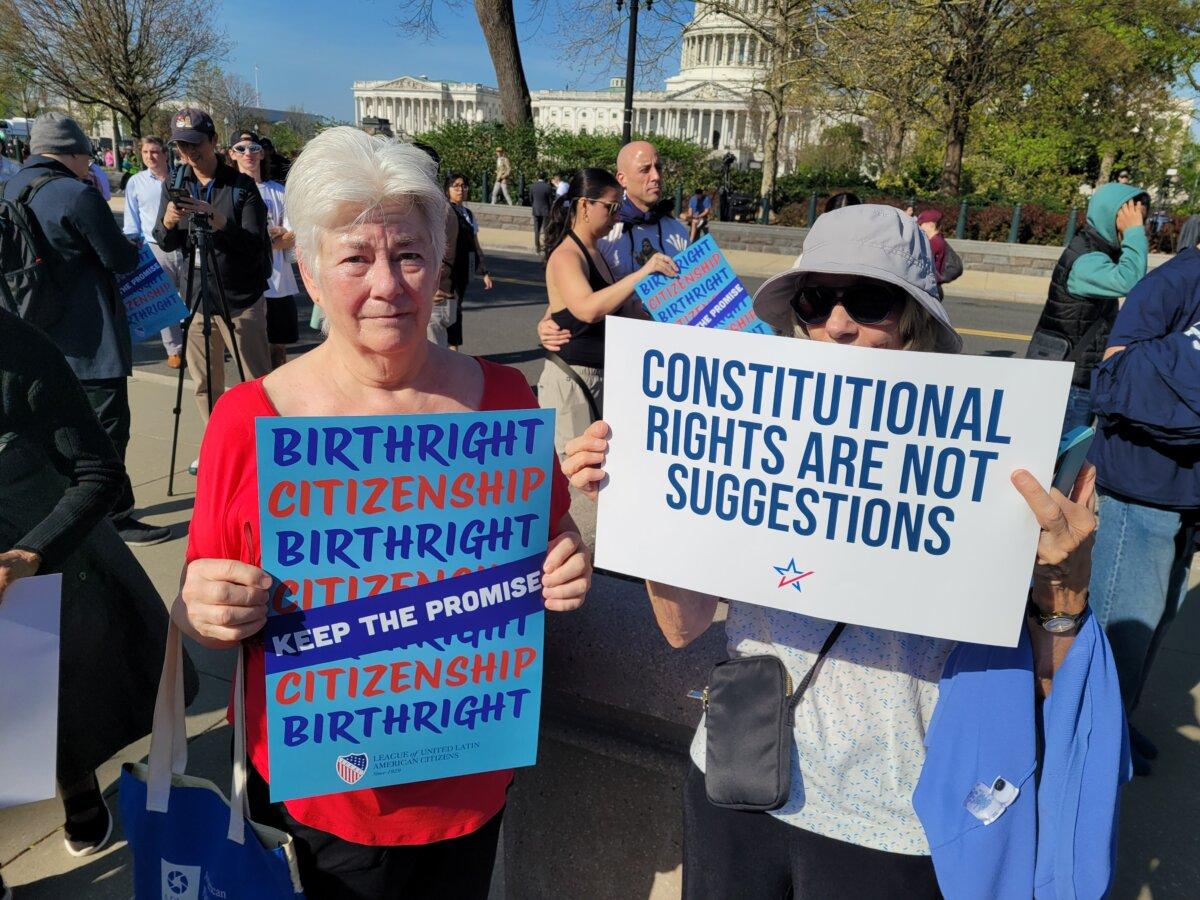
At one point, speakers with bullhorns coordinated their chants, purposely drowning each other out. A man dressed as the Statue of Liberty told The Epoch Times that today is about executive overreach, not just immigrants.


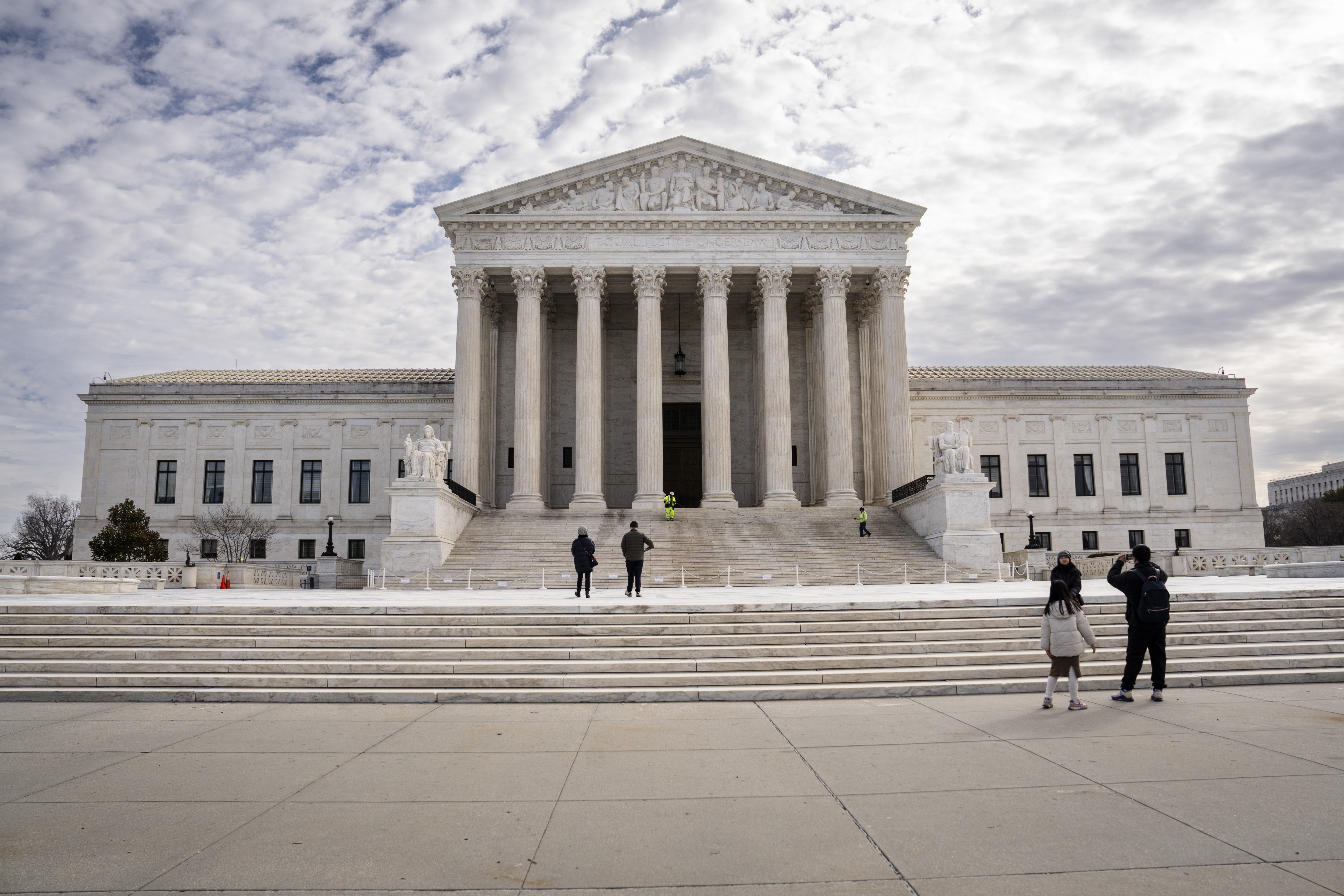
President Donald Trump will attend the Supreme Court oral argument on Wednesday regarding his executive order on birthright citizenship.
“I’m going,” Trump said on Tuesday when a reporter mentioned the upcoming argument the next day. Later on Tuesday, the White House released the president’s schedule for Wednesday, confirming he will attend the oral arguments at the Supreme Court at 10 a.m. ET.
The nation’s highest court will hear the case, known as Trump v. Barbara, on April 1. The case is about whether his Executive Order 14160, which excludes the children of illegal immigrants and legal temporary visitors from automatically gaining U.S. citizenship at birth, is constitutional. The order has been blocked in the lower courts.

The Supreme Court is set to consider a landmark case challenging President Donald Trump’s bid to limit birthright citizenship.
The case, known as Trump v. Barbara, is set for oral argument on April 1.
Upon entering office, Trump signed an order barring the children of illegal immigrants born in the United States from securing citizenship. It also applies to mothers on temporary U.S. visas who give birth in the country.
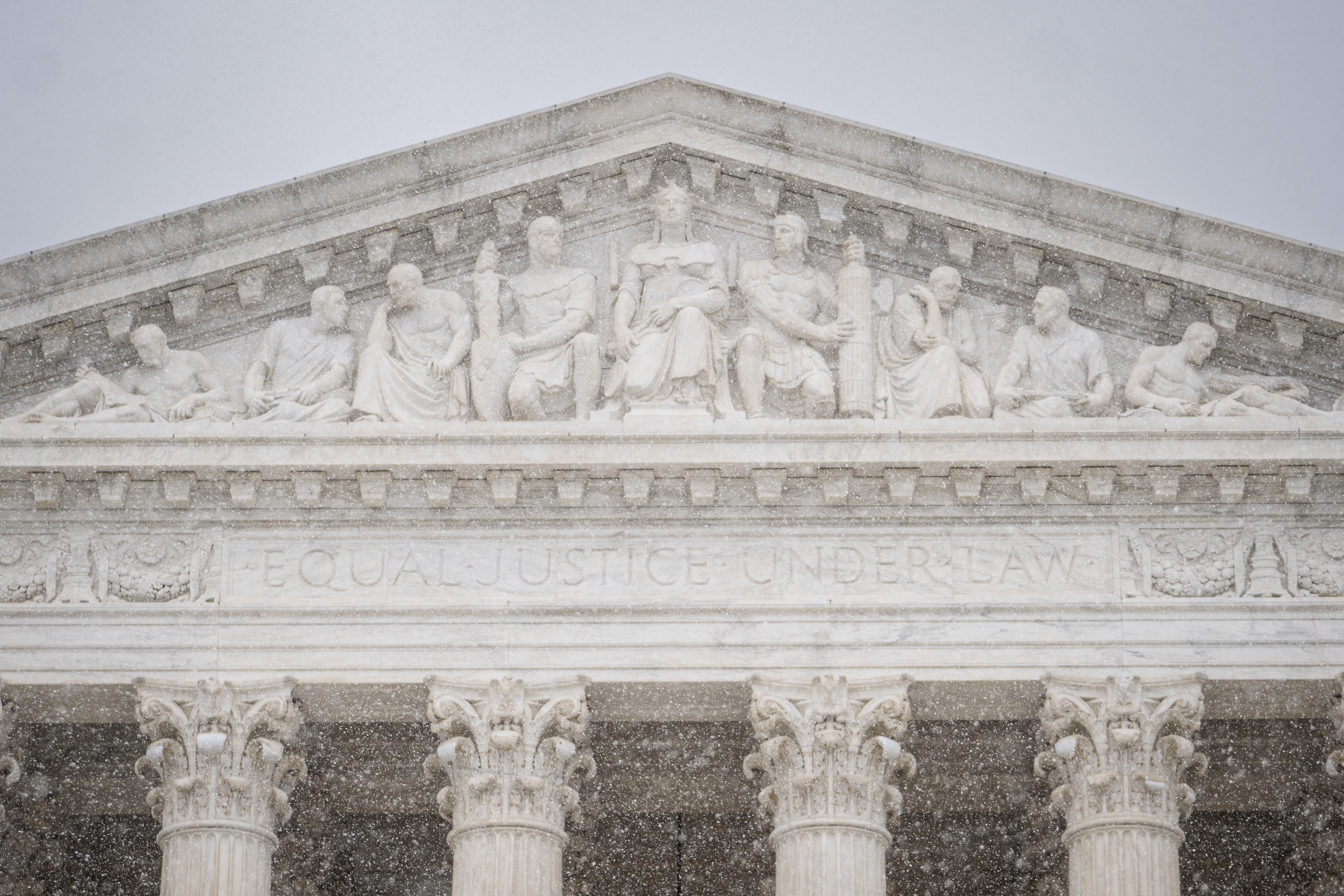
The U.S. Supreme Court on April 1 will consider whether President Donald Trump’s executive order excluding the children of illegal immigrants and legal temporary visitors from automatic birthright citizenship is constitutional.
Trump, who has frequently used the term “anchor babies” to refer to children born in the United States to illegal immigrant parents, issued Executive Order 14160 on Jan. 20, 2025, in hopes of ending the practice. His order, which is about to be considered by the justices, was blocked by lower courts.